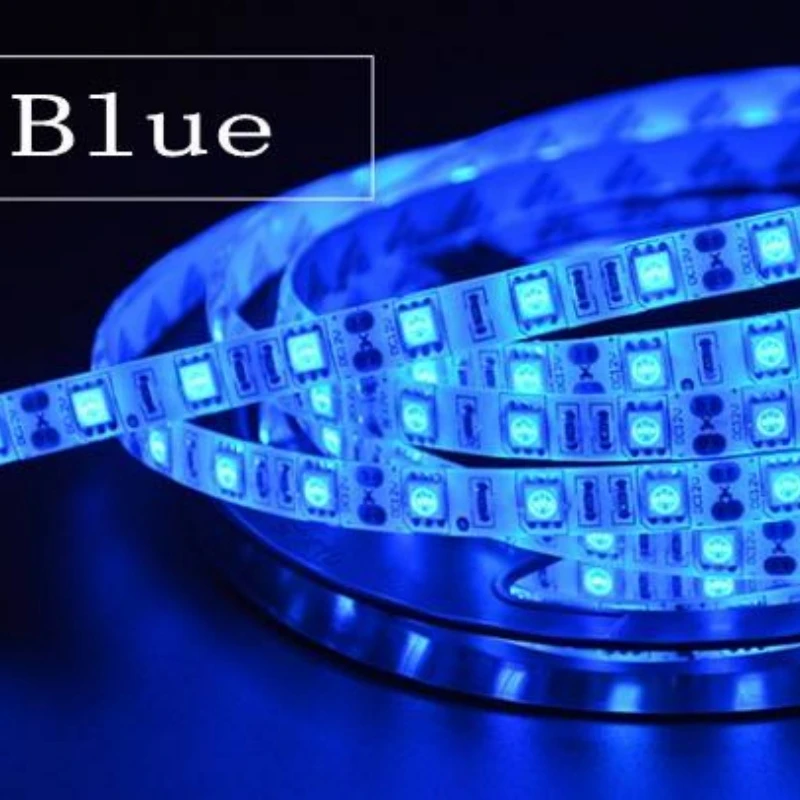
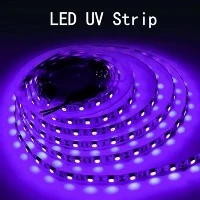
When clients come to us for blacklight (UV) LED strips, eight out of ten ask the same question: "Should I choose 385nm, 395nm, or 405nm?" Although they are priced similarly and look nearly identical, they produce vastly different results when powered on. With some strips, fluorescent materials glow as if they are electrically charged, while with others, you see only a hazy, whitish-purple glare that causes the colors on posters to blur into an indistinct mess. This article skips the complex spectral theory and focuses instead on the practical differences you'll encounter during procurement and use, helping you select the right wavelength for your specific needs.
Understanding the Basics: How Fluorescence "Glows"
When fluorescent paints, pigments, or fabrics are exposed to ultraviolet (UV) light, they absorb that energy and re-emit it as visible light-this is what we perceive as a "glow."
Two key factors are at play here:
The closer the wavelength is to the absorption peak of the fluorescent material, the more effective the excitation. Most fluorescent pigments respond best to the 365nm–395nm range; beyond 400nm, this response drops off significantly.
Visible light emitted by the LED strip itself can dilute the fluorescent effect. The more purple light "leaks" from the strip-making the environment appear "brighter"-the weaker the contrast becomes between the fluorescent objects and their background.
Therefore, determining "which is brightest" isn't about how glaring the LED strip itself is; it's about how effectively the colors of the illuminated objects "pop."
385nm: The Purest Fluorescent Effect
385nm is the closest to a "true" UV-A blacklight and offers the strongest excitation capability of the three options.
Because it emits very little visible purple light, the strip itself appears dimmer, resulting in a "darker" environment and the highest possible contrast for fluorescent objects.
Fluorescent pigments, inks, and graffiti appear more saturated and distinct.
It provides superior excitation for fluorescent red, orange, yellow, and green hues, resulting in a richer, more nuanced range of colors. The downside is the higher cost; for the same level of brightness, the LED chips are more expensive and consume more power. Furthermore, the market is flooded with products falsely labeled as 385nm.
If your project demands high-quality results-such as for fluorescent art exhibitions, themed escape rooms, or professional stage productions-385nm is the most reliable choice.
395nm: The Best Value-for-Money Mainstream Option
395nm is currently the most widely sold wavelength for blacklight LED strips, and for practical reasons:
It offers a fluorescence-excitation effect comparable to 385nm; to the naked eye, there is little noticeable difference when viewing most standard fluorescent paints or posters.
The LED technology is mature, with high production yields, making it more affordable than 385nm.
It emits slightly more visible purple light than 385nm, resulting in a faint but perceptible purple glow when the strips are on-though this remains well within an acceptable range for most people.
For settings like party decorations, bars, KTVs, home game rooms, or Halloween displays, 395nm is generally the "sufficient yet budget-friendly" solution.
405nm: Appears Brightest, but Weakest at Exciting Fluorescence
Strictly speaking, 405nm borders on the blue-violet visible spectrum and is not a "true" blacklight.
The LED strips themselves are the brightest and most striking, creating an immediate "atmospheric" effect.
However, their ability to excite most fluorescent pigments is significantly weaker, often causing colors to appear dull or washed out.
White clothing, walls, and light-colored objects take on a distinct blue-violet tint; while this makes the overall environment "brighter," it actually diminishes the contrast of the fluorescent elements.
Its advantages include a low price point, high brightness, and relatively efficient power consumption.
405nm is better suited for applications where the goal is simply a "blue-violet ambient glow"-such as decorative lighting, automotive interior accent lighting, or display case illumination-rather than for scenarios requiring strong fluorescent excitation.
How to Choose for Different Scenarios
Fluorescent graffiti, fluorescent art, and escape rooms: Choose 385nm for the cleanest, most vivid colors. For bars, parties, home entertainment, or holiday decorations: 395nm offers the best balance between visual effect and budget.
For interior vehicle ambient lighting, decorative backlighting, or general blue-violet lighting (where a strong fluorescent effect isn't required): 405nm is sufficient.
If you are on a tight budget but still want a fluorescent effect: Prioritize 395nm; do not settle for 405nm, as it will not yield the desired fluorescent response.
For large-scale installations: 395nm is more cost-effective, allowing you to cover more ground within the same budget.
Often-Overlooked Details When Purchasing
Wavelength Tolerance. While an LED might be labeled as 395nm, the actual output can fluctuate between 390–400nm. If a light strip has poor batch consistency, you may notice color variations across the same wall. Ask your supplier for wavelength "binning" data or test reports.
LED Density. The number of LEDs per meter directly affects brightness and uniformity; there is a significant difference in appearance between 60 LEDs/meter and 120 LEDs/meter.
Voltage and Length. 12V light strips are prone to noticeable voltage drop; for longer runs, opt for 24V to ensure the end of the strip doesn't dim.
Ingress Protection (IP) Rating. For outdoor or humid environments, choose a product with an IP65 rating or higher.
Safety Reminder. Avoid direct, prolonged exposure of UV-A light to your eyes or skin. Ensure the lights are shielded or kept at a safe distance during use.
Summary
In short: For the most vibrant fluorescent "pop," 385nm is the best choice; for the ideal balance of effect and cost, 395nm is the most suitable; and for a simple blue-violet ambient glow, 405nm is enough.
A brighter-looking light strip does not necessarily mean a better fluorescent effect. The key lies in how well the wavelength matches the fluorescent materials, as well as the darkness of the surrounding environment. Choosing the right wavelength is far more effective than simply adding more meters of lighting.
Need samples or a quote?
If you are selecting products for a project and aren't sure which wavelength best suits your fluorescent materials or specific environment, please feel free to contact us directly. We can provide samples in 385nm, 395nm, and 405nm wavelengths, allowing you to conduct comparative testing in real-world scenarios. We also offer customization options for LED density, voltage, length, and waterproof rating. Simply let us know your intended application and the required quantity, and we will provide a tailored solution along with a price quote.
https://www.benweilight.com/industrial-lighting/led-high-bay-light/ufo-led-high-bay.html