Do you intend to improve your lighting? So you may want to think about LEDs. LEDs are more common than ever and a viable solution for a variety of applications.
In this article, we will dispel some widespread misconceptions about LED lighting so that you may make an educated choice.
Myth #1 – “LEDs are way too expensive”
Many advantages of LEDs are overshadowed by this one fallacy. However, it is just that—a myth.
While it's true that LED bulbs are somewhat more expensive up front than conventional lights, they really end up being far less expensive over time.
See, LEDs have a considerably longer lifespan than conventional lights. You would thus wind up utilizing several conventional bulbs within the lifespan of one LED light. Additionally, LEDs are 80% to 90% more energy efficient than standard lamps.
Therefore, the additional money you spend on LEDs up front is more than made up for by their extended lifespan and high energy efficiency. By upgrading to LEDs, you would ultimately save money.
Myth #2: "LEDs don't have a lot of options."
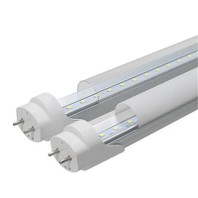
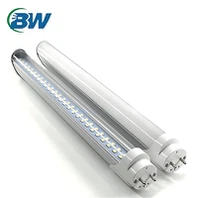
People often mistakenly believe that LED lamps don't have many options. That is not the situation. LED bulbs come in a variety of forms, including globe, candle, and tube. Additionally, if you like, you may buy smart LED lamps. A smartphone may be used to remotely control these lamps. Isn't it wonderful?
Myth #3: "LEDs last a lifetime"
Many people think LED light bulbs are indestructible. But this couldn't be farther from the truth.
LEDs do not burn out as fluorescent lights do, but they gradually deteriorate and lose brightness with time. As time goes on, they will begin to emit less and less light. Having said that, LED lights can last for 50,000 hours. That is around 10 times longer than a typical compact fluorescent light and 40 to 50 times longer than incandescent bulbs (CFL).
By using matching dimmers, you may increase the lifespan of your LED lights. Remember that not all dimmers are compatible with LEDs. While some vintage dimmers are compatible with LEDs, some are not. Make careful to only use dimmers that are compatible with LEDs since incompatible dimmers may harm bulb components and reduce the lifespan of LEDs.
Myth 4: "Since I don't like CFLs, I won't like LED lights either."
Only a short while ago, CFLS were heralded as the next big thing in lighting. CFLs are more energy-efficient than conventional lights, yet they fall short when compared to LEDs.
For starters, hazardous substances like mercury are present in CFLs but not in LEDs. In turn, this makes it simpler to dispose of LEDs. Two, LEDs have a longer lifespan than CFLs. As previously stated, LEDs often have a lifespan up to ten times longer than CFLs. That is definitely a bonus. Three, compared to CFLs, LEDs are far more energy-efficient. So if you move to LEDs, it will be simple to keep your power cost in control. Fourth, CFLs are quite climate-sensitive and often take a while to warm up in cold weather. They are seldom suitable for temperature variations because of this property. On the other hand, LEDs light up virtually instantly and are unaffected by weather changes in terms of performance.
All in all, making the transition to LEDs is a wise choice. Bear in mind, however, that not all LED lights are created equal. Choose LED bulbs with a CRI value of 90 or above if you want the best for your family. Only CRI 90+ LED bulbs are available from LiquidLEDs.