Introduction: Why the Inside Story Is the Only Story That Matters
The Problem With Exterior-Only Evaluation
What a Datasheet Hides
A street light datasheet is a compression algorithm. It reduces a fifteen-year operating reality into a handful of numbers: wattage, lumen output, efficacy, IP rating, warranty length. Everything that determines whether those numbers survive contact with a real pole, a real climate and a real maintenance budget is discarded in the process. Two luminaires with identical headline figures can differ by a factor of two in field life, because the difference lives in wall thickness, gasket durometer, thermal path resistance, driver placement, sealing geometry and the amount of copper in the surge-protection circuit.
The Buyer's Real Question
The professional buyer is not really asking "how bright is it?" They are asking four narrower questions: will it still deliver 90% of its output in year five, will water get inside, will the electronics outlive the LEDs, and when something eventually fails, can one technician fix it from a bucket truck in twenty minutes? Anatomy is the only way to answer those questions before purchase rather than after.
The Purpose of This Teardown
Structure of the Analysis
This paper takes a heavy-duty LED street light platform and works outward-in: housing and thermal structure, optical chamber, sealing architecture, power electronics, control layer, mechanical interface, and finally the assembly and validation process that binds them together. Each section identifies the design decision, the failure mode it prevents, and the inspection check a buyer can perform to verify it.
What "Heavy-Duty" Actually Means
Heavy-duty is not a synonym for "high wattage." It is an engineering posture: die-cast aluminum instead of thin-gauge sheet or plastic, a sealed driver cabinet instead of an open frame, a lens array instead of a flat diffuser, brand-grade power supplies instead of unbranded commodity electronics, and mounting hardware rated for the pole diameters actually found in the field. It is a statement about margin - thermal margin, sealing margin, electrical margin - and margin is what converts a three-year product into a fifteen-year asset.
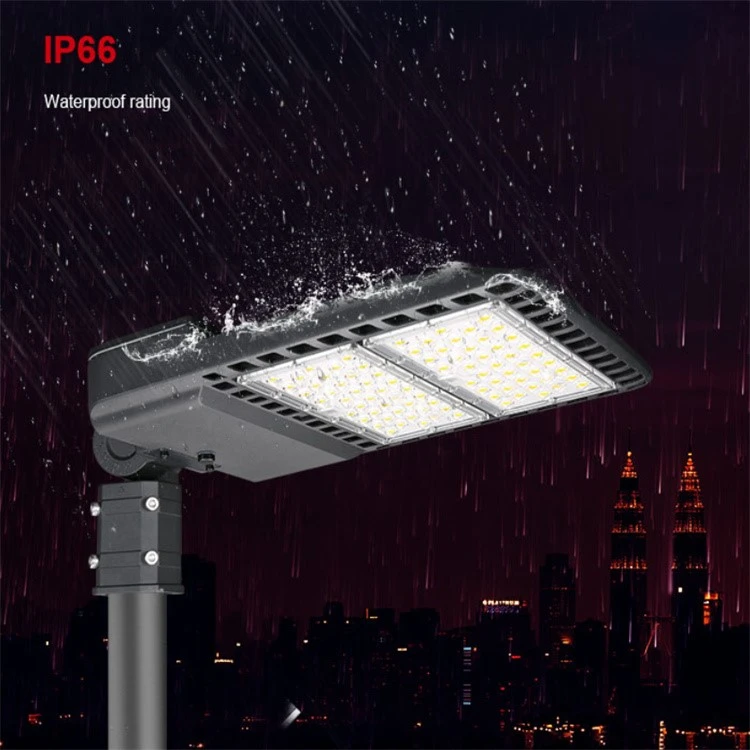
The Shell: Housing and Heat Sink as a Single Thermal Machine
Material and Metallurgy
Die-Cast Aluminum and Why Alloy Choice Matters
The housing is the luminaire's skeleton, its heat exchanger and its first line of corrosion defense. Die-cast aluminum - typically ADC12 or A380 alloy - offers the combination that no alternative matches at cost: high thermal conductivity, excellent dimensional repeatability for sealing faces, structural stiffness for wind loading, and good recyclability. Pressure die casting allows the fins, ribs and sealing grooves to be formed in a single shot, which is precisely why the thermal and mechanical design can be integrated rather than compromised against each other.
The metallurgical detail that separates durable product from disposable product is pretreatment. A properly specified housing receives chromate conversion coating or a multi-stage phosphate pretreatment before powder coating, producing a coating adhesion that survives salt fog, UV and thermal cycling without blistering. An under-pretreated housing looks identical at delivery and begins to chalk and pit within two coastal rainy seasons.
Wall Thickness and Structural Honesty
Wall thickness is invisible in photographs and decisive in service. Thin walls save aluminum cost and lose stiffness, which manifests as distortion of sealing faces under thermal cycling - and distorted sealing faces leak. A heavy-duty platform maintains wall thickness at the gasket landings and at the bracket attachment points, where load concentrates. Buyers can verify this physically: a sectioned sample or an ultrasonic thickness gauge answers in thirty seconds what a datasheet never will.
Thermal Geometry
The Fin Array as a Convective Engine
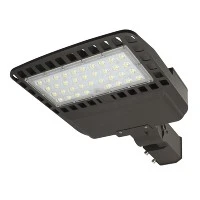
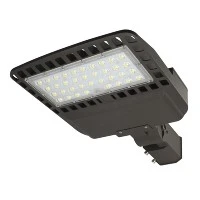
The finned top surface is not decoration. It is a convective engine designed around the chimney effect: air enters at the lower edge, absorbs heat from the fin surfaces, becomes buoyant and exits upward, continuously drawing fresh air through the array. Fin spacing, height and taper are tuned so that the boundary layers on adjacent fins do not merge and choke the flow. The distinctive sculpted, ridged fin pattern visible on the housing serves this function while also breaking up snow and debris accumulation and stiffening the casting.
Thermal Path Resistance
Heat must travel from the LED junction through the solder layer, the metal-core PCB, the thermal interface material and into the casting. Each interface is a resistance, and the sum determines junction temperature. This is why a serious platform specifies a metal-core PCB rather than FR-4, a documented thermal interface material rather than a mechanical gap, and a die-cast boss directly beneath the LED array so that heat enters metal immediately rather than crossing an air gap. Every 10°C reduction in junction temperature roughly doubles the effective life of both the LED and the driver's electrolytic capacitors - meaning thermal design is, in financial terms, the single largest determinant of warranty exposure.
What to Ask For
Request LM-80 data for the specific LED package, LM-79 for the finished luminaire, and a TM-21 projection to L90 at 50,000 hours or L70 at 100,000 hours at the actual drive current and case temperature. Then ask for the internal cabinet temperature measured under full load at 50°C ambient. A supplier who answers all four in writing has engineering behind the marketing; a supplier who answers two has a catalogue.
The Optical Chamber: Lens Array as Precision Instrument
Material and Optical Design
PMMA Versus Polycarbonate
The lens array is the component that converts electrical input into usable, correctly placed light. Optical-grade PMMA offers the highest transmission and the best UV stability of the practical molding materials, holding clarity for a decade where polycarbonate yellows and embrittles. The trade-off is impact resistance, which is why heavy-duty platforms pair a PMMA optic with a structurally rigid housing and, where vandal exposure is high, an additional IK-rated protective layer.
Individual Lens Control
Note the architecture: each LED sits behind its own molded lens element within a single array, rather than behind a shared diffuser plate. This individual control allows the designer to shape the composite distribution precisely - suppressing the hot spot directly under the pole, pushing light toward the target zone, and controlling the vertical angles that produce glare. A flat diffuser cannot do this; it can only scatter.
Photometric Distributions
Type II, III, IV and V
The platform supports the standard roadway classifications: Type II for narrow walkways and single-lane access roads; Type III for typical roadways and parking fields where the pole sits at the edge of the lit area; Type IV for wide, asymmetric coverage from wall or corner positions; and Type V for symmetric full-surround illumination in yards, depots and roundabouts. Optional 120°×50° and 145°×100° beams extend the same optic family to flood and wide-area duties.
Why Distribution Beats Raw Output
A luminaire with the wrong distribution must be over-specified to compensate for light thrown into the wrong place. A Type III optic placed correctly frequently achieves target illuminance with one fixture where a broad, uncontrolled beam needs two. For the buyer, this means a lower fixture count, lower connected load, a cleaner uniformity ratio in the DIALux report, and a lower glare index for drivers and pedestrians.
Glare, Uniformity and Visual Comfort
Illuminance alone does not make a good installation. Uniformity (minimum-to-average ratio) determines whether the eye perceives a continuous lit surface or a sequence of bright pools. Glare - quantified through disability glare metrics in roadway standards - determines whether drivers are momentarily blinded at the worst possible moment. A lens-array platform with defined beam types addresses both by design rather than by adding shields after the fact.
The Sealing Architecture: IP66 in Two Chambers
The Principle of Separated Compartments
Why the Driver Needs Its Own Room
The dominant failure mechanism in outdoor luminaires is not LED degradation but moisture reaching the electronics. A design that places the driver in the same open volume as the optical chamber exposes it to the full humidity and thermal cycling of the lens cavity. A dedicated driver cabinet changes this: the electronics occupy a sealed, separately gasketed enclosure with its own thermal management, isolated from the optical path and from direct water ingress routes.
The Rubber Seal Ring
The sealing element is a molded rubber ring - not a bead of adhesive, not a foam strip. A molded ring in a defined durometer, compressed into a machined groove at a controlled percentage of deflection, provides predictable sealing performance across the full thermal range and remains replaceable in the field. Adhesive seals fail silently at the edges and cannot be reopened without destroying them; molded rings can be inspected, re-gasketed and returned to service.
Verification, Not Assertion
IP66 and Its Test Protocol
IP66 means dust-tight and protected against powerful water jets. It is defined by IEC 60529 and must be demonstrated by an accredited laboratory report on the specific model - not extrapolated from a sister product and not claimed on the basis of a photograph of rain. Buyers should request the report number, the test house, and confirmation that both the optical chamber and the driver cabinet were tested.
The Design Details That Make the Rating Hold
A rating holds only if the geometry supports it: no horizontal sealing face where water can pool, gasket grooves deep enough to prevent extrusion under compression, cable entries through sealed glands rather than open ports, pressure-equalization via a breathable membrane rather than a vent hole, and a housing that drains rather than traps. In coastal and tropical markets the same architecture must be paired with a documented salt-spray rating and marine-grade pretreatment.
The Power Electronics: Where Field Reliability Is Actually Won
Driver Provenance
Brand-Grade Power Supplies
Industry-wide field return data converges on one conclusion: the driver, not the LED, is the dominant failure mode. Brand-grade power supplies are therefore the correct specification decision. Meanwell, MOSO and Sosen options each serve a distinct program profile - Meanwell for global service networks and immediate recognition in tender evaluation, MOSO for cost-optimized high-volume supply, Sosen for compact footprint and wide dimming range. All three share what matters: documented electrolytic capacitor selection, honest thermal derating curves, and batch-to-batch consistency.
Five-Year Warranty as Evidence
A five-year warranty covering the driver is a disclosure, not a courtesy. It states that the manufacturer has validated the driver's case temperature inside the actual cabinet at the actual ambient, and has burned in units long enough to catch early-life failures. Read it as one leg of a three-part proof, alongside the derating curve and the measured internal temperature.
Electrical Protection
Surge and Transient Immunity
Street lights are frequently the most exposed electrical equipment on a site. A heavy-duty platform specifies surge protection at the input - commonly 10kV/10kA combination-wave capability - because a single lightning-induced transient can destroy a driver that is otherwise perfectly engineered. This is also why the driver cabinet's separation from the optical chamber helps: a failed protection component is contained, replaceable and does not contaminate the optics.
Power Quality and Dimming Range
Power factor, total harmonic distortion and inrush current determine whether the luminaire plays well with large-scale deployment on a shared supply. A well-engineered driver maintains PF above 0.9 across the load range and limits inrush so that a contactor closing on two hundred fixtures does not trip upstream protection. Dimming range - typically 10% to 100% with 0–10V or DALI - is the foundation for every curfew and adaptive-lighting strategy the owner may later adopt.
The Control Layer: Photocell and Smart Readiness
Autonomous Control
The Plug-In Photocell
The single highest-return intelligence feature is a plug-in photocell that switches the luminaire on and off according to measured ambient lux difference, with hysteresis to prevent nuisance cycling from headlights, cloud edges or lightning. It removes the two most common operating failures in outdoor lighting - lamps burning at noon because a timer drifted, and lamps dark at dusk because nobody updated the schedule after a seasonal change. Its receptacle design permits field replacement without opening the sealed chamber, which preserves the IP rating through its service life.
Networked Readiness
The Upgrade Ladder
Above autonomous control sits the dimming ladder: 0–10V or DALI for curfew profiles, occupancy-based step dimming on low-traffic sites, and full networked control through NEMA 7-pin or Zhaga Book 18 interfaces for asset management, energy metering, fault alarm and remote configuration. The commercial logic is unambiguous: the incremental cost of a dimming-ready driver and control receptacle at the point of manufacture is a small fraction of retrofitting controls into an installed base later. Specifying smart-ready today is the cheapest decision in the entire project.
The Mechanical Interface: Brackets, Footprint and Wind Load
The Multiple Bracket System
A, B, C, D and E
Installation labor is frequently 20–40% of a retrofit budget, and most of it is consumed by mounting adaptation. A bracket family covering round pole, square pole and wall mounting eliminates that friction: the same luminaire drops onto an existing round steel pole, a square concrete column or a masonry wall without fabrication, drilling or third-party adapters. In volume programs, this is the difference between a two-day and a two-week installation window.
Compact Footprint and Service Access
A footprint of approximately 310 × 311 × 72 mm on the mid-power variant allows direct substitution onto existing davit arms and slip fitters without wind-load recalculation on most structures. Combined with single-tool access to the driver cabinet, the platform supports a one-truck, one-technician service model - the operational ideal for fleets of hundreds or thousands of units.
Environmental and Structural Ratings
Wind loading, IK impact rating and operating temperature range complete the mechanical case. A heavy-duty luminaire should be documented for the wind zone of the intended market, rated for the vandal exposure of the site, and specified for an operating range that covers the actual climate - not an optimistic 25°C laboratory condition.
Assembly and Validation: The Invisible Discipline
Process Controls
Burn-In and Aging
Every unit should undergo a burn-in period at elevated temperature before shipment, because early-life electronic failures concentrate in the first hours of operation. A supplier running a documented aging process ships a product whose failure curve has already been truncated at the factory rather than in the customer's parking lot.
Traceability
Batch traceability - linking each luminaire to its LED bin, driver batch and test record - is what makes a warranty operational rather than aspirational. Without it, a claim becomes a negotiation; with it, a claim becomes a replacement.
The Buyer's Teardown Checklist
Ask for: IP66 reports for both chambers; LM-79 and LM-80 data with TM-21 projection; driver datasheets with derating curves; a sectioned housing sample or thickness measurement; bracket drawings with pole-diameter ranges; a spare-parts program covering drivers, photocells and gaskets; and a warranty document naming the responsible party and the claim procedure. Score each item in writing. A supplier who answers all seven comprehensively is a manufacturing partner; one who answers four is a trading intermediary with a catalogue.
Procurement Implications: How Anatomy Becomes Margin
The commercial translation of all this engineering is straightforward. Thermal margin buys lumen maintenance, which buys warranty headroom and eliminates relamping cycles from the operating budget. Sealing margin buys years of driver life in humid and coastal climates, which buys a service model instead of an outage model. Optical precision buys fixture count, which buys connected load and installation labor. Brand-grade electronics buy predictability, which buys insurability and tender compliance. Mechanical flexibility buys installation speed, which buys the difference between a project that fits the budget and one that does not.
None of these advantages appear in a headline lumen figure. All of them appear on the owner's energy invoice, maintenance log and incident report for the next fifteen years.
Conclusion
A heavy-duty LED street light is not a lamp in a box. It is an integrated thermal machine, a precision optical instrument, a sealed electronics enclosure and a universal mechanical interface, held together by process discipline that never appears in a marketing photograph. The design decisions that matter most - alloy pretreatment, wall thickness at sealing faces, thermal path continuity, lens-level beam control, a separately gasketed driver cabinet, brand-grade power supplies, surge immunity, and a bracket family that fits every pole on site - are all inspectable before purchase, provided the buyer knows where to look.
That is the purpose of anatomy: to move the evaluation from the datasheet to the design. The luminaires above our roads and facilities are the infrastructure most organizations think about last and notice first when it fails. Understanding what is inside them is how a buyer stops purchasing fixtures and starts purchasing decades of dependable light.
How To Cooperate With Us?
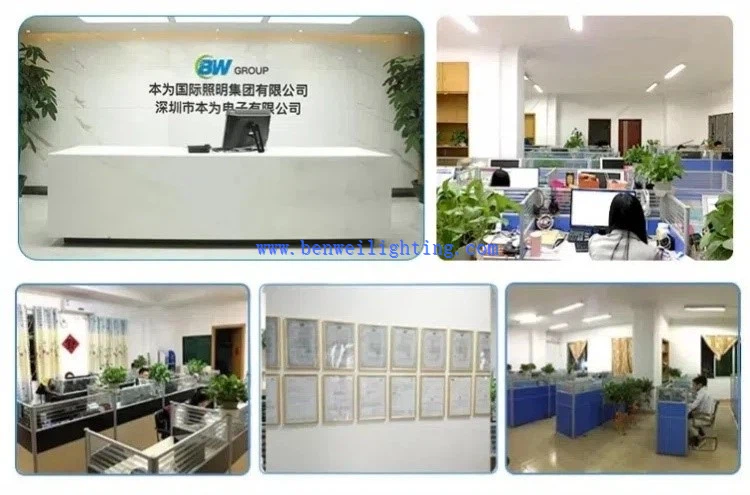
We are happy that we have total control over the manufacturing process and the quality of our products since we have our own facilities. Since we are producers rather than just brokers, we are dedicated to providing our customers with the best pricing. Since we are certain that the price and quality of our products are transparent, we advise customers to examine our samples first. Our commitment to quality and customer satisfaction drives us to continuously provide top-notch goods.
Our address
3rd Floor, 5th Building, Hebei Industrial Park, Hualian Community, Longhua District, Shenzhen, China