660nm & 850nm Dual‑Wavelength Red Light Therapy Lamp: The Anti‑Aging Technology from NASA Labs to Your Home Toolkit
When NASA scientists needed to accelerate wound healing in the microgravity environment of space, they accidentally discovered the remarkable ability of red and near‑infrared light to penetrate tissue and trigger cellular energy production. This discovery has now traveled from space stations to dermatology clinics, fitness recovery rooms, and home wellness spaces worldwide. The key to making this technology widely accessible is consumer products like the Benwei 18 High Power LEDs Red Light Therapy Bulb. This article systematically analyzes the core technical logic of this phototherapy device-covering the basic mechanism of photobiomodulation, the synergistic principle of 660nm and 850nm dual wavelengths, clinical application scenarios, and selection considerations.
1. What Is Photobiomodulation and Why Did NASA Discover It?
Photobiomodulation (PBM), sometimes called red light therapy or near‑infrared light therapy, is a technique that uses specific wavelengths of light to stimulate cellular function, thereby promoting healing, reducing inflammation, and accelerating tissue repair. The clinical potential of this technology was first noticed by NASA while studying wound healing in space microgravity. Scientists observed that red and near‑infrared light not only warm the skin but also penetrate tissues and directly trigger the energy‑producing machinery of mitochondria. When light of specific wavelengths reaches cells, it stimulates mitochondria to increase production of adenosine triphosphate (ATP)-the molecule that acts as the "energy currency" driving virtually all physiological processes inside cells.
In human cells, the key light‑absorbing enzyme is cytochrome c oxidase. When photons at 660nm and 850nm are absorbed by this enzyme, the activity of the electron transport chain is enhanced, and ATP synthesis efficiency rises. More ATP means cells have more "fuel," so their repair and regeneration capabilities naturally improve. This mechanism explains why red and near‑infrared light therapy can produce effects across different tissue types-it does not simply heat locally but rather activates the cell's own repair system at the molecular level.
However, it must be noted that although this mechanism has been repeatedly validated in cell and animal studies, as of 2025 no high‑quality human clinical trial has confirmed that whole‑body red light exposure truly extends human lifespan or significantly improves long‑term health outcomes. The general academic consensus is that there is clinical evidence supporting the benefits of PBM for skin, pain, and cognitive function, but bridging the gap from "biological possibility" to "clinical certainty" still requires more large‑scale, rigorously controlled randomized trials.
2. Why 660nm and 850nm? – The Scientific Basis for Dual‑Wavelength Synergy
In photobiomodulation practice, not all red or near‑infrared light produces the same effect. Wavelength determines penetration depth and absorption characteristics, which is why the combination of 660nm and 850nm has become an industry standard.
660nm Deep Red Light: Focused on Surface Repair
The 660nm wavelength lies within the visible red spectrum. Its photons have relatively high energy and are efficiently absorbed by mitochondria in the skin and superficial tissues, with a penetration depth of about 5–10 mm. This makes 660nm especially suitable for treating skin lesions, superficial wounds, hair follicle stimulation, and collagen regeneration. A 2025 randomized controlled animal study showed that red LED light irradiation significantly promoted full‑thickness wound healing on rat back skin, with wound contraction rates and granulation tissue thickness superior to those of the untreated group. Clinically, red light has been shown to stimulate fibroblasts-the main cells responsible for collagen synthesis-thus helping to improve wrinkles and skin texture.
850nm Near‑Infrared Light: Deeper into Muscles and Joints
The 850nm wavelength lies just above the visible range; it is invisible to the human eye, but because of that, it is less absorbed by skin pigments and scatters less, allowing it to penetrate deeper tissues-up to 20–30 mm or more. This makes 850nm particularly effective for muscle soreness, joint pain, and deep inflammation. In muscle recovery studies, LED devices that combine 660nm and 850nm have been shown to significantly reduce delayed‑onset muscle soreness 48 hours after exercise, increase muscle contraction repetitions, and lower blood lactate levels as well as blood creatine kinase and C‑reactive protein levels. Other studies indicate that red and near‑infrared light irradiation can simultaneously lower both systolic and diastolic blood pressure, suggesting potential benefits for improving cardiovascular parameters.
Dual‑Wavelength Combination: A Spectral Bridge from Surface to Depth
Combining 660nm and 850nm in a single device essentially creates a seamless connection between "superficial repair" and "deep treatment." In daily use, such a combination meets diverse needs: use 660nm in the morning to enhance facial skin radiance and elasticity, use 850nm at midday to relieve shoulder and back soreness from prolonged sitting, and after exercise use both wavelengths together to accelerate muscle recovery. Biologically, the two wavelengths act on different tissue depths while simultaneously initiating cellular signaling cascades, producing synergistic effects that are superior to repeated irradiation with a single wavelength.
It is important to note that although the two wavelengths have different physical characteristics, the same logic applies to dose calculation. To deliver a target energy density, for example 5 J/cm², you can calculate the required exposure time using the device's power density (in W/cm²) at the skin surface. For 850nm, because it needs to penetrate deeper tissues, exposure time may need to be extended by 10–20% to ensure that the energy dose at deep tissues matches that at the surface.
3. Main Application Scenarios of Red Light Therapy Lamps
Based on existing clinical evidence and research data, phototherapy devices combining 660nm and 850nm have relatively mature application value in the following four areas.
3.1 Skin Anti‑Aging and Wound Healing
Red and near‑infrared light are recognized for their ability to achieve skin rejuvenation and wound repair through the photobiomodulation mechanism. In clinical practice, this effect is realized in three ways: first, stimulating fibroblasts in the dermis to synthesize more collagen and elastin fibers, thereby improving fine lines and skin laxity; second, accelerating microcirculation, enhancing local oxygen supply and removal of metabolic waste; third, modulating inflammatory responses and shortening wound healing time. For people who wish to improve skin quality through non‑invasive, non‑contact conditions, irradiation for 10–20 minutes per session, 3–5 times per week, is considered a reasonable regimen.
3.2 Muscle Recovery and Athletic Performance Enhancement
Muscle recovery is another major application scenario for red light therapy lamps. Studies have confirmed that photobiomodulation pretreatment before exercise can significantly increase the maximum voluntary contraction repetitions and duration, delay the onset of exercise fatigue, and reduce blood lactate levels. Used after exercise, it effectively reduces delayed‑onset muscle soreness and oxidative stress. For both professional athletes and everyday fitness enthusiasts, this means faster training cycles and fewer recovery plateaus.
3.3 Pain Management and Chronic Inflammation
For chronic musculoskeletal pain (such as arthritis, lumbar muscle strain, cervical spondylosis, etc.), the deep‑penetrating ability of the 850nm wavelength plays a key role. It can reach joint capsules, tendon attachment points, and paravertebral muscles, relieving pain by increasing local ATP supply and reducing inflammatory mediator concentrations. Many users report improved joint flexibility, shortened morning stiffness, and reduced reliance on topical analgesics or oral non‑steroidal anti‑inflammatory drugs after several weeks of consistent use.
3.4 Hair Regrowth and Scalp Health
Hair follicles also respond positively to photobiomodulation. Studies show that light irradiation at 660nm and 850nm can stimulate dormant hair follicles to enter the growth phase, increase microcirculation around the follicles, thereby slowing hair loss progression and promoting new hair growth. For common types of hair loss such as androgenetic alopecia, consistent irradiation for at least 3–6 months is considered a necessary intervention period.
4. How to Identify a Truly Effective Red Light Therapy Device? – A Selection Guide from Specifications to Experience
As the red light therapy lamp market expands rapidly, more and more products appear on e‑commerce platforms and social media. However, not every lamp labeled "red light" produces genuine therapeutic effects. Below are key dimensions to consider when evaluating and purchasing a red light therapy lamp.
4.1 Wavelength Accuracy Is the Core of Efficacy
Therapeutic light must fall within the narrow bands of 630–660 nm (red) or 810–850 nm (near‑infrared) to effectively activate cytochrome c oxidase and trigger mitochondrial responses. Cheap products that claim a broad 600–900 nm range waste their energy across ineffective bands and cannot truly activate cellular receptors; they merely produce warm red light unrelated to cellular regeneration.
4.2 Irradiance Determines Exposure Time and Effectiveness
Irradiance (units: mW/cm²), the optical power received per unit area, directly affects the time needed per session. Higher irradiance means shorter exposure time to reach a target energy density. The irradiance data for the Benwei 18 High Power LEDs Red Light Therapy Bulb can be found in the product specification sheet. By dividing the desired energy density by the actual irradiance at the skin surface, you can precisely calculate the required exposure time.
4.3 Number of LEDs, Power, and Optical Lens Design
More LEDs do not directly equal better results; what matters is the quality of each individual LED chip and the optical system design. High‑quality red light therapy lamps incorporate optical elements such as 90° glass lenses to narrow the beam and reduce scattering, so that more light energy accurately reaches the target tissue rather than diffusing into the surrounding air. A dual‑chip LED head design is also a detail worth noting, as it ensures that each LED die stably outputs its designated wavelength without spectral shift.
4.4 Thermal Design Determines Long‑Term Stability
High‑power LEDs generate some heat during operation. If heat dissipation is inadequate, not only is the LED lifetime shortened, but output wavelength may drift and light intensity may fluctuate. Good thermal design typically includes a high‑thermal‑conductivity aluminum housing, sufficient heat sink fin area, and proper airflow channels. The Benwei red light bulb uses a high‑thermal‑conductivity aluminum substrate and optimized heat dissipation structure to maintain stable light output even during long continuous operation.
4.5 Safety Certifications and Warranty Period
For home‑use phototherapy devices, safety compliance is a basic prerequisite. Products should carry necessary safety certifications such as CE and RoHS to confirm that they meet health and safety standards for low voltage and low radiation. The warranty period offered by the manufacturer also reflects confidence in product quality.

5. Market Trends: Why Red Light Therapy Lamps Are Becoming a Consumer Hotspot
Growth data for the red light therapy lamp market confirms the clear trend of this technology moving from professional medical use to home applications. The global red light therapy panel market was valued at approximately USD 960 million in 2025 and is projected to grow to USD 1.11 billion in 2026, with a compound annual growth rate (CAGR) of 15.5%. When the scope is broadened to include handheld devices, masks, and other product categories, the red light therapy device market was valued at USD 689 million in 2025 and is expected to reach USD 1.013 billion by 2032, with a CAGR of about 5.7%.
Key drivers of this growth include: expansion of dermatological treatments, increased demand for non‑pharmacological pain management solutions, continued validation of photobiomodulation clinical efficacy, an increasing number of wellness clinics, and widespread adoption of LED technology. Notably, high engagement on social media platforms has also played a significant role. For example, on TikTok, content related to red light therapy devices has accumulated over 70 million views. Numerous before‑and‑after videos and celebrity endorsements shared by users have greatly shortened the distance between consumers and the technology.
On the consumer side, more people are gravitating toward non‑invasive, drug‑alternative solutions for skin issues, chronic pain, and suboptimal health. Red light therapy, with its non‑thermal effect, painlessness, and simple operation, fits this trend perfectly. In professional settings, more physical therapy clinics and sports medicine practices are incorporating red light therapy into rehabilitation protocols to shorten athletes' recovery cycles and reduce inflammation. Well‑known brands such as Hooga have launched multiple power and size options for phototherapy devices to accommodate use cases ranging from handheld local treatment to whole‑body irradiation.
From 2025 to 2030, multiple market research firms predict that the red light therapy panel market will maintain a CAGR of approximately 15%, reaching an estimated USD 1.95 billion by 2030. This growth reflects not only the maturity of the technology itself but also a general rise in consumer awareness of proactive health management.
6. Final Thoughts
Red light therapy is not pseudoscience; the mitochondrial photobiomodulation mechanism behind it has a clear molecular biology basis. The combination of 660nm and 850nm dual wavelengths, by acting on superficial and deep structures respectively, achieves multi‑scenario coverage from skin aesthetics to muscle recovery and pain management. From NASA's laboratories to bedside tables in millions of homes, the widespread adoption of this technology is a vivid illustration of the convergence of evidence‑based medicine and consumer technology.
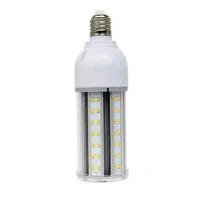
When choosing a red light therapy lamp, do not be misled by flashy marketing language. Instead, focus on engineering fundamentals: wavelength accuracy (660±10 nm, 850±10 nm), adequate irradiance (directly affecting dose per unit time), reliable thermal design and safety, and a sufficiently long warranty period. By these standards, the Benwei 18 High Power LEDs Red Light Therapy Bulb-a consumer product with a standard lamp base (E27/E26)-offers a technically solid and easy‑to‑use choice for users who want professional‑grade red light irradiation at home.