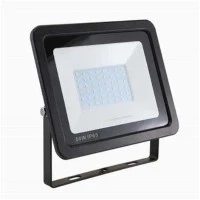
Analysis of the export situation of the lighting industry
One, basic analysis
In the history of human lighting, Edison invented the incandescent lamp, which meant the beginning of the lighting field. With the development of technology, the emergence of fluorescent lamps greatly met the diverse needs of human lighting. Now it is nighttime all over the world. The vast majority of indoor lighting uses fluorescent lamps. However, although fluorescent lamps have many advantages, one of the biggest disadvantages is that they consume very much electricity. Most of the electric energy is consumed in heat. In addition, the mercury in the lamp has the problem of polluting the environment. Therefore, new energy-saving lighting is sought. Light sources have always been the task of scientists and businesses. Until the late 20th century, the invention of light-emitting diodes brought dawn to the lighting field in the future, and LEDs began to enter the lighting market.
Compared with traditional light sources (such as fluorescent lamps and incandescent lamps), when LEDs are close to the theoretical conversion efficiency, the luminous efficiency of LEDs is 5-20 times higher than that of traditional light sources. Even at the current stage of mass production, the level of luminous efficiency is between 2-15 times. At the same time, combined with the advantages of its directivity, the gap will be even greater. Due to the change in the principle of light emission, its life span will be much longer than that of traditional light sources. In addition, because LED has a series of advantages such as no harm to health and environment, it has been recognized as the most suitable light source for the next generation at this stage.
However, due to the high cost of LED light sources, traditional bulbs (incandescent lamps and fluorescent lamps) are still the main products in the global lighting market. Since 2008, they accounted for nearly 80% of the total bulb market, and there will be more in 2011. With a proportion of more than 50%, it still has a market share of nearly 40% by 2015. It can be seen that incandescent lamps and fluorescent lamps are still not easy to be completely replaced in the lighting market with low prices. In addition, the energy-saving light bulb market has gradually started to grow steadily after 2008. It is expected to enter the peak period in 2011. The period from 2012 to 2014 is regarded as the peak period for the growth of energy-saving light bulbs in the lighting market. During the LED lamp period, its market share will gradually increase.
At present, China's lighting industry still has the problem of low industry concentration. From the perspective of regional distribution, China’s lighting industry companies are mainly concentrated in the Pearl River Delta and the Yangtze River Delta. They have formed a large scale of production capacity and a comprehensive domestic and foreign sales network, and their total production capacity has occupied the national electric light source and lighting products. More than 70% of it is not only the center of China's lighting appliance industry, but also an important production base of light source lamps in the world. Among them, lighting companies in the Pearl River Delta developed relatively early, leading the development of the market. However, the lighting companies in the Yangtze River Delta pay more attention to the internal management and export sales of their companies. Not only do they get ahead of the Pearl River Delta in the competition in the electrical industry, but they also show aggressiveness in the lighting industry. The comprehensive layout of foreign superior enterprises in the country also brings strong competitive pressure to domestic lighting equipment, and the industry will be further reorganized and integrated, and gradually become centralized.
The low market concentration of the lighting appliance industry actually shows that this industry lacks a group of large-scale enterprises. The low market concentration also reflects the low level of branding in the industry and the lack of a competitive brand. However, over the years, a number of lighting and electrical appliances enterprises have won the title of national brand. Some companies have gained a recognized brand reputation in the industry. Foshan Lighting is known as the "Chinese Lamp King", Huadong Technology is known as the number one brand of fluorescent lamps, Zhejiang Sunshine is known as the number one brand of energy-saving lamps, and Ningbo Liaoyuan is known as street lamps. The first brand, NVC is known as the first brand of commercial lighting, Op is known as the first brand of home lighting, and Zhenmingli is known as the first brand of LED lighting. However, the largest sales in the domestic market are international lighting appliances giants such as Philips and Osram. In addition, Japan's Toshiba, Panasonic, Hong Kong Prosperity Lighting Equipment Co., and Taiwan's lighting companies such as Xiangyao, Qianli, Xingrui, Xilina, etc. also have a place in the domestic market.
2. Patent information of the lighting industry
From the perspective of lighting patents, patent applications and publications show a trend of increasing year by year. Guangdong, Zhejiang and Taiwan have a large number of patent applications, of which utility model patents account for a relatively large number.
From the perspective of patent applications and publication trends over the years, since 1992, the patent applications and publications of lighting lamps have shown an upward trend, especially after 2000, the growth rate has gradually increased.
From the perspective of the distribution of patents by country and province, the regions with the most distribution of lighting lamp patents are Guangdong, Zhejiang and Taiwan. In addition, Jiangsu, Shanghai, Beijing, Japan, Shandong, Fujian and Liaoning also have more patents.
Lighting lamp patent type
From the perspective of the patent types of lighting fixtures, utility model patents account for a larger proportion, followed by invention patents, and appearance patents are relatively small.