When selecting linear lighting for a project, the dilemma is often not "whether to use it," but rather "how to install it." The same connectable linear light fixture can yield vastly different visual effects, lighting performance, and installation complexity depending on whether it is suspended in mid-air, surface-mounted to the ceiling, or recessed into a dropped ceiling. Choosing the wrong installation method can lead to costly rework later-or force you to settle for a suboptimal result.
This article breaks down three common installation methods-covering aspects such as structural design, light output, ceiling height requirements, and installation and maintenance-to help you make the right choice based on your specific space.
Understanding the fundamental differences between the three installation methods
At its core, the distinction lies in the relationship between the light fixture and the ceiling:
Suspended: The fixture hangs from the ceiling via cables or rods, leaving a gap between the light and the ceiling surface.
Surface-mounted: The fixture is attached directly to the surface of a ceiling or wall, with no gap or suspension space.
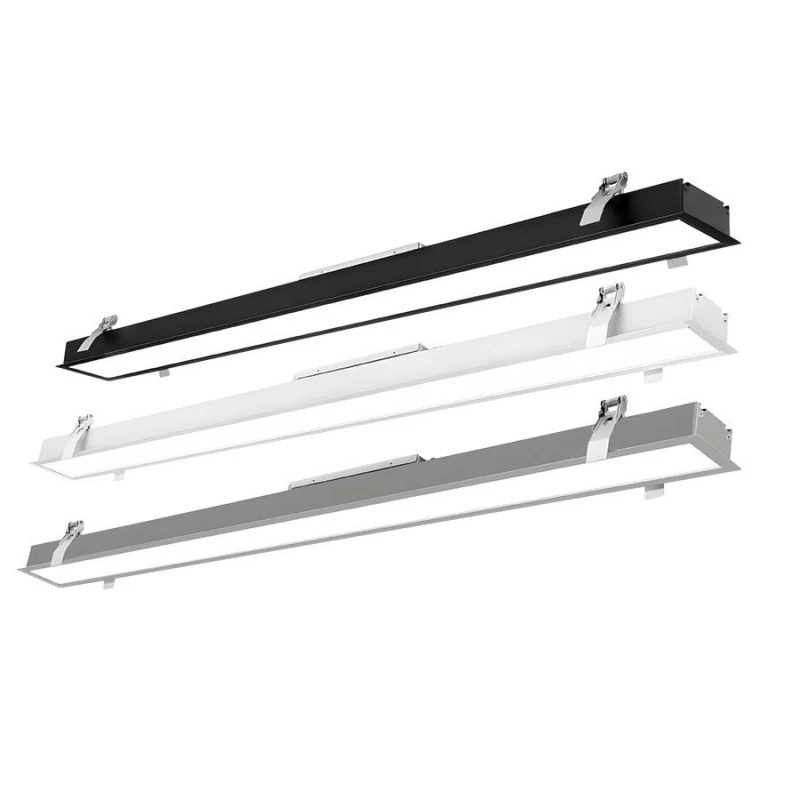
Recessed: The fixture is embedded into a dropped ceiling or a pre-cut channel, with only the light-emitting surface exposed.
This relationship dictates everything that follows: the required ceiling height, whether openings need to be pre-cut into the ceiling, the direction of the light, and how to access the fixture for maintenance or repairs.
Suspended: Ideal for spaces with generous ceiling height that require a strong visual statement
The defining characteristic of suspended linear lighting is its "presence." A long, continuous strip of light hanging in the air acts as a distinct visual line within the space. Suitable Scenarios:
Offices, shopping malls, and exhibition halls with ceiling heights exceeding 3 meters.
Above open-plan workstations or conference tables.
Restaurants, cafés, and other spaces where creating a specific ambiance is desired.
Advantages:
The height of the fixture can be adjusted via suspension cables, bringing the light source closer to the work surface.
Many suspended models provide both upward and downward illumination; by lighting the ceiling, the space feels more open and less oppressive.
The fixtures themselves serve as decorative elements, eliminating the need for additional, purely ornamental lighting.
Considerations:
In spaces with ceiling heights below 2.7 meters, suspended fixtures may create a sense of confinement or even pose a risk of head bumps.
The ceiling must have sufficient load-bearing capacity; weight calculations are essential, especially when long suspension cables are used.
Surface-Mounted: Ideal for spaces with limited ceiling height or where cutting into the ceiling (recessing) is not feasible.
Surface mounting is the most "straightforward" of the three methods: no suspension cables or ceiling cutouts are required-simply secure the fixture and connect the wiring.
Suitable Scenarios:
Corridors, warehouses, or underground parking garages with relatively low ceilings.
Concrete ceilings or renovations of older buildings where installing a dropped ceiling is impractical.
Projects with tight schedules or strict budget constraints.
Advantages:
Simple installation process with minimal requirements for the ceiling structure.
Does not occupy space within a dropped ceiling, making future replacements easy.
The fixture sits flush against the ceiling, preserving overhead clearance.
Considerations:
Since the fixture remains visible, its appearance should harmonize with the overall style of the space.
With surface-mounted fixtures, light is directed primarily downward, which can create a sharp contrast in brightness against the ceiling surface.
Recessed: Ideal for achieving a clean, uncluttered ceiling where the presence of the lighting fixtures is minimized.
The core concept behind recessed lighting is "seeing the light, but not the fixture"-ensuring a tidy ceiling appearance by seamlessly integrating the lighting into the architecture. Suitable Applications:
Offices, hotels, and residences with existing gypsum board or mineral fiber ceiling systems.
Spaces requiring a high degree of visual tidiness, such as retail stores and art galleries.
Designs that require light strips to be flush with the ceiling, creating a continuous line of light.
Advantages:
Maintains a seamless ceiling surface for a clean visual appearance.
Incorporates anti-glare features, effectively reducing discomfort when looking directly at the light source.
Ideal for creating long, continuous light strips that offer a cohesive, unified look.
Considerations:
Opening dimensions and locations must be determined prior to construction; modifications afterward are costly.
Sufficient installation depth and heat dissipation space are required within the ceiling plenum.
Maintenance often necessitates removing the fixture from below the ceiling; access for servicing should be planned in advance.
Differences in Light Effects by Installation Method
The same light fixture can produce significantly different lighting experiences depending on how it is installed.
Suspended: Fixtures are positioned closer to the work surface, making it easier to achieve target illuminance levels on tabletops with the same power output. Models with both upward and downward light emission can also illuminate the ceiling, creating a more open and airy sense of space.
Surface-mounted: Light is directed primarily downward, providing even coverage; however, the ceiling may remain relatively dark, which can sometimes make a space feel "oppressive" or enclosed.
Recessed: Light is focused downward, making glare control critical. Opting for models with deep anti-glare structures or prismatic diffusers significantly enhances visual comfort.
In short: suspended lighting is superior for adding spatial depth; recessed lighting is ideal for a clean, sharp aesthetic; and surface-mounted lighting is a reliable, versatile choice.
Considerations for Connectable Lighting Systems Across Installation Methods
"Connectable" systems allow fixtures to be joined end-to-end to form long, continuous lines; however, the specific connection details vary by installation method.
Suspended: The spacing of suspension points must be carefully considered-typically, each segment requires at least two suspension points to prevent sagging or swaying over long spans.
Surface-mounted: The mounting surface must be perfectly flat; otherwise, the joints between segments may develop visible gaps or misalignments.
Recessed: The dimensions of the recessed channel (slot) must be precise. Minimizing the gap between connected segments ensures a more seamless, continuous line of light. Regardless of the installation method, always calculate the maximum length of lighting fixtures that can be supported by a single circuit beforehand. This prevents issues such as a drop in brightness at the end of the run or exceeding the power supply's load capacity.
Summary
None of these three methods is inherently better than the others; the best choice depends on the specific conditions of your space:
For high ceilings and a design-forward aesthetic: choose pendant mounting.
For low ceilings, or when you prefer a simple, reliable solution: choose surface mounting.
For spaces with a suspended ceiling, where a clean, concealed look is desired: choose recessed mounting.
Before making a selection, consider these three factors: the ceiling height, the structure of the ceiling, and how you envision the fixtures appearing within the space. Once these points are clear, the right choice will become apparent.
Need advice on selecting the right fixtures? Feel free to contact us.
Unsure which installation method is best for your project? Based on your space dimensions, ceiling height, ceiling type, and lighting requirements, we can provide a tailored selection of linear lighting solutions, as well as assist with calculating connection lengths and layout configurations. Please send us your project drawings or requirements; we will respond within 24 hours and can provide samples and price quotes.
https://www.benweilight.com/linear-lighting/4-foot-8-foot-linkable-led-linear-lights-for.html