Can Barn Lighting Really Increase Milk Yield?
1. Why Do Dairy Cows Need "Specialised Lighting"? – Light Has a Direct Impact on Milk Production
Many ranchers feel that if a barn is getting some light it is fine if it is a little brighter or dimmer, it doesn't matter much. But it has been demonstrated by modern animal science that the length of daylight, its intensity and spectrum have a direct effect on the endocrine system, feeding behaviour, reproductive performance and milk yield of the dairy cow.
The main mechanism is the regulation of melatonin and prolactin:
- Not enough light → more melatonin secretion → less prolactin → less milk production
- Proper light → melatonin suppression → prolactin secretion enhancement → increased milk yield
Research data suggest that a 16 hours light + 8 hours dark photoperiod can improve milk yield by 5-15% and improve reproductive performance. Therefore, the large-scale dairy farms are paying more and more attention to the scientific design of barn lighting.
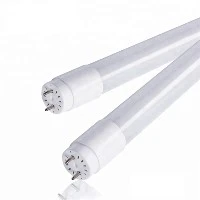
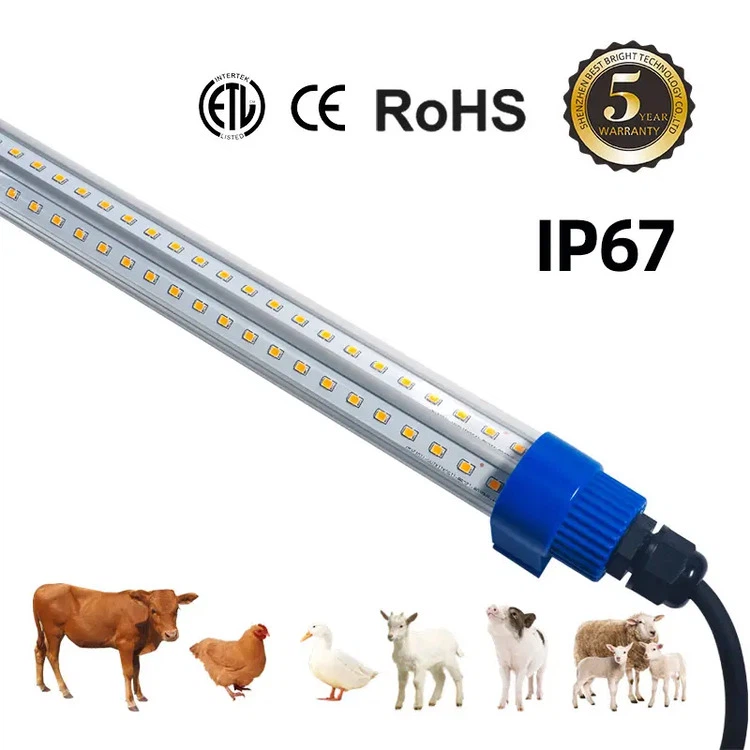
The Benwei LED tube for barn is specially designed for the physiological needs of dairy cows and the harsh barn environment. We outline its benefits across five major dimensions below.
2. Light Intensity: Not "The Brighter The Better" – It Has To Fit The Comfort Zone Of The Cow
Barn lighting should not simply chase "bright as day". Too bright light stresses the cows, makes them restless, and can even cause eye discomfort. Too dark light affects feeding and personnel management.
According to domestic and international animal husbandry lighting guidelines, recommended illuminance levels are:
| Area | Recommended Illuminance (Lux) | Purpose |
|---|---|---|
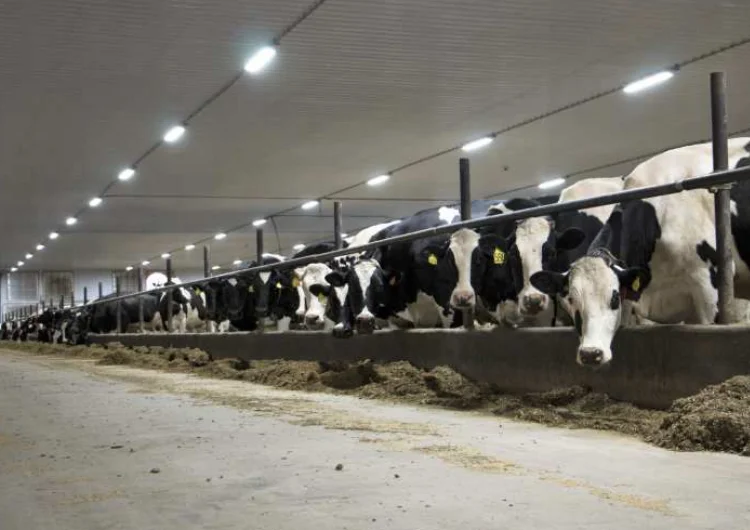
| Feeding alley | 150‑200 | Promote feeding, easy feed observation |
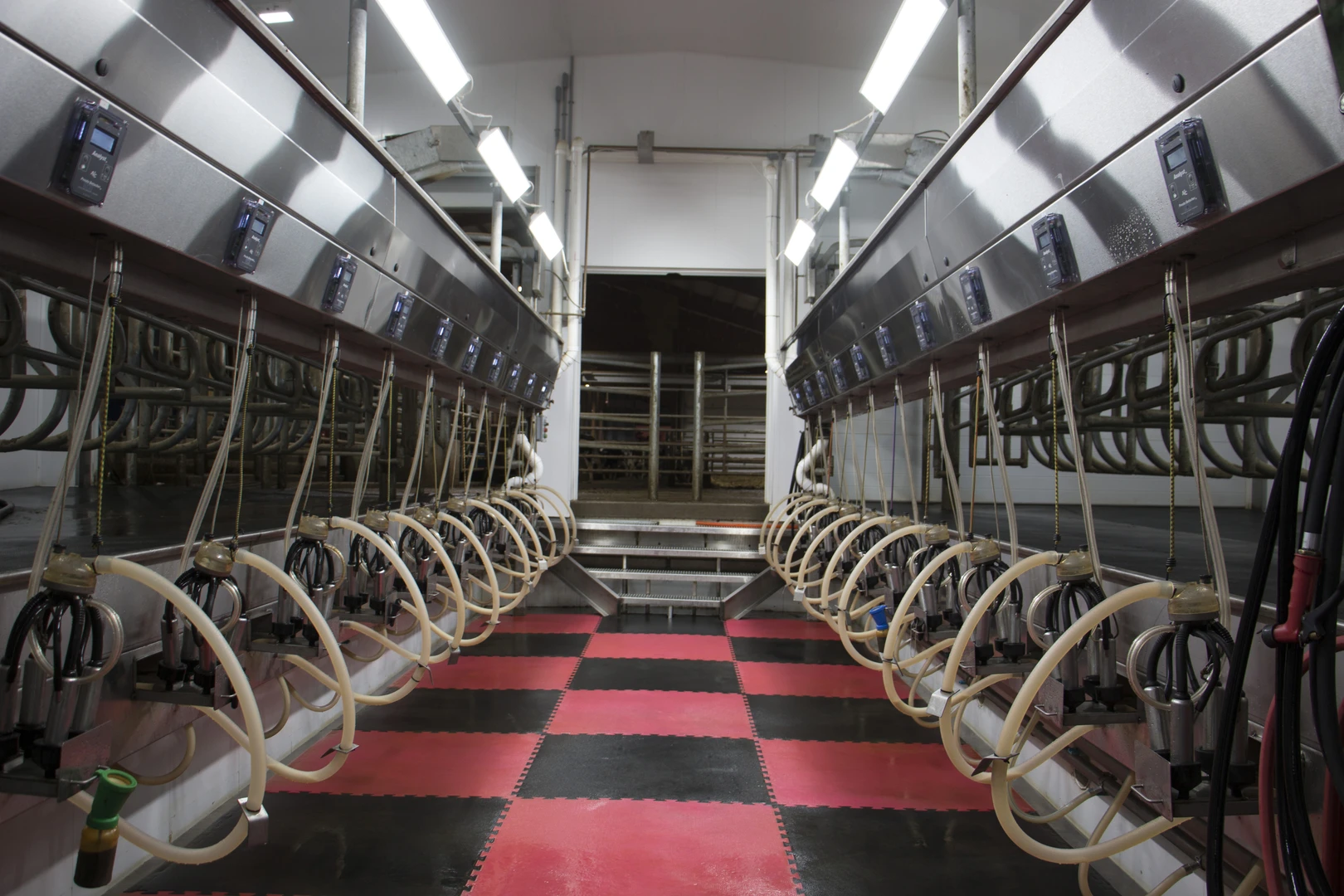
| Milking parlour | 200‑300 | Clear view of udder, equipment operation |
| Resting area (cubicles) | 50‑100 | Do not disturb rest, still allow monitoring |
| Calving / treatment area | 100‑150 | Facilitate inspection and assistance |
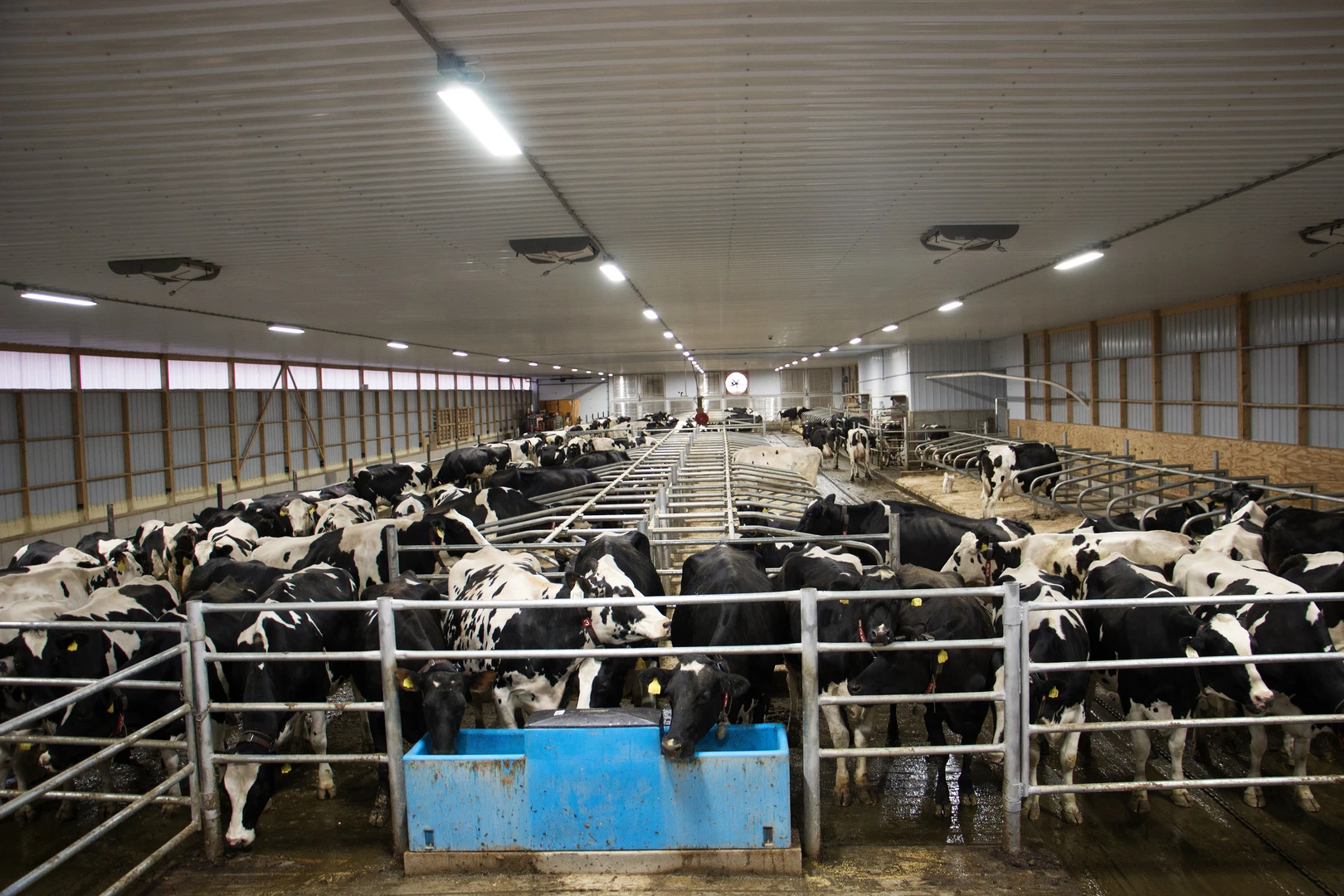
Benwei barn tube adopts high-efficacy LED chips + professional optical lenses, so that the uniform ground illuminance is 150-200Lux at the mounting height of 3-5 meters, without dark spots and glare. With a dimmable driver, the brightness can be flexibly adjusted according to day/night or production stage, imitating natural light changes.
3. Spectrum Design: Why Is Warm White Better for Dairy Cows?
Ordinary white LEDs (6500K cool white) contain a large amount of blue light, which is too "harsh" for cows and may disturb their circadian rhythm. In contrast, 3000K‑4000K warm white or neutral white light is closer to natural light around sunrise/sunset, making cows feel calm and comfortable.
The Benwei barn tube offers 3000K / 4000K / 5000K options, with 4000K neutral white recommended:
- CRI Ra≥80 – easy to observe body condition, faeces, and udder health
- Moderate blue light content – does not interfere with the natural melatonin rhythm
- Visually comfortable – reduces cow stress
Moreover, high CRI is especially important in the milking parlour – clearly distinguishing teat colour, swelling or injury helps detect mastitis and other diseases early.
4. Waterproof, Dustproof, Corrosion‑Resistant: The Three "Killers" in a Barn Environment
Inside a barn, the following are present year‑round:
- Corrosive gases such as ammonia and hydrogen sulphide (from manure decomposition)
- High‑pressure water washing (daily cleaning)
- Dust, feed residues
- High humidity, condensation
Under such conditions, ordinary LED tubes within a few months will:
- Rust on the housing, yellowing of the diffuser
- Corrosion and short‑circuiting of the driver
- Accelerated lumen depreciation, greatly shortened life
The Benwei barn tube has IP65 or IP67 waterproof/dustproof rating (depending on model):
- Fully sealed structure, potted driver
- Corrosion‑resistant aluminium alloy housing + PC anti‑glare cover
- Withstands direct high‑pressure water washing and ammonia attack
This means: install once and no frequent replacement for 5 years, greatly reducing maintenance costs and safety hazards.
5. Anti‑Glare and Uniform Light Distribution: Keeping Cows at Ease
Cows are very sensitive to sudden light spots and direct strong light – they can be startled and bump into things. Therefore barn lighting must achieve:
- No direct glare – the light fixture should have a diffuser or lens to prevent chips from shining directly into cow eyes
- Uniform illuminance – no alternating bright/dark patches along the alley (no "zebra effect")
The Benwei tube uses a frosted PC cover + 120° wide‑angle optics , producing a soft, diffused light and a uniform light patch on the floor. It can also be installed in continuous runs (tubes connected end‑to‑end) to eliminate shadow areas, giving cows a consistent light environment anywhere in the barn.
6. Energy Saving & Long Life: Key to Reducing Farm Operating Costs
Barn lighting typically runs 16+ hours per day (to match the photoperiod). Electricity is a significant expense. Compared to traditional fluorescent or halogen lamps, LED tubes save 60‑70% energy.
The Benwei barn tube:
- Efficacy >130 lm/W – a 1.2m (4ft) tube consumes only 18W yet delivers brightness equivalent to a 40W fluorescent tube
- Lifespan 50,000 hours – 5‑year warranty
- Optional smart sensing: auto‑dimming according to natural light or group control for further energy savings
For a 500‑cow dairy farm, replacing all barn lighting with Benwei LED tubes can save thousands to tens of thousands of yuan per year in electricity, while also reducing labour costs for lamp replacement.
7. Summary: Good Lighting = Healthier, Higher‑Yielding Cows
Barn lighting is not a trivial matter. A scientific lighting solution can:
✅ Increase milk yield by 5‑15%
✅ Improve reproductive performance
✅ Reduce disease incidence (better observation conditions)
✅ Reduce stress and improve animal welfare
✅ Save energy and reduce maintenance costs
The Benwei barn‑specific LED tube is designed for farms across five dimensions: illuminance, spectrum, ingress protection, anti‑glare, and lifespan. If you are building a new barn or retrofitting an existing one, this lamp deserves a place on your procurement list.