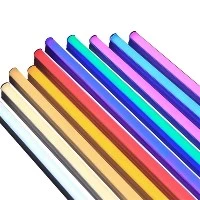
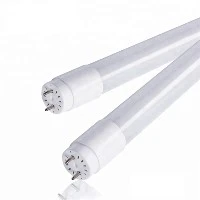
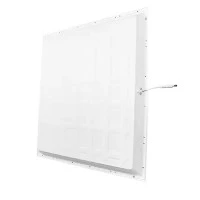
Color‑Changing LED Panel Light with Remote: What's the Essential Difference from a Standard Panel Light?
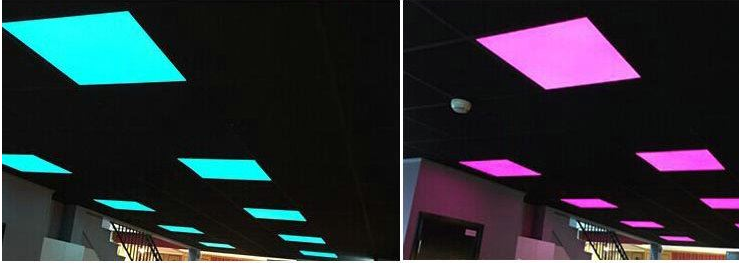
Press a button on a remote control, and the LED panel light on your ceiling instantly switches from a neutral 4000K white to a soft warm yellow. Press another button, and it turns into a romantic lavender purple. Scenes like this are appearing more and more often in modern homes, boutique hotels, and trendy shops. This is not science fiction – it is a fast‑growing new type of lighting product: the remote‑controlled RGBCW color‑changing LED panel light.
So, what is the real difference between this product and the common standard LED panel light? Is a color‑changing light just a "decorative toy that happens to glow"? How does it work? And what practical value does it offer for commercial spaces and homes? This article will systematically answer these questions from four dimensions: the technical principle of RGBCW color‑changing panels, parameter comparisons, application value, and market trends.
1. RGBCW Color‑Changing vs. Standard LED Panel Lights: Technical Comparison
To understand the difference, you first need to understand the underlying technology of color‑changing panel lights.
1.1 Classification of Technology Solutions
LED panel lights on the market can be divided into the following categories based on their color control capability:
- Fixed CCT LED panel light – Emits white light at a single color temperature (e.g., 4000K), not changeable.
- CCT‑tunable panel light – Can adjust white light color temperature over a range (e.g., 2700K–6500K), but cannot produce colored light.
- RGB panel light – Can produce various colors by mixing red, green, and blue, but white light quality is poor (mixed white light is bluish and has low CRI).
- RGBW panel light – Adds a fixed‑CCT white chip (e.g., 3000K or 6000K) to the RGB channels. Can produce both colors and white light, but white CCT is not adjustable.
- RGBCW panel light – Adds two independent white‑light chips: warm white (WW, ~2700K–3000K) and cool white (CW, ~6000K–6500K) to the RGB channels, for a total of five independently controlled channels. This enables full‑color changing + steplessly adjustable white CCT in one fixture.
RGBCW is currently the most complete technical solution for color‑changing panel lights. It can mix any color through the three RGB channels, and independently adjust the white light CCT (smoothly from 2700K to 6500K) through the WW and CW channels – achieving a perfect unity of "color lighting" and "functional lighting." Benwei's remote‑controlled color‑changing panel light adopts this RGBCW solution.
1.2 Core Parameter Comparison: RGBCW Color‑Changing vs. Standard LED Panel vs. Traditional Fluorescent Troffer
To clearly show the essential differences, we compare Benwei's 600×600mm RGBCW color‑changing panel light (30W) with a standard fixed‑CCT LED panel light (4000K, 30W) and a traditional fluorescent troffer.
| Parameter | Traditional 2×2 Fluorescent Troffer (4×T8 tubes) | Standard LED Panel Light (fixed CCT) | Benwei RGBCW Color‑Changing LED Panel Light |
|---|---|---|---|
| Rated Power | 144–216W | 30–40W | 30W / 40W (multiple options) |
| Chip Type | Phosphor‑coated glass tube | Single‑CCT white LED | SMD 2835 RGBW 4‑in‑1 chip |
| Color Tuning Capability | Not adjustable | Not adjustable | ✓ Full RGB color changing + 2700–6500K stepless white CCT tuning |
| White Light CRI | Ra 60–70 | Ra ≥ 80 | Ra ≥ 80 |
| Rated Lifetime | 8,000–15,000 hours | 50,000 hours | 80,000 hours |
| Control Method | Mechanical switch | Mechanical switch / wall switch | Wireless remote (brightness / color / mode – full control) |
| Preset Scene Modes | None | None | 20+ static colors + multiple dynamic effects (fade, strobe, flow, etc.) |
| Color Consistency (SDCM) | - | < 3 | < 3 |
| UGR (Unified Glare Rating) | ≥ 22 | ≤ 19 | ≤ 19 (meets comfort lighting standards) |
| Power Factor (PF) | 0.5–0.6 | ≥ 0.95 | ≥ 0.95 |
| Flicker | Significant (100Hz) | Flicker‑free | Flicker‑free |
| Operating Temperature | 0°C – 40°C | -20°C – 50°C | -20°C – 50°C |
| Energy Saving vs. Fluorescent | Baseline | ~75% saving | ~80% saving |
| Dimensions | 2×2 ft (600×600mm) | 600×600mm | 600×600mm / 300×300mm / 300×1200mm (multiple sizes) |
| Mounting | Recessed in grid ceiling | Grid ceiling / surface / suspended | Surface mount on ceiling or wall – easy installation |
1.3 Deep Dive into Key Parameters
① 80,000 hours lifetime – 60% longer than standard LED panel lights
Standard LED panel lights typically have a rated lifetime of 50,000 hours. Benwei's RGBCW color‑changing panel light achieves 80,000 hours. At 8 hours of use per day, that is more than 27 years of continuous operation. Even in commercial environments with 12 hours of daily use, it guarantees over 18 years of stable operation. Compared to fluorescent troffers that need lamp replacement every year, 80,000 hours means virtually zero maintenance costs over the product's lifespan.
② 80% energy saving – payback period less than one year
Compared to a traditional fluorescent troffer (e.g., 4×36W = 144W), a 30W RGBCW panel light saves about 80% of electricity. With 10 hours of daily use and $0.12/kWh:
- Fluorescent annual consumption: 144W × 10h × 365 ÷ 1000 ≈ 525.6 kWh → annual cost ~$63.
- Color‑changing panel annual consumption: 30W × 10h × 365 ÷ 1000 ≈ 109.5 kWh → annual cost ~$13.
- Annual electricity saving: ~$50 – and the purchase cost of the color‑changing panel is similar to or even lower than a fluorescent troffer, so the payback period is typically less than one year.
③ Why RGBCW is the "best solution"
Compared to early RGB solutions, the core advantage of RGBCW is white light purity and tunability. White light produced by mixing RGB has low efficacy (three channels of power) and poor CRI, with a bluish, cold cast – completely unsuitable for daily functional lighting. RGBW adds a fixed‑CCT white chip (e.g., 3000K), giving pure white light, but the white CCT is fixed and cannot be adjusted for different scenes.
RGBCW adds both warm white (~2700K–3000K) and cool white (~6000K–6500K) chips to the RGB channels – five independently controlled channels. This allows it to:
- Emit pure, high‑CRI white light (Ra ≥ 80) for functional tasks like office work and study.
- Steplessly adjust white CCT from 2700K to 6500K, covering the full range from "morning sunshine" to "noon daylight."
- Switch to pure white mode independently of the RGB channels, without sacrificing white light brightness or efficiency.
2. RGBCW Color‑Changing vs. Standard Panel Light: Which Is Better for Your Space?
Different spaces have very different lighting needs. A fixed‑CCT white panel provides stable, efficient functional lighting, but cannot meet the demands of atmosphere creation or scene switching. An RGBCW color‑changing panel, however, delivers both "functional lighting" and "mood lighting" in a single product.
Key Difference 1: Functional vs. Experiential
- Standard LED panel light: Single function – fixed‑CCT white light only. Suitable for spaces with no need for color variation, such as warehouses, corridors, and industrial workshops.
- RGBCW color‑changing panel light: Multi‑function – switch between pure white lighting mode and full‑color mood mode with one button. Suitable for spaces where experience and atmosphere matter, such as boutique hotels, cafés, trendy shops, and private homes.
Key Difference 2: Fixed CCT vs. Full‑range Tunable CCT
- Standard LED panel light: Fixed CCT (e.g., 4000K). Cannot adjust light warmth or coolness according to time of day, season, or activity type.
- RGBCW color‑changing panel light: Tunable CCT from 2700K warm yellow to 6500K cool white, with smooth stepless adjustment. Use cooler 5000K in the morning to boost alertness, then switch to warmer 3000K in the evening for a relaxing atmosphere – one fixture meets all daily lighting needs.
Key Difference 3: No Scene Modes vs. Multiple Preset Scenes
- Standard LED panel light: No scene memory. Each on/off cycle produces the same single light state.
- RGBCW color‑changing panel light: Store and recall multiple preset scenes via the remote control (e.g., "Reading Mode," "Party Mode," "Night Light Mode," "Movie Mode") – truly "one‑button atmosphere switching." Supports stepless brightness adjustment and independent color selection, covering everything from functional lighting to entertainment mood lighting.
Key Difference 4: Fixed Size vs. Multiple Size Options
Standard 2×2 panel lights are only available in 600×600mm. Benwei's RGBCW color‑changing panel light comes in 600×600mm, 300×300mm, and 300×1200mm sizes, meeting installation needs from recessed grid ceilings to surface‑mounted ceilings, and from standard office cubicles to narrow corridors.
Key Difference 5: No Rewiring + Wireless Remote
Traditional color‑changing solutions often require complex wall wiring, dimmers, and multiple switches – making retrofits difficult. Benwei's RGBCW panel light comes with a supplied wireless remote control – no changes to existing wiring, just install and use. Effortlessly switch between full‑scene light colors.
Key Difference 6: Ultra‑Long Life + Professional Engineering Quality
The RGBCW panel light is not just a "home ambiance light." It is a professional lighting product with 80,000‑hour life, high CRI (Ra≥80), flicker‑free operation, and UGR<19 low glare – fully suitable for demanding commercial buildings and bidding projects.

3. From Basic Illumination to Smart Light Environment: Who Is the Real Star?
The value of the RGBCW color‑changing panel light goes far beyond "being able to change colors." Driven by trends in smart lighting and Human Centric Lighting (HCL), it is evolving from a "color‑changing decoration" into a core node connecting lighting control and spatial design.
| Application Scenario | Standard LED Panel Light Suitability | RGBCW Color‑Changing Panel Light Suitability | Added Value of RGBCW |
|---|---|---|---|
| Open‑plan office | ★★★★☆ (basic illumination) | ★★★★★ | Cool white in morning boosts focus; transitional light in afternoon reduces fatigue |
| Hotel / Boutique guesthouse | ★★☆☆☆ (monotonous) | ★★★★★ | One‑button switch between welcome mode / sleep mode / romantic mode for different room types or times |
| Retail store / Shop | ★★★☆☆ (basic) | ★★★★★ | Dynamically adjust light colors to match seasons, holidays, or promotions – attract customers and increase dwell time |
| Restaurant / Café | ★★☆☆☆ (harsh light) | ★★★★★ | 4000K at lunch for true food colors; 2700K in evening for warm, cozy atmosphere |
| School classroom | ★★★★☆ (functional) | ★★★☆☆ (some customization needed) | Cool white for lectures, warm white for self‑study, gradual transition light during breaks |
| Hospital / Treatment area | ★★★★☆ (standard) | ★★☆☆☆ (limited need for color) | Warm white in patient rooms helps soothe mood, but colored light has limited use |
| Home / Living room | ★★★☆☆ (basic) | ★★★★★ | Reading → warm, low‑level light; movie → colored side light; guests → 4500K bright light |
| KTV / Bar / Entertainment venue | ★☆☆☆☆ (unsuitable) | ★★★★★ | Dynamic color‑changing + music sync for immersive entertainment experience |
| Exhibition hall / Gallery | ★★★☆☆ (basic) | ★★★★☆ | Switch accent CCT according to exhibit type; note: need CRI ≥ 90 for art |
The table shows that the greatest replacement value of RGBCW over single‑CCT panel lights is in spaces where user experience, atmosphere creation, and emotional response are critical – and that is exactly the core growth area in commercial and high‑end residential renovation today.
4. Global Market Trends and Outlook for Color‑Changing Panel Lights
Color‑changing panel lights are not a niche "decorative fixture"; they are a fast‑growing global market.
According to QYResearch's "Global Color‑Changing Light Panel Sales Market Report":
- The global market size for color-changing light panels was approximately US$3.314 billion in 2024 and is projected to grow to US$4.51 billion by 2031, with a compound annual growth rate (CAGR) of approximately 4.5%.
Looking at the broader LED panel light market:
- The LED panel light market reached US$27.44 billion in 2025 and is projected to grow to US$59.14 billion by 2032, representing a CAGR of approximately 11.59%.
Key drivers of this rapid growth include:
- Smart lighting & IoT integration – Color‑changing panels are upgrading from passive light sources to "smart building terminals" with embedded sensors and wireless control.
- Rise of Human Centric Lighting – Tunable‑CCT white light helps regulate circadian rhythms, improving productivity and well‑being.
- Demand for "experience upgrades" in commercial spaces – Retail, hospitality, and food & beverage industries are creating differentiation through dynamic light environments to attract and retain customers.
- Continued cost reduction of LED technology – The cost of multi‑channel RGBCW controllers keeps falling, shortening payback periods and accelerating adoption.
5. Conclusion and Selection Guide: When Should You Choose an RGBCW Color‑Changing Panel Light?
RGBCW color‑changing panel lights and standard LED panel lights are not "replacements" for each other – they serve different needs. Use the following checklist to guide your purchasing decision.
| Question | If "Yes" → Choose RGBCW Color‑Changing | If "No" → Standard Panel is Enough |
|---|---|---|
| Does the space need to create multiple scenes and moods? | Cafés, boutique hotels, trendy shops, KTVs, private clubs, high‑end homes | Warehouses, corridors, equipment rooms, industrial workshops, standard offices |
| Do users need to change light color/mode depending on activity? | Home – reading, movie, dining, party – multiple scene needs | Single consistent need (e.g., 24‑hour production workshop) |
| Is day/night or seasonal CCT adjustment desired? | Yes – cool white in morning for alertness, warm white in evening for relaxation | No – lighting only needed for basic visibility |
| Do you want to attract customers or increase dwell time through light color? | Retail stores, mall entrances, brand showrooms – color is part of marketing | Pure functional spaces like stairwells or equipment rooms |
| Can the project budget handle a slightly higher equipment cost for long‑term scene flexibility? | The premium for color‑changing is far less than its experiential value – worth the investment | Extremely tight budget, lowest initial purchase price is the only priority |
Final advice:
- Function‑first spaces (warehouses, workshops, equipment rooms, corridors) – Standard high‑efficacy LED panel lights offer better value and shorter payback periods.
- Experience‑driven spaces (hotel rooms, boutique shops, restaurants, KTVs, high‑end homes) – RGBCW color‑changing panel lights are the best one‑stop choice. One fixture, one installation, one price – delivers both "tunable‑CCT white lighting" and "full‑color mood lighting" that would otherwise require two separate systems. It makes lighting solutions simpler, more efficient, and more valuable.
Lighting is no longer just "infrastructure to see by" – it is becoming a core design element that defines spatial emotion, shapes brand impression, and enhances user experience. The RGBCW remote‑controlled color‑changing LED panel light is one of the most noteworthy products in this lighting transformation.

If you are still unsure which panel light solution to choose for your project, or would like to learn more about RGBCW color‑changing panel light samples and pricing, please feel free to contact us. We will provide one‑on‑one selection advice and lighting design based on your actual application scenario, mounting requirements, and usage needs. Click the online message form or visit our website to start your lighting upgrade journey – from "illuminating a space" to "defining its emotion."
✨Contact✨
🙋♀️Harriet
📫Email: bwzm88@benweilighting.com
📞Whatsapp: +8613007285242