Back-Lit vs. Edge-Lit: How to Make the Right Choice?
When purchasing LED panel lights, buyers and project contractors often face a critical technical crossroads: Edge-Lit or Back-Lit (Direct-Lit)? Both technologies can provide a uniform surface light source, but there are fundamental differences in luminous efficacy, lifespan, thickness, reliability, and long-term cost of ownership. Making the wrong choice could mean dealing with a yellowed light guide plate, severe lumen depreciation, and skyrocketing maintenance costs just two or three years later. The right choice, however, will deliver a truly "install-and-forget-for-a-decade" energy-saving retrofit.
This article will thoroughly explain the differences between Back-Lit and Edge-Lit LED panel lights from four dimensions – technical principles, core parameters, real test data, and application scenarios – to help you make a scientific and cost-effective decision.
1. Technical Principle Comparison: The Light Path Determines the Outcome
1.1 Edge-Lit Panel Lights
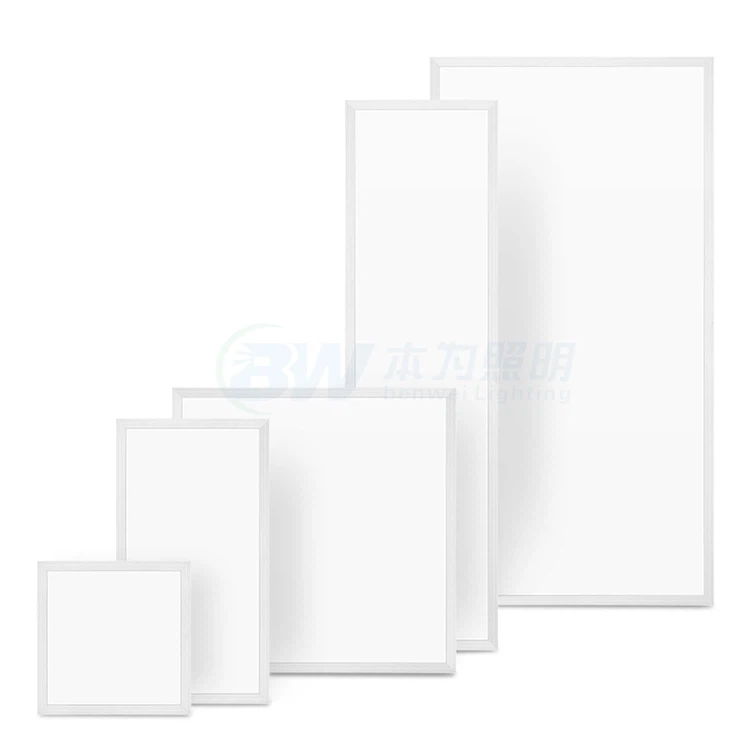
In an Edge-Lit panel light, the LED chips are mounted only on the four sides of the frame. Light enters a Light Guide Plate (LGP) from the edges. The bottom of the LGP features precisely designed laser dots or printed dots. Using the principle of total internal reflection, the horizontally traveling light is gradually refracted downward, then softened and directed through a diffuser sheet and brightness enhancement films (BEF) to finally form a uniform illumination surface.
- Key components: LED strips (on the frame) + Light Guide Plate (LGP) + Diffuser + Reflective film + BEF.
- Advantages: Extremely thin (typically 12–15mm), sleek appearance, suitable for ultra-thin recessed or surface-mounted installations.
- Disadvantages: Long optical path, significant light loss; the LGP is prone to yellowing over time due to heat and UV exposure; more components mean more potential failure points.
1.2 Back-Lit (Direct-Lit) Panel Lights
In a Back-Lit panel light, LED chips are evenly distributed across the entire back of the panel. Light shines directly downward and is homogenized by a high-haze diffuser. No Light Guide Plate (No LGP) is required.
- Key components: LED array (full surface) + Diffuser (optionally with micro‑lenses).
- Advantages: Higher luminous efficacy (no LPG absorption loss); no yellowing risk (no LGP at all); uniform heat dissipation, longer life; simpler construction, lower cost; maintains high luminous flux even at higher power levels.
- Disadvantages: Slightly thicker (typically 25–35mm), which may be a consideration for ultra‑thin mounting environments.
One‑sentence summary: Edge‑Lit pursues "thinness," while Back‑Lit pursues "stability."
2. Core Parameter Comparison: Let the Data Speak
To clearly show the real differences between the two technologies, we compare the typical measured parameters of Edge‑Lit and Back‑Lit 2×2 ft (600×600mm) panel lights from mainstream brands (e.g., Benwei). The data are derived from product specifications and third‑party LM‑79 test reports.
| Parameter | Edge‑Lit LED Panel Light | Back‑Lit (Direct‑Lit) LED Panel Light |
|---|---|---|
| Typical Power (2×2 ft) | 36–48W | 36–48W |
| System Luminous Efficacy (lm/W) | 90–110 lm/W | 140–160 lm/W |
| Total Luminous Flux (40W typical) | ~3,600–4,400 lm | ~5,600–6,400 lm |
| Thickness | 12–15 mm | 25–35 mm |
| Light Guide Plate (LGP) Used? | Yes (PMMA) | No (No LGP) |
| Long‑term Yellowing Risk | Yes (may occur after 2–3 years) | None (completely eliminated) |
| Uniformity (U0) | ≥ 0.8 | ≥ 0.8 (equally good) |
| Color Rendering Index (CRI) | Ra ≥ 80 | Ra ≥ 80 (up to 90+ available) |
| UGR (Unified Glare Rating) | ≤ 19 | ≤ 19 (some models ≤ 16) |
| Heat Dissipation Structure | Frame heat sink (heat concentrated on the edges) | Full backplate heat sink (heat evenly distributed) |
| Number of LED Chips | Fewer (40–80 chips) | More (120–200 chips) |
| Rated Lifetime | 30,000–40,000 hours | ≥ 50,000 hours |
| Lumen Maintenance after 3 years | ~70%–80% (affected by yellowing) | ≥ 90% (LM‑80 projection) |
| Unit Price (same power) | Slightly higher (precision LGP process) | Slightly lower (simplified construction) |
| Compatible Mounting Types | Recessed, surface‑mounted, suspended | Mainly for T‑bar grid ceilings |
Key Data Interpretation
① Efficacy gap of more than 40%
At 40W, an Edge‑Lit panel delivers about 4,000 lm, while a Back‑Lit panel delivers over 6,000 lm. This means that to achieve the same target illuminance, Back‑Lit allows you to use fewer fixtures or lower power – reducing both initial procurement cost and long‑term electricity bills.
② Yellowing: the "hidden killer" of Edge‑Lit panels
The light guide plate (usually PMMA) in Edge‑Lit panels is constantly exposed to heat and blue‑light radiation from the LED chips, leading to polymer chain breakage and oxidation. The result is visibly yellowing in the center or across the panel. Once yellowing occurs, the luminous efficacy, color temperature, and CRI all degrade severely, and the damage is irreversible – the entire fixture must be replaced. Back‑Lit panels, having no LGP at all, have zero risk of yellowing.
③ Lifetime and lumen maintenance differences
In Back‑Lit panels, the LED chips are evenly distributed across the backplate, and heat is quickly dissipated by the large aluminum backplate, so each chip operates at a lower junction temperature. In Edge‑Lit panels, dozens of LED chips are densely packed on the narrow frame, resulting in a small heat dissipation area, high heat flux density, higher junction temperatures, and accelerated lumen depreciation. LM‑80 data show that Back‑Lit design can extend the L70 lifetime (time to 70% of initial lumens) by more than 30%.
3. Application Scenario Selection Guide: Which Technology Fits Your Project?
No technology is absolutely "best" – only "most suitable." The following table gives clear recommendations for the most common lighting design scenarios.
| Application Scenario | Recommended Technology | Reason | Notes |
|---|---|---|---|
| Office / Open‑plan office | Back‑Lit | Used 8–10 hours daily; needs long life, high efficacy, low maintenance. Back‑Lit has no yellowing risk, high lumen maintenance – truly 5–10 years maintenance‑free. | Thickness within 30mm fits standard grid ceilings – thickness is not an issue. |
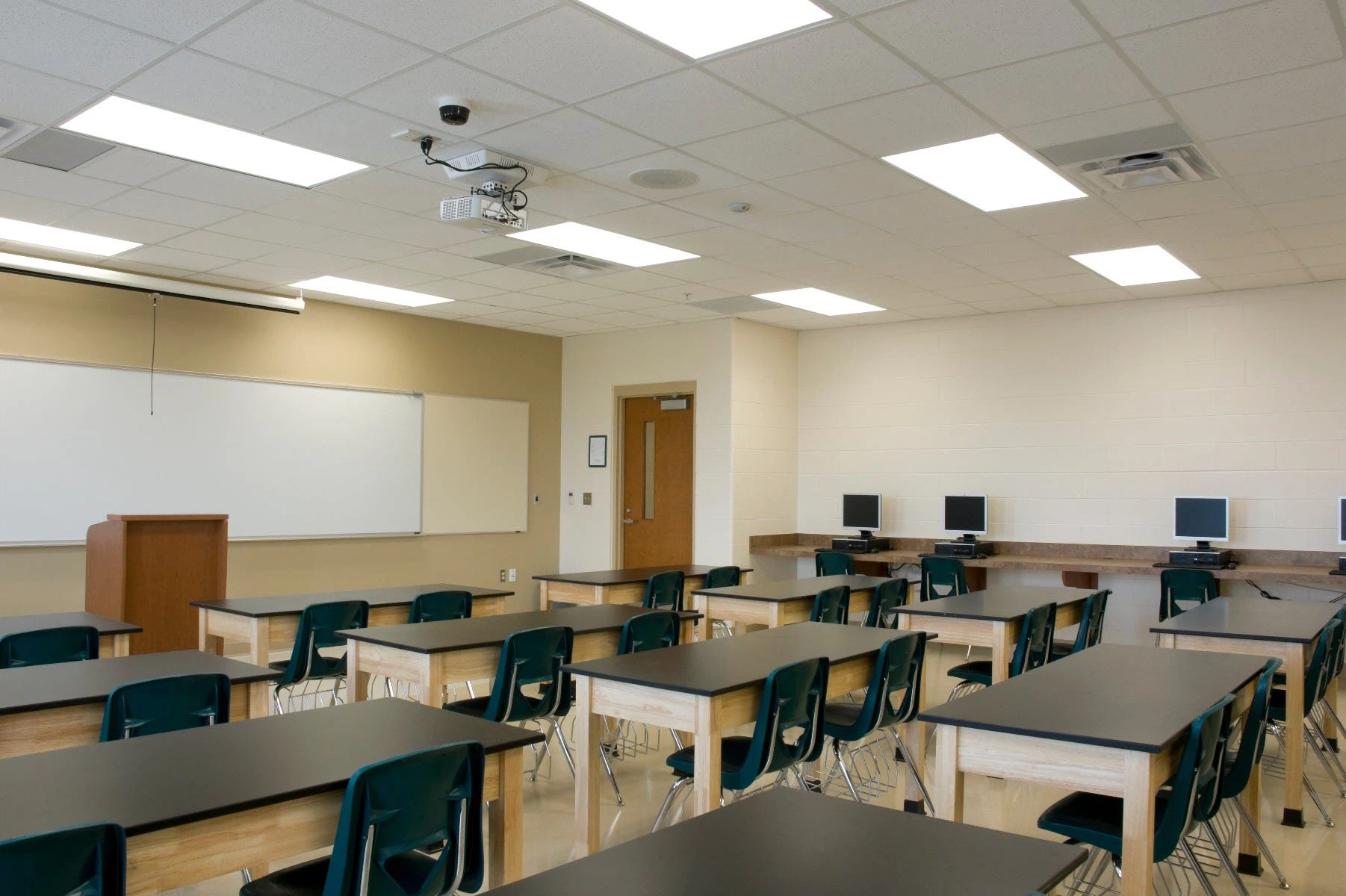
| School classrooms | Back‑Lit | Extremely long hours of use, high requirements for color stability and flicker‑free operation. Back‑Lit is more reliable and avoids color temperature drift caused by LGP yellowing. | Recommend Back‑Lit with UGR ≤ 16 to further reduce glare. |
| Hospitals / Clean rooms | Back‑Lit | Medical environments demand long‑term color consistency and high CRI. Yellowing would severely affect color judgment in diagnostic areas and must be avoided. | Choose Back‑Lit version with CRI ≥ 90. |
| Retail stores / Showrooms | Edge‑Lit (if aesthetics are top priority) or Back‑Lit (if cost‑priority) | If the design requires a ultra‑thin profile (e.g., ≤15mm) flush with the ceiling, Edge‑Lit is the only option. If ceiling plenum depth >30mm, Back‑Lit offers better value. | Note: Retail stores run 12–14 hours/day, which accelerates yellowing in Edge‑Lit panels. |
| Hotel lobbies / High‑end residences | Edge‑Lit | Pursuing extreme thinness (10–12mm) and refined appearance – Edge‑Lit achieves a high‑end "see the light, not the fixture" look. | Choose premium Edge‑Lit with UV‑resistant PC light guide plate or anti‑UV additives to delay yellowing. |
| Warehouses / Workshops / Underground garages | Back‑Lit | Thickness is irrelevant; durability, efficacy, and maintenance cost are critical. Back‑Lit's high efficacy and long life are major advantages. | Use 48W high‑lumen version to reduce the number of fixtures. |
| Government / School bidding projects | Back‑Lit | More and more tender documents (e.g., India CPWD standard, US DLC requirements) explicitly require efficacy ≥130 lm/W and lifetime ≥50,000 hours – which Back‑Lit meets as standard. Edge‑Lit often fails to meet these thresholds. | Check tender documents for "No LGP" or efficacy threshold clauses. |
4.Common Misconceptions Clarified
Misconception 1: "Edge‑Lit is brighter than Back‑Lit."
Reality: Quite the opposite. Due to absorption and scattering losses in the light guide plate, Edge‑Lit system efficacy is typically 30–40 lm/W lower than Back‑Lit. At the same power, Back‑Lit is significantly brighter.
Misconception 2: "Edge‑Lit has the same lifetime."
Reality: Because of LGP yellowing and poor frame heat dissipation, the actual useful life (the period during which light quality remains acceptable) of Edge‑Lit panels is often 30%–50% shorter than Back‑Lit. Many Edge‑Lit panels show obvious yellowing and lumen depreciation after just 2–3 years.
Misconception 3: "Back‑Lit is too thick to fit in a grid ceiling."
Reality: Standard T‑bar grid ceilings typically have a depth of 50–80mm. A Back‑Lit panel with 30mm thickness can be recessed without protruding below the ceiling plane. Only when the design requires a thickness below 15mm for a minimalist look is Edge‑Lit necessary.
Misconception 4: "Edge‑Lit is more energy efficient."
Reality: To achieve the same illuminance, Edge‑Lit requires higher power or more fixtures to match the luminous flux output of Back‑Lit. Therefore, Back‑Lit has an advantage in both initial cost and operating electricity cost.
6. Conclusion and Recommendations
| Comparison Dimension | Edge‑Lit | Back‑Lit (Direct‑Lit) |
|---|---|---|
| Core Technology | Light Guide Plate + frame LED strips | Full‑surface LED array + diffuser |
| Biggest Advantage | Ultra‑thin (12–15mm) | High efficacy (140–160 lm/W), no yellowing, long life |
| Biggest Disadvantage | Lower efficacy, prone to yellowing, poor heat dissipation | Slightly thicker (25–35mm) |
| Best for | Space‑constrained high‑end decorative applications | Offices, education, healthcare, retail, industrial – most general applications |
| Long‑term Cost | Higher (shorter replacement cycle) | Lower (long maintenance‑free period) |
Final advice:
- Prioritize Back‑Lit unless the installation space has a strict thickness limit (<20mm). Back‑Lit is superior in efficacy, lifespan, reliability, and long‑term cost – it is the first choice for commercial lighting retrofits and new projects.
- If Edge‑Lit is unavoidable, choose a high‑quality version with UV‑resistant, yellowing‑resistant PC light guide plate and enhanced heat dissipation (e.g., thickened frame heatsink). Ask the supplier for LM‑80 reports and yellowing test data to maximize the delay of performance degradation.
In the LED panel light category, "thinness" is a visual aesthetic, but "stability" – high efficacy, no yellowing, long life – is the true measure of excellence. We hope this comparative analysis and data support will help you make the right, cost‑effective decision for your next lighting project.