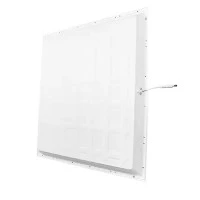
An LED panel light: what is it?
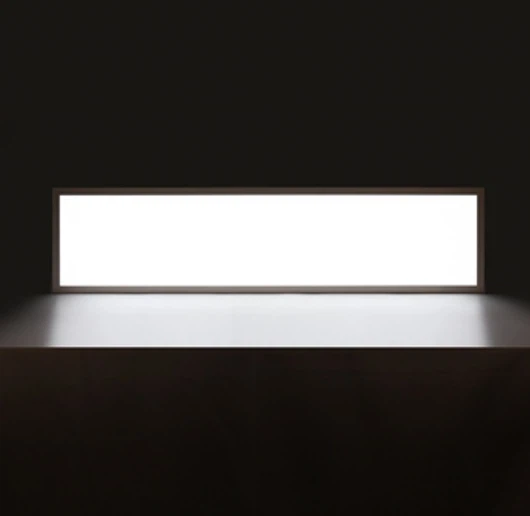
An expensive type of indoor lighting fixture is an LED panel light. To create a consistent plane bright effect, light travels through the light guide plate with a high transmittance. These lights can be readily placed on a variety of surfaces by matching various accessories (clips, surface-attached frame, or steel ropes), which makes them appropriate for a variety of applications.
Components of an LED panel light:
Aluminum panel light frame
A flat panel light's frame is a crucial component, and a strong frame increases the panel light's longevity. The LED panel light's lateral frame is made of a variety of materials, each of which has a unique capacity to dissipate heat. Aluminum alloy, steel, PC, A6063, aluminum-plastic, steel, and other materials currently make up the majority of panel light frame materials.
There are two types of aluminum frames: splicing frames and welding frames. The most popular type is the aluminum frame (small panel light, with a plastic casing). Compared to the splicing frame, the welding frame will be more expensive and stronger. Depending on the style, the basic frame comes with a flat frame or a step frame, and the cost will vary. Additionally, the frame's weight will have an impact on the cost.
LED lighting source
The light effect will be influenced by the type, brand, and quantity of LED chips, and the price will also be influenced by the luminous flux.
Panel lights frequently use SMD2835 and SMD4014 chips; our top picks are Lumileds (previously Philips), Samsung, Hongli, and Sanan. Because the optical lens scatters the lamp beads' light, a direct-lit panel light often requires a lot less lamp beads than a side-emitting panel light.
Guide plate for LED lights
For edge-emitting panel lights, the light guide plate is necessary. It guides light through the light-transmitting plate by refracting it from parallel to perpendicular. The light is directed to the rear of the panel light through reflection through a reflective paper. Dot design and plate selection (transmittance), often PMMA, MAS, or PS, with various costs, determine efficiency.
Long-term use will cause PS and MAS to turn yellow. MAS will likely last three years, whereas PS will likely last two. It also relies on the local climate. In general, hotter locations will create it. There will be less fading time. PMMA light guide plates are essentially utilized if you desire a 5-year warranty or greater light efficiency. Most companies utilize light guide plates that are between 1.6-3.0 mm in thickness, and the thicker the plate, the more expensive it is.
LED diffuser
In addition to distributing the light from the light guide plate uniformly, the diffuser plate can also be used to blur the dots. The primary materials utilized include acrylic, PS (polystyrene plastic), PP (polypropylene plastic), PC (polycarbonate plastic), etc. PS and PP are utilized more frequently, and the price ranges from high to low.
Acrylic, PC, and PS have light transmittances of 92%, 88%, and around 80%, respectively. Acrylic is more affordable and has a higher light transmittance, but it ages less well. In contrast, PC is more expensive but has superior anti-aging capabilities. Manufacturers differ in diffuser plate thickness; standard options range from 0.8 mm to 1.2 mm and are more expensive. Compared to side light-emitting varieties, direct light-emitting panel lights require a larger diffuser intensity, which frequently necessitates a broader design.
Paper for Reflection
To increase light efficiency, reflect the remaining light onto the back of the light guide plate (usually RW250).
Rear cover
The iron back cover, which is the most widely used, varies in thickness, weight, and strength. In contrast to the side-emitting panel light, the direct-lit panel light has a different design, a thicker rear cover, and a direct-type back cover that will be spray-coated and colored for improved reflection.
LED power source
The brand, voltage, isolation (isolation is safer), non-isolation, stroboscopic (it will affect whether the light of the lamp is stroboscopic when taking pictures under the mobile phone), functional requirements (like dimming and color grading), and certification requirements will all affect the quality and cost of the LED panel light power supply.
Installation components
To install and fix accessories, mounting brackets, suspension wires, and other components are utilized.

Which kinds of panel lights are available?
Different LED panel light styles and types are frequently chosen for different locations. The following categories apply to LED panel lights:
Considering the illumination
In order to produce the best light mixing effect, an LED back-lit panel light is constructed with an appropriate LED spacing using the LED light-emitting angle, diffuser plate, and lamp height. The typical grille light panel is being replaced with high brightness, high light efficiency products with 595*595 specs that can exceed 4000lm. thicker, typically greater than 45 mm. The brightness uniformity can exceed 0.9, and the light output is comparatively uniform. The requirements for the process are rather straightforward.
Light guide plate technology, which is used by side-emitting panel lights, is made with dots that line up with the placement of LED chips to provide consistent brightness. They have a thin profile (≤15mm), lesser brightness (often less than 3000lm for 595*595 specifications), and are appropriate for areas with low ceilings. If not handled carefully, they could display uneven surfaces and brightness changes (up to 0.85). High standards of cleanliness must be maintained in installation settings to avoid dust-related problems that lower yield rates.
From an installation perspective
LED panel light that is recessed. The market demand is highest for this panel light, which is the most basic and traditional. It complements the building and is primarily mounted on the ceiling.
LED panel light installed on the surface. It can be installed in locations like the top of a cement ceiling where drilling holes is difficult. Typically, independent surface-mounted conversion frames are utilized with conventional side-emitting panel lights. An integrated surface-mounted lamp body is an option for the back-illuminated panel light.
LED panel light installed on a suspension. The panel light can be installed as a hanging wire using a wire hanging rope.
Third.
From practical decisions
LED panel light that may be dimmed. It is mostly compatible with dimming LED drivers; when the LED panel light's driver is switched to a dimming LED driver, the LED panel light can also dim. Triac dimmable, 0/1-10V dimmable, and DALI dimmable LED panel lights are the three traditional dimming options.
To keep moisture out of the interior of the lamp body, it often uses a unique lamp construction, adds a waterproof rubber ring, and has a watertight outlet connector and power supply. IP44, IP54, IP65, and IP68 are typically used for waterproof LED panel lights. Typically appropriate for certain locations like restrooms, labs, restrooms, etc.
What is the mechanism of the LED panel light?
Positive and side-emitting LED panel lights differ structurally and in terms of how they generate light.
How edge-lit LED panel lights operate
The frame, diffuser plate, light guiding plate, light bar, reflective film, rear plate, and other parts are its principal parts. The light from the LED chips enters the interior of the light guide plate from the light-emitting surface, strikes the light guide plate's reflective point, departs downward, and is radiated from the lamp's light-emitting surface. The majority of the light from the LED chips is transformed into illuminating light by reflecting back any light that does not reach the reflective point through the reflective layer. One crucial factor in evaluating the side-emitting panel light's quality is the light guide plate's quality.
The principle of operation of back-lit panel lights
A frame, a diffuser plate, and a light bar-which may contain an aluminum substrate, lamp beads, a lens, a rear cover, etc.-are the primary components of a direct type (back-lit) panel light.
The lens scatters the light from the LED chips, which are then reflected off the back cover and released from the lamp's light-emitting surface. It is directly lighted and does not require the light guide plate to refractive aid.
Use of LED Panels
Because of their effectiveness, adaptability, and visual appeal, LED panel lights have emerged as a flexible lighting option for a range of environments. They are mostly utilized in:
ceiling (instead of the grille lights that were originally there);
walls (both for artistic expression and for lighting purposes);
decorations (aiming for a convenient and easy installation that combines art and functionality);
Others (may also be utilized in other locations, like counters, railroad boxes, or big mobile cars)
LED panel lights are found practically everywhere in our daily lives, including in important locations such as offices, commercial spaces, parking garages, educational institutions, healthcare facilities, and residential spaces.
What are the typical issues with panel light quality?
There are patches of darkness near the panel lights
Side-emitting panel lights typically experience this problem due to insufficient light guiding plate thickness. Kindly swap out the thicker light guide plates, like the 2.0T and 3.0T models.
Around the panel light frame, a yellow light appears
Because the distance between the light guide plate and the side lamp beads is too close during production, this also frequently happens with side-emitting panel lights. It is necessary to modify the distance between the lamp beads and the light guidance plate. Naturally, there's a chance that the LED lamp bead itself has a quality issue and needs to be replaced with a better one.
Ripples in the water appear
In order to cut costs, certain low-end suppliers frequently employ foam reflective film, which will distort when heated for an extended period of time. The reflective film in side-emitting panel lights is typically composed of PE material. causing ripples in the water to occur.
Flickering LED panel lights
The following are the primary causes of flickering: 1. The power source isn't working properly; 2. 3. The lamp bead's power and current parameters are not met by the power supply. There is damage to the lamp bead.

How should a ceiling panel light be selected?
You must comprehend the following crucial panel light parameters in order to select the best LED panel lights:
Panel lights can be backlit or edge-lit. The cost of the positive light-emitting panel is lower than that of the side light, and it has a high lighting efficiency and no yellowing risk. While low-end side-emitting panel lights frequently feature fading and dead areas, high-end side-emitting panel lights are typically more expensive and appropriate for usage in upscale settings. Therefore, purchasing positive-emitting panel lights is advised.
Panel lights come in the following basic sizes: 1200 x 300 mm, 300 x 300 mm, 300 x 600 mm, and 600 x 1200 mm. 9W, 12W, 18W, 21W, 22W, 24W, 36W, 48W, 72W, 85W, and 90W of power. Small, low-power panel lights are suitable for general home lighting in areas like living rooms, study spaces, kitchens, and restrooms.
For instance, the general power is roughly 10W for 3–8 square meters with 300*300 specs. 300*600 dimensions, 8–15 square meters, and a general power of 18–20 W are all possible.
Larger spaces are frequently found in commercial lighting settings, and larger LED light panels-such as 2x2 or 4x1 or 4x2-can produce greater brightness.
Lumens: The more energy-efficient a project is and the fewer bulbs are needed, the higher the luminous efficacy output. With the help of LED technology, panel lights can now maintain an actual output of at least 100 lm/W and up to 170 lm/W.
Power Factor: LED lights use only 1/10 the energy of incandescent lights and 1/4 that of energy-saving bulbs. The maximum power factor is 1, the service life can exceed 100,000 hours, and the utilization rate is at its highest when the load is fully resistive and the power transmission only has active power-no reactive power.
The LED driver determines the power factor of LED lights. Currently, approved LED drivers often have an efficiency of more than 85%. In actuality, lower wattage LED lights of 3W, 5W, 7W, 9W, 12W, and 15W power are typically unaffected. Large wattage will have a larger power factor, and the factor needs are high, typically between 0.5-0.65. Many people believe that a power source is more efficient if its power factor is higher. Naturally, the higher the power factor, the better under the same wattage.
UGR: Glare can cause nausea, discomfort, or even blindness because it produces a dazzling sensation in the visual field that the human eye cannot adjust to. extreme brightness variations before and after, or excessive brightness in a specific area of the field of view. One of the main causes of optical tiredness is glare. The LED panel light will be more comfortable if the glare value is reduced. Anti-glare LED panel lights with UGR<19 or below are typically required for certain particular locations, including school classrooms.
Lifespan: If the LED panel light is utilized 12 hours a day, it should last 11 years because the LED light has a potential lifespan of at least 50,000 hours. The longer durability, the more money can be saved.
Led driver brand: Based on our years of manufacturing and sales experience, the LED driver has a significant impact on how long an LED panel light lasts. Low-end LED drivers (usually non-isolated drivers) are frequently used in subpar LED panel lights. Brand driver > regular isolated driver > non-isolated driver in terms of quality. The isolation strategy is typically used by high-end LED panel light drivers. Try to utilize high-end brand drivers if the price is within your budget.
How are LED panel lights installed?
LED panel lights that are recessed
Offices, stores, kitchens, toilets, etc. frequently use this installation technique. Additionally, it is the most used installation technique. Remove the ceiling first, then place the LED panel light driver next to it, attach the power cord, and install it. There are plenty panel lights, and it's not too difficult to install.
LED light suspension flat panel
First, you must get a set of steel ropes ready. Use steel ropes to suspend the lighting from the ceiling. First, attach the four hanging wire bases to the roof lighting fixture. Next, attach the four hanging wires to the LED panel light, attach the driving power line, and pull the wire to change the panel light's height. The installation process is more adaptable.
LED panel light installed on the surface
Attach three sides of the frame to the proof using screws, then plug in the LED driver, place the LED light panels inside the frames, and screw the final frame in place.
Installation of clips
These are often clip-led ceiling panel lights that resemble recessed LED downlights. The installation process is thereafter the same.
Market for LED Panel Lights
The market for LED panel lights is expanding globally.
In 2024, the global market for LED panel lights was valued at USD 26.8 billion. It is anticipated to increase at a 9.04% CAGR from 2025 to 2033, reaching USD 60.7 billion.
As Dimmable LED panel lights become the industry standard for energy-efficient, aesthetically pleasing, and adaptable interior lighting, these numbers show a strong, ongoing rising trend.
Drivers of market growth
Energy Efficiency & Regulation: Two major global drivers are stringent regulations and the rising need for energy-efficient lighting.
Technological Advancements: Panel light is attractive due to innovations including thin designs, smart lighting integration (Wi-Fi, sensors), greater color rendering, and durability.
Infrastructure and Urbanization: The quick growth of institutional, commercial, residential, and industrial areas drives enormous demand.



Our address
No. 5-3 Niujiao Road, Yanchuan Community, Yanluo Street, Bao'an District, Shenzhen
Phone Number
+8618659785153
hello@yourdomain.com