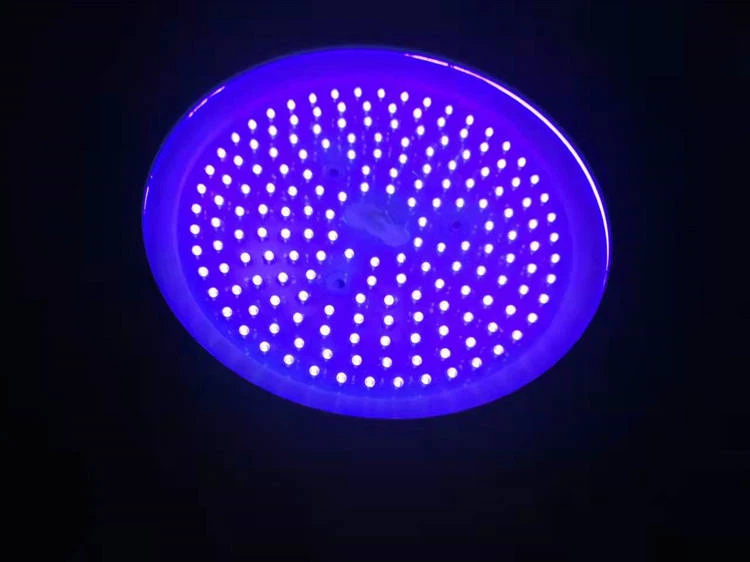
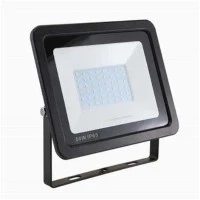
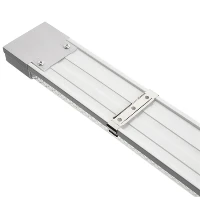
Deep-UV LEDs attracting attention about water disinfection
Industry leader in the UV light sector, offering high-output products that are the driving force for industry expansion
The high-power Deep-UV LEDs that BENWEI has developed have garnered a significant amount of attention, particularly in the field of hygiene.
BENWEI was able to obtain the maximum output power in the industry, which was 50 mW, emitting at 265 nm, which is the ideal wavelength for disinfecting water.
This is due to the further increased possibilities of spreading Deep-UV light applications to equipment such as water purification systems. These possibilities have arisen as a result of recent advancements in technology.
The company's goal is to achieve an even higher light output by maximising the utilisation of technologies, materials, and processes that have been developed over the course of many years in conjunction with visible light LEDs and IREDs. Their plan is to quicken the pace at which a new market for deep-UV LEDs is established.
An LED that emits light in the wavelength range known as "UV-C" (100 to 280 nanometers) is referred to as a Deep-UV LED. At this time, there is a heightened level of activity on the development of deep-UV LEDs. This is because there has been a rapid rise in the demand for Deep-UV LEDs as an alternative device to replace mercury lamps, which have traditionally been the primary light sources utilised for UV light application equipment such as sterilisation equipment. The reason for this is that mercury lamps have a relatively short lifespan.
When compared to mercury lamps, deep-UV LEDs have a number of advantages that mercury lamps do not, including their compact size, high efficiency, and absence of a warm-up period. For this reason, as a general perspective in the field of UV lighting, mercury lamps will eventually replace LEDs in a transition that will occur naturally. While producers of LED devices are concentrating on speeding up the development of Deep-UV LEDs, new entrants from other industries, such as makers of materials and precise pumps, are entering the market one after the other.
In this scenario, BENWEI is one of the LED manufacturers that is demonstrating a strong presence. "Since the very beginning of our company, we have been diligently working on light technologies. Beginning in the 2010s, we began developing LEDs, and since then, we have amassed a vast amount of technologies and know-how pertaining to LEDs."
BENWEI's Deep-UV LEDs offer the most strong light output among the products available in the 265 nm wavelength category, which is now the most promising application for water disinfection. BENWEI is the number one provider of the highly requested 265 nm wavelength. "Whereas chlorine disinfection is inefficient, the wavelength that is effective for sterilisation of pathogenic germs ("Cryptosporidium") in water is 265 nanometers. In some water treatment facilities in Europe and the United States, mercury lamp sterilisation systems are already in use. These facilities were ahead of the curve. It has only very recently been implemented at water purification plants in Japan. The applications of small and medium type water sterilisation systems are driving the initial Deep-UV LED market, and in the future, the replacement of light sources on large scale water sterilisation systems (such as water purifying facilities) is to be predicted.
When it comes to replacing mercury lamps with deep-UV LEDs, the most difficult obstacle to overcome is light output, which is where the market is putting its attention. In point of fact, deep-UV LEDs provide a significant number of benefits over traditional mercury lamps; nevertheless, their output is significantly lower at the moment. The light output of mercury lamps is often 1 W or more, however the quantity of light output produced by Deep-UV LEDs is only in the hundreds of mW range; the value is therefore off by a digit. As the development of technology continues to advance and production improves, new applications continue to expand as mercury lamps are being phased out. Because of its world-class high output, the Deep-UV LED offered by Stanley Electric has garnered the attention of those working in the UV industry.
The firm is primarily focusing on two main initiatives in order to build Deep-UV LED mass production technology with superior characteristics ahead of schedule. Both initiatives are countermeasures to technological challenges that are specific to Deep-UV LEDs and that inhibit high output.
Features:
● High Wattage uv led light are similar in size and shape to conventional germicidal UV lamps but are capable of operating at higher UV output.
● High Wattage uv led light are widely used in forced air duct systems and water disinfection applications.
● High Wattage uv led light are often found in odor control and photochemical applications.
● Available in Low Ozone and Ozone Producing versions.
Specification:
| Product Name: | High power uv led light |
| Wattage: | 20-40W |
| Color Temperature(CCT): | 365-415nm |
| Type: | UV LED |
| Lifespan (hours): | 30000 |
| Luminous Intensity: | 5000-20000mW |
| Viewing Angle(°): | 60/90 |
| Storage Temperature(℃): | -45 - 85 |
| Input Voltage(V): | 9-15 |
| Application: |
● Photocatalyst ● purification ● Horticulture ● Endoscopy ● Machine Vision ● Scientific Instrumentation |