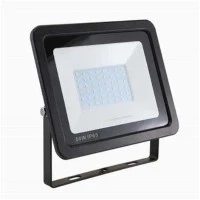
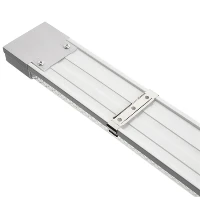
IP20, IP65, and IP67 are Ingress Protection (IP) ratings defined by the international standard IEC 60529. They indicate how well an enclosure protects against solid objects/dust (first digit) and water/liquids (second digit). Higher numbers generally mean stronger protection, but the ratings are not strictly hierarchical for water-jet resistance (IP65) and immersion resistance (IP67) are tested differently.
Quick Breakdown
| Rating | Solids/Dust Protection | Water/Liquid Protection | Typical Meaning |
|---|---|---|---|
| IP20 | 2: Protected against objects >12.5 mm (e.g., fingers) | 0: No special water protection | Finger-safe only; for dry indoor use |
| IP65 | 6: Dust-tight (no dust ingress) | 5: Protected against low-pressure water jets from any direction (e.g., 6.3 mm nozzle, ~12.5 L/min) | Dust-tight + rain/spray/hose-resistant |
| IP67 | 6: Dust-tight (no dust ingress) | 7: Protected against temporary immersion (up to 1 m depth for 30 minutes in still water) | Dust-tight + short-term submersion-resistant |
Important notes:
IP65 is water-resistant (jets/rain), not fully waterproof against immersion.
IP67 handles temporary immersion but is not automatically rated for powerful water jets (IP65/IP66 tests). Some products carry dual ratings such as IP65/IP67 if both tests are passed.
Neither is suitable for continuous long-term submersion (that requires IP68, with manufacturer-specified depth/time) or high-pressure hot water jets (IP69K).
How to Choose
Select based on the actual environmental risks, not just the highest number:
Choose IP20 when:
The device is indoors in a clean, dry location (offices, homes, enclosed cabinets, indoor electronics, PC power supplies, indoor LED strips in dry spaces).
No exposure to dust, rain, splashes, or humidity that could cause condensation.
Cost and size matter, and basic finger protection is enough for safety.
Choose IP65 when:
Outdoor or semi-outdoor use with rain, splashing, or occasional low-pressure hose-down is expected (outdoor cameras, junction boxes, wall-mounted lights, LED strips under eaves or in covered areas, industrial enclosures that get sprayed).
Full dust protection is needed, but the device will not be submerged or sit in standing water.
This is the most common practical outdoor rating for many lighting, security, and enclosure applications.
Choose IP67 when:
There is a real risk of temporary flooding, puddles, ground-level mounting, or accidental short-term immersion (outdoor connectors, rugged phones/devices, in-ground lights, equipment near flood-prone areas, marine splash zones with possible brief submersion).
Dust-tight protection plus immersion tolerance is required.
Note: For heavy rain + hose cleaning without immersion risk, IP65 or IP66 is often more relevant than pure IP67.
Practical Selection Tips
Assess the worst-case exposure: rain only → IP65 often suffices; possible standing water/flooding → IP67; indoor dry → IP20.
Consider installation height and orientation (ground-level or recessed fixtures benefit more from IP67).
Check for dual ratings if both jet and immersion protection are needed.
IP rating is only one factor-also evaluate UV resistance, corrosion protection, temperature range, and sealing quality (gaskets, cable glands).
Local electrical codes or industry standards may specify minimum ratings for certain zones (e.g., bathrooms, outdoor, food processing).
IP20 for dry indoor, IP65 for most outdoor/wet-but-not-submerged, and IP67 when temporary immersion is a realistic risk. Match the rating to the environment rather than defaulting to the highest number. you can see more information on http://www.benweilight.com