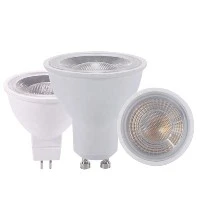
In our years of exporting lighting products, we are asked the same question by clients almost every month: Do GU10 bulbs require a transformer or a separate driver? The people asking are usually contractors or designers new to spotlight projects, or retailers stocking up for the first time. The answer is actually simple, but there are a few common pitfalls to avoid. This article explains everything clearly so you can refer to it directly when selecting products or preparing quotes.
The Bottom Line: GU10 Bulbs Do Not Need an External Transformer
GU10 bulbs connect directly to mains voltage; they do not require an external transformer or a separately installed external driver. Whether it is a halogen or LED GU10, simply twisting the bulb into the socket and connecting it to the mains power makes it light up.
Why GU10 Bulbs Don't Need a Transformer
GU10 refers to a specific base type designed for mains voltage (line voltage) operation. The two pins on the base are spaced 10mm apart and secure via a twist-and-lock mechanism-which is exactly how the name "GU10" originated.
They were originally designed for 110V–240V AC mains power, so the socket connects directly to the mains supply. Since the function of a transformer is to step down mains voltage to low voltage-and GU10 bulbs do not require voltage reduction-this component is unnecessary.
The LED GU10 "Driver" Is Built Into the Bulb
LED chips require stable, low-voltage DC power, regardless of the bulb's base type. Therefore, LED GU10 bulbs contain an internal driver circuit responsible for converting mains power into the current required by the LED. This driver is integrated into the bulb's housing or base, so it is invisible to the user and requires no separate installation.
This has a practical implication: the quality of the driver directly determines the bulb's lifespan, flicker performance, and power factor. When comparing two 5W GU10 bulbs from different manufacturers, the difference often lies in this small internal circuit.
Don't confuse GU10 with MR16 (GU5.3)
Many people mix them up because the two types of bulbs look almost identical:
GU10: Operates on mains voltage; requires no transformer; features a twist-and-lock base.
MR16 (GU5.3): Typically low-voltage (12V); requires a transformer or low-voltage driver; features a pin-style base.
The bases are not interchangeable; you cannot force one into the other's socket. As long as you check the base type and rated voltage when selecting a bulb, you shouldn't run into issues.
Situations that lead to the mistaken belief that a transformer is needed
In actual inquiries, the following scenarios are the most common:
Retrofitting old projects: The original setup used low-voltage MR16 bulbs with a transformer in the circuit. If you want to switch to GU10, you must remove the transformer and rewire for a direct mains connection; otherwise, the bulb won't work properly and could even be damaged.
Fixtures with built-in transformers: Some light fixtures come with a transformer pre-installed in the housing. These are designed for low-voltage bulbs and are not suitable for GU10.
Misunderstanding the term "driver": When product specifications list a "Built-in Driver," many people mistakenly think they need to purchase a separate driver. In reality, it refers to the circuit board already inside the bulb.
For dimming, the driver is the key factor
In non-dimming applications, a GU10 bulb works immediately upon installation. When it comes to dimming, the impact of the driver becomes significant:
Bulbs must be labeled "Dimmable"; standard models connected to a dimmer are prone to flickering or buzzing.
Dimmer types must match (common options include leading-edge and trailing-edge phase-cut dimming), and compatibility varies across brands.
If there are too few bulbs on a single circuit-falling below the dimmer's minimum load-flickering may occur.
If your project requires dimming, we recommend testing samples with the specific dimmers to be used on-site before placing an order; this saves a great deal of trouble compared to troubleshooting issues later.
Summary
GU10 bulbs operate on mains voltage, requiring neither an external transformer nor a separate driver. The driver for the LED version is integrated into the bulb itself; the key factors to watch out for are residual transformers in existing wiring, confusion with MR16 bulbs, and dimming compatibility. By clearly verifying voltage, driver quality, and dimming specifications during the selection process, most issues can be avoided from the start.
If you are sourcing GU10 LED bulbs for a project or retail store, please feel free to contact us directly. Let us know the voltage requirements for your target market, power needs, and whether dimming is required; we will recommend suitable models and provide samples, quotations, and relevant certification documentation.
https://www.benweilight.com/lighting-tube-bulb/gu10-mr16/gu10-led-spotlight-bulb-3w-9w.html