Have You Chosen the Right LED Grow Light for Your Pitaya? - 4 Tables + 5 Q&As to Help You Increase Yield by 80%
1. Quick Check Table 1: Does Your Pitaya Need Supplemental Light?
| Indicator | Supplemental Light Needed | Supplemental Light Not Needed |
|---|---|---|
| First flowering time in spring | Later than mid‑April | Already flowering in bulk by end of March |
| Total fruiting batches per year | ≤3 batches | ≥6 batches |
| Flower buds per plant | <10 | >20 |
| Last harvest in autumn | Earlier than October | Later than November |
| Average daily light duration in greenhouse | <10 hours | ≥12 hours |
Bottom line: If you meet any two items on the left, LED supplemental lighting is recommended.
2. Quick Check Table 2: Which of the 4 LED Lights Is Best for Your Orchard?
| Lamp Code | Light Color | Dominant Wavelength (nm) | Efficacy (Lm/W) | Luminous Flux (Lm) | Flower Induction Effect | Energy Saving Rank | Recommendation |
|---|---|---|---|---|---|---|---|
| L1 | Orange | 596.1 | 99.05 | 1485.67 | ★★★★★ | 1 | ⭐⭐⭐⭐⭐ |
| L2 | Yellow‑green | 562.1 | 95.93 | 1439.01 | ★★★★☆ | 2 | ⭐⭐⭐⭐ |
| L4 | Yellow | 582.3 | 90.70 | 1360.50 | ★★★★☆ | 3 | ⭐⭐⭐ |
| L3 | Red | 699.9 | 94.64 | 851.79 | ★★★☆☆ | 4 (lower power but low flux) | ⭐⭐ |
Key takeaway: Orange light (L1 type) gives the best flower induction and energy efficiency. Red light (L3 type), though cheaper, has insufficient luminous flux and performs significantly worse.
3. Quick Check Table 3: How Much Yield Increase Can You Get? (Example: Ecuadorian Pitaya / Yellow Dragon Fruit)
| Indicator | No Supplement (CK) | L1 Supplement | Improvement |
|---|---|---|---|
| Flower buds per plant | 6.2 | 29.7 | +379% |
| Fruits per plant | 1.40 | 7.37 | +426% |
| Yield per plant (kg) | 0.54 | 2.82 | +422% |
| Yield increase rate (%) | - | 80.85% | - |
| Fruit Brix (%) | ~20.5 | 19.21–20.37 | No significant difference |
Conclusion: Supplemental light increases yield per plant from 0.54 kg to 2.82 kg - over 80% higher - without reducing sweetness.
4. Quick Check Table 4: Spring vs. Autumn Lighting Schedules
| Season | Lighting Period | Daily Schedule | Duration per Day | Extra Fruit Batches | Key Benefit |
|---|---|---|---|---|---|
| Spring | Feb 2 – Apr 15 | 18:00 – 22:00 | 4 hours | +4–5 batches | First flowering as early as March, earlier market entry |
| Autumn | Aug 15 – Oct 15 | 19:00 – 23:00 | 4 hours | +1–2 batches | Last harvest delayed to late November |
Benefit comparison: Without supplemental light, the first mass flowering in spring occurs in early May. With lighting, flowering starts in late March - over 40 days earlier, commanding 1–2 times higher prices.
5. Top 5 Grower FAQs
Q1: Will supplemental light make the fruit less sweet?
A: No. Trial data show Brix of 19.21%–20.37% with lighting vs. ~20.5% without - no significant difference. Minor variation can be managed with increased organic fertilizer.
Q2: How many hours of lighting per day are optimal?
A: The trial used 4 hours per day (18:00–22:00 in spring, 19:00–23:00 in autumn). Less is insufficient; more wastes electricity and may disturb plant rest.
Q3: What is the proper installation height and spacing?
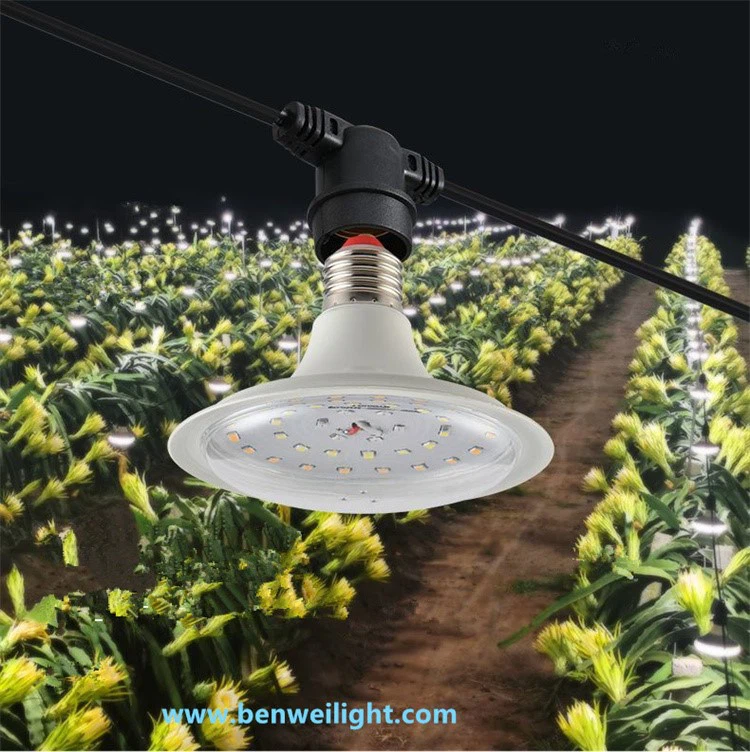
A: Hang lights 80–100 cm above the plant canopy, with 1.5 m between lights, keeping them equidistant from two rows.
Q4: Do all pitaya varieties respond the same way?
A: The trial used imported varieties such as Israel Yellow Dragon and Ecuadorian Pitaya. The conclusions apply to most red‑flesh and white‑flesh varieties, as they are all long‑day plants.
Q5: Can I use ordinary household LED bulbs?
A: No. Household LEDs are not designed for plants - their light quality (wavelength) is mismatched, and their efficacy and flux are far lower than agricultural LEDs, resulting in very poor flower induction.
6. One‑Sentence Lighting Recommendation
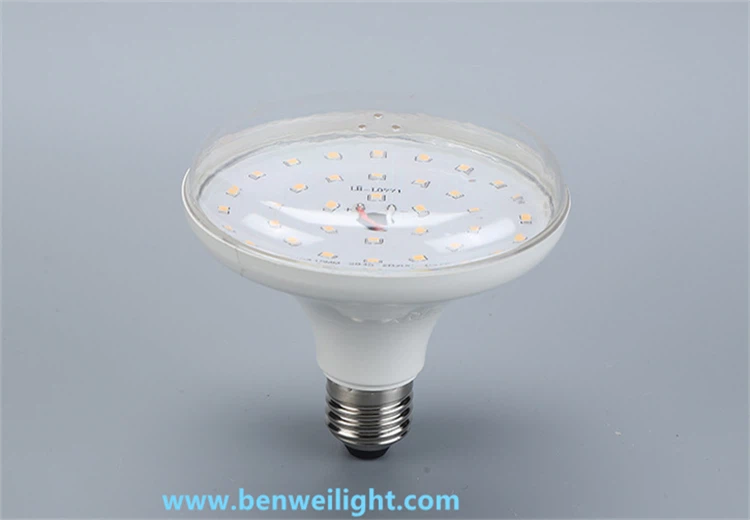
First choice: Orange‑light LED (L1 type) - dominant wavelength 590–600 nm, efficacy ≥95 Lm/W, luminous flux ≥1400 Lm.
Avoid low‑flux red LEDs (like L3) - they seem energy‑saving but give much poorer flower induction, reducing yield per plant by more than 15%.