Introduction: Thermal Loss - The Hidden Killer of LED Stadium Light Lifespan
The Operational Pain Points of Traditional High-Power Outdoor Luminaires
In large-area outdoor lighting scenarios such as stadium competitions, night sports training, and industrial park all-weather lighting, luminaires often need to maintain 8–12 hours of continuous operation every day, with long-term high-load working status. Traditional high mast lighting equipment faces two fatal defects in actual project operation. First, outdated heat dissipation structures rely on single planar heat conduction, which cannot quickly discharge concentrated heat generated by high-power LED chips and constant-current drivers. Long-term high-temperature operation causes irreversible aging of internal electronic components. Second, most ordinary LED flood lights adopt integrated closed structures, resulting in poor internal air convection. Heat accumulation forms a high-temperature microenvironment inside the lamp body, accelerating material aging and light attenuation.
For engineering project owners, the most intuitive loss caused by poor heat dissipation is frequent equipment replacement and high maintenance costs. Traditional stadium lights usually fail completely within 20,000–30,000 working hours, with lumen retention rate dropping below 60% in less than two years. Frequent high-altitude maintenance and lamp replacement not only consume a large amount of labor and material costs but also affect the normal use of venues and the stability of engineering projects, bringing invisible economic losses and operational risks.
The Core Logic: Heat Dissipation Design Determines Full Lifecycle Value
The service life and luminous efficiency of LED luminaires are essentially thermal management problems. According to LM-80 industry standard data, the junction temperature of LED chips is negatively correlated with service life. When the chip junction temperature exceeds 85°C, the lumen depreciation speed increases exponentially, and the overall service life of the luminaire will be reduced by more than 50%. For high-power LED high mast stadium lights, power ranges from 250W to 1000W, and the heat flux density per unit area is far higher than that of ordinary indoor LED lights. Without professional targeted heat dissipation design, even if high-quality LED chips and imported drivers are used, the equipment will still face premature aging and failure.
Excellent thermal management design can keep the LED chip working temperature in a safe and stable range for a long time, effectively slow down lumen attenuation, protect the driver and internal circuit system, and maximize the full lifecycle service value of the luminaire. This is also the fundamental reason why professional engineering-grade LED high mast stadium lights can achieve 50,000+ hours of long-term stable operation, completely outperforming ordinary civilian-grade flood lights.
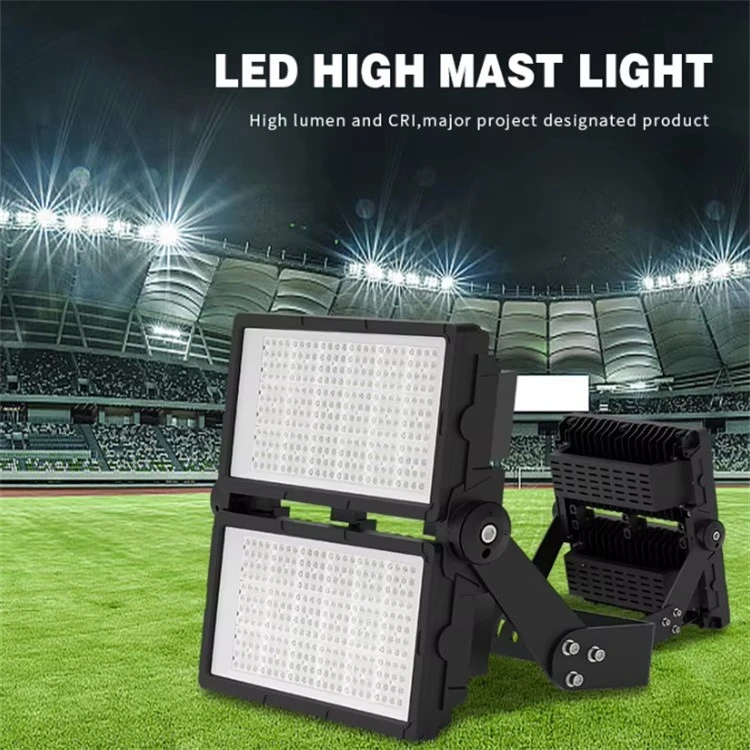
Thermal Failure Mechanism of LED High Mast Stadium Lights
Chip Aging and Accelerated Lumen Depreciation
LED chips are semiconductor devices extremely sensitive to temperature. During continuous high-power operation, if heat cannot be dissipated in time, the accumulated heat will cause thermal expansion of the chip internal structure, damage the solid-state lighting medium, and reduce photoelectric conversion efficiency. In high-temperature environments, the phosphor layer on the chip surface will age and yellow rapidly, resulting in decreased color rendering index, distorted light color, and continuous dimming of the luminaire. Ordinary unoptimized stadium lights will have a lumen loss rate of more than 30% after one year of use, failing to meet the uniform brightness requirements of sports venues and large outdoor venues, and forcing project owners to replace equipment in advance.
Driver Damage and Circuit System Failure
The constant-current driver is the core power supply component of LED stadium lights and is also one of the main heat sources of the luminaire. The electronic capacitors, resistors and integrated circuits inside the driver have strict temperature adaptation ranges. Long-term high-temperature heat accumulation will cause capacitor bulging and leakage, circuit board aging and oxidation, and unstable output current and voltage. Unstable power supply will cause frequent strobing of the luminaire, and in severe cases, direct short circuit and burnout will occur. In outdoor open-air environments, high temperature combined with humidity and salt fog will further amplify thermal damage, greatly reducing the fault-free working time of the equipment.
Structural Material Aging and Reduced Environmental Adaptability
The shell, sealing gaskets and structural accessories of stadium lights will undergo irreversible aging under long-term high-temperature baking. The silicone sealing gaskets will harden and crack, losing waterproof and dustproof sealing performance, resulting in reduced IP protection level. External dust, rainwater and water vapor will penetrate into the lamp body, causing internal component corrosion and short circuit failure. At the same time, high temperature will accelerate the oxidation and rust of the metal shell, reduce the structural rigidity and wind resistance of the lamp body, and bring hidden dangers to the safety of high mast installation.
Core Thermal Management Design of Professional LED High Mast Stadium Lights
High-Purity Die-Cast Aluminum Finned Heat Sink Structure
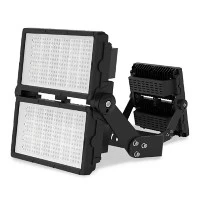
This series of LED high mast stadium lights adopts industrial-grade high-purity die-cast aluminum alloy heat sink, which has ultra-high thermal conductivity, far exceeding ordinary aluminum profiles and plastic heat dissipation structures. Different from the flat heat dissipation design of ordinary flood lights, the product is equipped with an intensive vertical finned heat dissipation structure on the back of each independent light module. The optimized fin spacing and height design maximizes the heat dissipation surface area per unit volume, forming a three-dimensional heat conduction and dissipation system. The high-thermal-conductivity aluminum material can quickly absorb the heat generated by LED chips and drivers and transfer it to the surface of the heat sink, avoiding local heat accumulation.
All heat sinks are integrally die-cast and formed at one time, with no splicing gaps, ensuring uninterrupted heat conduction paths and effectively reducing thermal resistance. Compared with ordinary spliced heat dissipation structures, the integrated die-cast design improves heat conduction efficiency by more than 35%, and completely avoids heat accumulation caused by loose fitting gaps. Even under long-term full-load operation of 1000W high power, it can maintain efficient and stable heat conduction performance.
Modular Split Heat Dissipation and Independent Air Convection System
The product adopts a dual-module independent light source structure, and each lighting module is equipped with an independent heat dissipation unit and air convection channel, which is a key innovative design different from traditional integrated stadium lights. The modular split structure realizes physical separation of heat sources, avoiding superposition of heat generated by multiple light sources leading to local overheating. Each heat dissipation unit is equipped with open ventilation gaps, forming a natural vertical cross-air convection system. The cold air at the bottom continuously enters the heat sink gaps, takes away the surface heat of the heat sink through airflow circulation, and discharges the hot air upward, realizing passive circulating heat dissipation without fan assistance, zero power consumption and zero failure risk.
This natural convection heat dissipation design adapts to all installation angles of high mast lights. Even when the lamp body is rotated 180° for angle adjustment through the gear-lock bracket, it will not block the airflow channel, ensuring that the heat dissipation efficiency will not be reduced by angle adjustment. It perfectly solves the problem of poor heat dissipation of traditional finned heat sinks after tilting installation, and maintains stable thermal management performance in all working states.
Isolated Driver Heat Dissipation and Low-Temperature Operating Mechanism
Aiming at the problem of concentrated heat generation of high-power drivers, this stadium light adopts an independent isolated driver bin design. The driver is placed in a closed and ventilated independent cavity, which physically isolates the driver heat source from the LED light source module, avoiding mutual superposition of heat and forming a dual heat dissipation protection system. The driver cavity is equipped with reserved heat dissipation gaps and heat conduction auxiliary structures, which can continuously discharge the heat generated by the driver during operation, keep the driver working in a low-temperature and constant-temperature environment, and effectively delay the aging speed of electronic components.
This isolated heat dissipation structure greatly improves the anti-aging ability of the core power supply system, avoids brightness attenuation and strobing caused by driver overheating, and ensures the long-term stable output of constant current and constant voltage. It is the core guarantee for the luminaire to achieve ultra-long service life and low light loss.
High-Temperature Resistant Thermal Interface Material Optimization
Between the LED light source board and the heat sink, the product is filled with high-performance phase-change thermal interface material (TIM) with high thermal conductivity and low thermal resistance. This material can perfectly fill the tiny gaps between the chip substrate and the heat sink surface, eliminate air barriers that hinder heat conduction, and greatly improve the overall heat transfer efficiency. Compared with ordinary thermal silica gel, the phase-change thermal material has better high-temperature stability, will not age and fail after long-term high-temperature baking, and maintains efficient heat conduction performance for a long time.
Through the optimization of thermal interface materials, the chip junction temperature is effectively controlled below 80°C during full-load operation, which is 20% lower than that of ordinary stadium lights. It fundamentally inhibits the thermal aging of LED chips and realizes ultra-low lumen depreciation operation.
Practical Benefits: How Heat Dissipation Design Extends Lifespan and Reduces Project Costs
Ultra-Low Lumen Depreciation to Maintain Long-Term Lighting Performance
Benefiting from the systematic thermal management design, this series of LED high mast stadium lights strictly follows the LM-80 international lumen maintenance standard. After 10,000 hours of continuous operation, the lumen retention rate is still higher than 95%; after 30,000 hours of operation, the light loss is less than 8%; and after 50,000 hours of long-term use, the luminous efficiency can still maintain more than 85% of the initial state. Compared with ordinary stadium lights with a light loss rate of 30%–40% in two years, it completely avoids the problem of rapid dimming of equipment, maintains uniform and high-brightness lighting effect for a long time, and meets the long-term use standards of professional sports venues and key engineering projects.
50,000+ Hours Ultra-Long Service Life to Reduce Replacement Frequency
Scientific heat dissipation design eliminates the core hidden danger of thermal aging of the luminaire. The rated service life of the product reaches more than 50,000 working hours, which is 2–3 times that of traditional metal halide lamps and ordinary LED flood lights. Calculated according to 10 hours of daily use, the service life of a single luminaire can reach more than 13 years. For large-scale stadiums, port terminals and municipal lighting projects, it greatly reduces the frequency of equipment procurement and replacement, saves a lot of equipment renewal costs, and avoids project delays and venue use restrictions caused by frequent replacement.
Low Maintenance Cost to Improve Project Full Lifecycle Profitability
High-altitude maintenance of high mast lights has high operational difficulty and high labor cost. Poor heat dissipation leads to frequent equipment failure, which brings huge maintenance pressure to project operation. This professional heat dissipation design effectively reduces the failure rate of chips, drivers and sealing structures, and the overall equipment failure rate is reduced by more than 80%. In the full lifecycle of more than 10 years, almost no manual maintenance and component replacement are needed, which greatly saves labor costs, maintenance equipment costs and later operation and management costs for project owners, and significantly improves the economic benefits of lighting projects.
Enhanced Environmental Adaptability to Expand Application Scenarios
Excellent thermal management system enables the luminaire to adapt to extreme outdoor temperature environments. It can work stably in the temperature range of -40°C to +75°C, resisting high-temperature baking in summer and low-temperature freezing in winter. In high-temperature and high-humidity coastal areas, desert high-temperature areas and other harsh environments, it can still maintain efficient heat dissipation effect, avoid equipment failure caused by heat accumulation, and ensure the stable operation of lighting system in all seasons and all weather.
Conclusion: Thermal Management Is the Core of High-Value Stadium Lighting Investment
In the procurement and construction of modern large-scale outdoor lighting projects, simply pursuing low unit price and high power is no longer a scientific investment logic. The core value of LED high mast stadium lights lies in long-term stability, low attenuation and ultra-long service life, and all these advantages are based on professional and systematic heat dissipation design. Ordinary luminaires with backward thermal management design will bring continuous hidden costs and operational risks to the project in the later stage, which is essentially a low-value investment.
This modular high-efficiency heat dissipation LED high mast stadium light, with integrated die-cast aluminum finned heat sink, independent modular convection system, isolated driver heat dissipation structure and high-performance thermal interface materials, builds a full-dimensional thermal management protection system. It effectively solves the industry pain points of rapid light attenuation and short service life of high-power outdoor luminaires, realizes ultra-long life, low failure and low maintenance operation, and creates maximum full-lifecycle value for sports venues, municipal engineering, port logistics and industrial lighting projects. For engineering purchasers and lighting designers, choosing products with excellent heat dissipation design is the key to reducing project costs, improving lighting quality and ensuring long-term stable operation of the system.
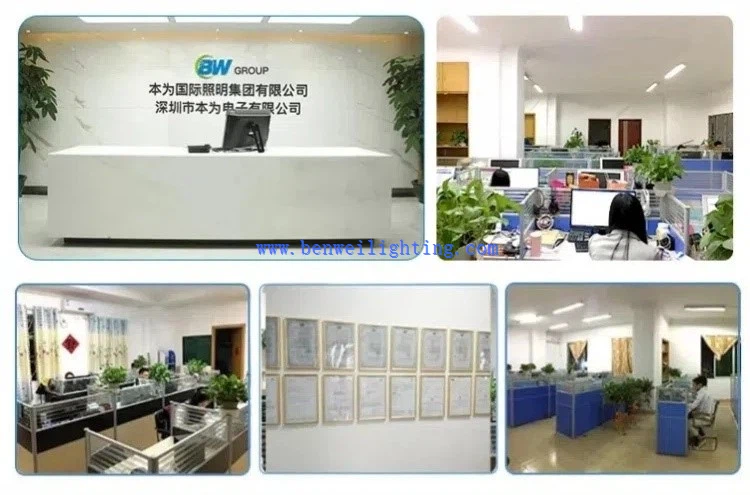
How To Cooperate With Us?
We are happy to have total control over the manufacturing process and the calibre of our products since we have our own facilities. Since we are producers rather than just brokers, we are dedicated to providing our customers with the best pricing. Since we are certain that the price and quality of our products are clear, we invite customers to see our samples first. Our commitment to quality and customer satisfaction drives us to continuously provide top-notch goods.
Our address
3rd Floor, 5th Building, Hebei Industrial Park, Hualian Community, Longhua District, Shenzhen, China