Introduction: Two Claims That Are Often Made, Rarely Proven
Open almost any LED panel catalogue and you will read the same two promises within the first three lines: high quality, super bright. Both words are legitimate, and both are close to meaningless as written, because a supplier can apply them to a panel built from a thin diffuser, a capacitor-less driver and a 0.3 mm steel back plate without any risk of contradiction.
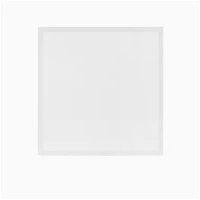
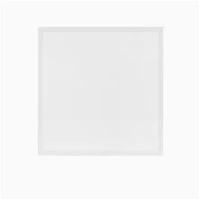
This article examines the two claims on a specific product family - a 30 mm slim panel range supplied in 595 × 595 mm and 1195 × 295 mm formats, with a six-layer optical stack and a field-selectable colour temperature - and asks a simple question of each word: what evidence sits behind it?
The Export Buyer's Real Problem
An export buyer works under a handicap that a domestic buyer does not. The product is inspected at a distance, on a datasheet, in a language that may not be the factory's first language, and it is judged months later in a container that has already been paid for. If the panels arrive dim, blotchy, or without the documentation a retailer or a project engineer requires, the cost is not a complaint - it is a rejected shipment, a rework order and a customer who does not come back.
That asymmetry is why the words on a quotation matter less than the evidence behind them. A supplier who can answer a technical question with a test report is operating a different business from a supplier who answers it with an adjective.
What "Super Bright" Should Mean
Brightness is not a specification. It is a perception produced by three separate quantities: luminous flux, the total light the panel emits; luminous efficacy, the flux obtained per watt; and luminance, the intensity of the emitting surface per unit area. A panel can be high in flux and low in efficacy, high in efficacy and blinding in luminance, or bright in the middle and dim at the edges. "Super bright" is only a credible claim when all three are controlled and the distribution across the face is even.
Super Brightness, Measured Properly
Flux, Luminance and the Line Between Bright and Blinding
Take a 595 × 595 mm panel with an emitting area of roughly 0.32 m². At an efficacy of 120 lm/W, a 30 W version delivers about 3,600 lumens, which is enough for a bright office or a retail aisle at ordinary mounting heights. The same 3,600 lumens forced through a smaller, brighter aperture would raise the surface luminance and the glare proportionally, which is why output and comfort have to be designed together rather than traded against each other.
The commercial argument for genuine output is straightforward: more usable light per fitting means fewer fittings per room, shorter installation time and a lower bill of materials at the project level. That argument only survives if the extra light is distributed well. Brightness concentrated in the centre of a panel wastes flux on a small area, creates glare for anyone standing near it and leaves the edges of the room under-lit.
Uniformity and Light-Declining: Brightness That Holds
Uniformity is measured as the ratio of minimum to average luminance across a grid of points on the emitting face, and a figure of 0.8 or better is what separates a panel that looks like a single sheet of light from one that shows a bright centre, faint bands and dim edges. For an export buyer this number matters twice: it determines how the room looks on commissioning, and it determines how many complaints come back after the first month of use.
The second half of the promise is light-declining. A panel that is bright on day one and noticeably dimmer after a year has not delivered its rated output in any commercially meaningful sense. Lumen depreciation comes from two sources - LED ageing, driven by junction temperature, and optical ageing, driven by films that yellow or haze - and both are functions of the thermal and material design rather than of the LED brand alone. Ask for the depreciation curve, not the initial lumen figure.
180 Degree Optics: Same Wattage, More Usable Light
How light leaves the panel decides how much of it reaches a surface. A bare LED emits in a narrow forward lobe, so a panel that simply diffuses a dense LED array produces a bright centre and a rapid fall-off at the edges; the lumens are real, but a large share of them land on the ceiling grid or at the wrong angle.
Circular lenses over each LED spread the emission into a rotationally symmetric 180 degree distribution before the light enters the guide. The guide then mixes it into a uniform face, and the panel delivers usable light across the whole 180 degree half-space rather than a hotspot with a halo. In a suspended installation, or in a room where the ceiling is high, this is the difference between a panel that lights the room and one that lights the ceiling around it.
High Quality, Layer by Layer
Quality in a panel is not a finish or a label. It is the sum of six optical layers, one driver, one thermal path and a set of mechanical tolerances, each of which can be specified, measured and inspected in a cross-section photograph.
The Six-Layer Optical Stack
The active part of the luminaire is the sequence of films between the LED and the room: a metal back cover, pearl cotton, a light guide board, a refractive membrane, a diffusion board and an aluminium cooling frame.
What Each Layer Does
Metal back cover - holds the panel flat over 1200 mm, shields the driver and LED string, and spreads heat laterally so no zone runs hotter than its neighbours.
Pearl cotton - a high-reflectance diffuse reflector that returns light into the optical path instead of absorbing it.
Light guide board - turns a line of point sources into an area source, mixing light by total internal reflection and extracting it across the face.
Refractive membrane - extracts light from the guide and breaks up the residual hot regions the guide cannot smooth alone.
Diffusion board - the surface the eye sees: it hides the LED image, lowers peak luminance and produces a soft, structure-free face.
Aluminium cooling frame - the thermal and structural spine, carrying heat away from the strip and keeping the stack square and aligned.
Sequence, Tolerance and Consistency
The layers cannot be reordered: light must be mixed before it is extracted, extracted before it is diffused, and diffused before it is seen. In production, the second variable is tolerance. Film thickness, guide printing density and frame flatness all vary slightly between batches, and a factory that measures and compensates for that variation produces panels that match each other in a shipment; one that does not produces a container in which three panels side by side look like three different products.
Colour Consistency: Quality the Eye Reads Immediately
Colour is where cheap and good panels diverge most visibly, and where a specification can be written precisely. Ra averages eight pastel test colours, so a panel can score Ra 80 and still render saturated reds poorly; R9 carries that red information and is excluded from the average. For commercial interiors, Ra ≥ 90 with a declared R9 value is the honest threshold.
Consistency matters as much as the headline number. LEDs are binned by chromaticity, and a factory that mixes bins within one panel produces a face with a subtle colour gradient; one that mixes bins across a shipment produces walls that do not match from fitting to fitting. A tight MacAdam step, applied to every panel in the order, is the difference between a coherent installation and a patchwork.
Driver, Heat and the Lifetime Claim
The driver decides three things that no optical layer can fix: flicker, electrical behaviour and dimming stability. A well-designed constant-current driver filters the rectified mains so that the 100 Hz ripple does not reach the LED string, keeps power factor and harmonics inside EN 61000-3-2, and dims smoothly without dropping into visible modulation at the bottom of its range. A cheap driver does none of these, and the symptom appears as banding on camera, humming in the ceiling and complaints that the lights "give me a headache".
Heat decides the lifetime. A slim panel has little space to dissipate, so the aluminium frame is the only path that keeps junction temperature in check; when that path is inadequate the panel loses output, shifts colour and ages faster than its label suggests. A genuine L70 or L80 claim is built on LM-80 data and a TM-21 projection, not on a marketing estimate.
Mechanical Quality: 30 mm, Square Edges, Clean Fits
A panel that is 2 mm out of square will not sit flat in a grid; a frame that flexes will show a shadow line at the ceiling junction; a back plate that is too thin will bow after installation and open a gap at the diffuser. These are the failures that an installer notices immediately and that a buyer discovers only after the first site visit.
The 30 mm profile is a deliberate compromise: shallow enough for tight plenums during a retrofit, deep enough to hold a full optical stack and a proper heat path. Both formats use it - 595 × 595 mm for the standard 600 × 600 mm ceiling grid, and 1195 × 295 mm for 1200 × 300 mm linear modules in corridors and retail runs - so a project can mix formats without a change in appearance or output.
Export-Ready: The Word Has a Definition
"Export-ready" is often used to mean that a product can be put in a carton. It should mean that the product can clear the border, satisfy a retailer's technical audit and survive a forty-foot container without losing its quality on the way.
The Compliance Package
For the European Union, a panel light falls under the Low Voltage Directive, the EMC Directive and the RoHS Directive, and since 2021 the ecodesign and energy labelling regulations for light sources, (EU) 2019/2020 and (EU) 2019/2015. The ecodesign regulation now sets explicit flicker limits for mains-operated light sources - Pst LM ≤ 1.0 and SVM ≤ 0.4 at full load - which converts a technical preference into a testable legal requirement. Photobiological safety is assessed under IEC 62471, and the luminaire itself against IEC 60598-1 and its recessed-luminaire part, IEC 60598-2-2.
What an importer should receive is not a logo on a carton but a file: the Declaration of Conformity naming the manufacturer and the directives, the test reports behind it, the ErP energy label and product information sheet, and the photobiological assessment. UKCA documentation for the British market, UL or ETL listings for North America, and RCM for Australia follow the same principle: a named test house, a report number, a date.
Electrical Configuration for Destination Markets
The same optical body can be built for different markets, and the differences are electrical rather than optical. Input voltage range, terminal type, driver isolation class, power factor, harmonic performance, surge immunity and dimming protocol - phase-cut, 0–10 V, DALI or none - all have to be declared before the order is placed, not discovered at commissioning.
Two details are worth confirming early. First, dimming compatibility: whether the panel stays flicker-free at 10 percent output with the dimmer actually specified for the project. Second, CCT strategy: a driver with a DIP switch offering 3000 K, 4000 K and 5000 K lets one reference be stocked and adjusted on site, which removes a stock decision from the distributor and a variation order from the contractor.
Packaging, Labelling and Logistics
A panel is a flat, fragile, low-weight object with a large surface area - the worst combination for shipping. Quality that survives the factory but not the container is not quality. Packaging should be specified rather than assumed: individual cartons with corner protection and a foam or moulded insert that carries the panel without pressing on the diffuser, master cartons sized to a standard pallet footprint, and a drop test against a recognised method such as ISTA 1A or 2A.
Labelling and documents should travel with the goods: model and batch codes on the carton, the energy label where the market requires it, an installation sheet in the destination language, and a packing list that matches the shipping marks. These details cost little to fix at the factory and cost a great deal to fix after the container has been opened.
Customisation, MOQ and Lead Time
An export-ready range should be able to answer three commercial questions without a new project file: whether the body can take a customer logo and packaging, what the minimum order quantity is per model and per colour temperature, and what the lead time is from confirmed artwork to shipment. OEM and ODM work is normal in this category, and the difference between a good and a poor partner is whether the customisation touches only the label or also the photometry - a private-label panel that changes the diffuser without retesting has changed the product, not the branding.
Where the Advantages Turn into Money
For a distributor, the value of a good panel is not the panel. It is the number of problems it prevents.
Projects That Need Real Output
High-ceiling retail, supermarket aisles, showrooms and workshop areas ask for output that ordinary panels cannot deliver without glare, and they are exactly where a wide 180 degree distribution and an even face pay for themselves. Fewer fittings, cleaner ceilings, and a room that is lit at the merchandise rather than at the ceiling grid.
Distributor Economics: One Reference, Three CCTs
A CCT switch changes the economics of a warehouse. One model, adjustable between 3000 K, 4000 K and 5000 K, covers hospitality and residential projects, general office work and clinical or inspection environments - three markets, one SKU, one safety stock figure. Fewer references mean less capital tied up in inventory, lower risk of obsolete stock and faster response when a project changes its specification mid-build.
Compliance That Shortens Approvals
In tender work, time is lost in document review rather than in installation. A supplier who hands over the Declaration of Conformity, the test reports, the ErP sheets and the photobiological assessment on the first request removes weeks from the approval cycle, and removes the risk that a specifier substitutes a competitor while the paperwork is being chased.
A Verification Checklist for Importers
The table below converts the article into questions. Each one has a documentary answer, and a supplier who cannot produce that answer has not tested the claim.
|
Claim to test |
Question that exposes it |
Evidence that settles it |
|---|---|---|
|
Super bright |
Delivered lumens at 4000 K, at what wattage and efficacy? |
LM-79 report from an accredited laboratory |
|
Even output |
Minimum to average luminance on a nine-point grid? |
Photometric report with uniformity data |
|
No flicker |
Pst LM and SVM at full load and at 10 percent dimming? |
Flicker test to (EU) 2019/2020 or IEEE 1789 |
|
High CRI |
Ra, R9 and the CCT bin tolerance across the order? |
Spectroradiometer report and binning statement |
|
Long life |
On what data is L70 or L80 based? |
LM-80 report with TM-21 projection |
|
Export-ready |
Which directives, and who signed the Declaration? |
CE DoC, LVD, EMC and RoHS test reports, ErP label |
|
Photobiological safety |
Which risk group, and at what distance? |
IEC 62471 assessment |
|
Shipping robustness |
Which drop-test method, and at what pass height? |
ISTA 1A or 2A report, packaging drawings |
|
Consistency across sizes |
Is the same optical stack used in both formats? |
Cross-section photographs and bill of materials |
Two follow-up questions are worth asking in every negotiation. Whether the sample shipped matches the production panel or is a hand-built unit, and whether the photometric report was issued against that specific model and driver combination rather than a family representative. A credible supplier answers both without hesitation.
Conclusion: Buy the Evidence, Not the Adjective
"High quality" and "super bright" are fair descriptions of a well-built panel, and they remain empty on a badly built one. The difference is not a matter of opinion: it is a six-layer optical stack that mixes light before the eye sees it, a lens array that spreads every LED into 180 degrees, a diffuser that hides the source, a driver that keeps the current clean, and a metal frame that keeps the junction temperature where the lifetime claim assumes it is.
Around that core sits the export layer: the declaration, the reports, the label, the carton and the packing list. None of it is glamorous, and all of it is what allows a container to be sold, approved and installed without incident. For an importer, that is the real product - the panel plus the file that proves it.
Ask for the numbers, ask for the reports, and ask for a sample to dim to 10 percent in a room with a camera. A supplier who is comfortable with all three is selling quality. A supplier who is not is selling a word.
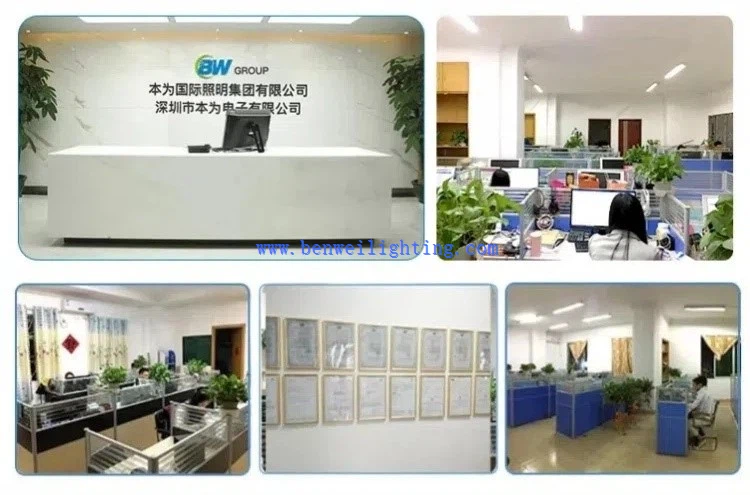
How To Cooperate With Us?
We are happy to have total control over the manufacturing process and the calibre of our products since we have our own facilities. Since we are producers rather than just brokers, we are dedicated to providing our customers with the best pricing. Since we are certain that the price and quality of our products are clear, we invite customers to see our samples first. Our commitment to quality and customer satisfaction drives us to continuously provide top-notch goods.
Our address
3rd Floor, 5th Building, Hebei Industrial Park, Hualian Community, Longhua District, Shenzhen, China