Introduction: Unique Lighting Challenges of Hospital and Public Building Interiors
Hospitals and public buildings represented by government service halls, transportation hubs, and public activity centers belong to high‑standard and high‑load indoor lighting scenarios, whose operational environment and usage attributes are completely different from ordinary civil buildings. The particularity of these scenarios determines that ordinary lighting products cannot meet their long‑term operational and functional demands, and the core challenges are mainly reflected in hygiene standards, continuous operation intensity, and post‑operation maintenance costs.
Strict Hygiene and Environmental Purification Requirements
Hospital interiors including consulting rooms, inpatient wards, operating auxiliary areas, and medical corridors have extremely strict air purification and environmental cleanliness standards. Airborne fine dust particles, suspended impurities, and microbial carriers in the air are key factors affecting medical environmental safety. Traditional open LED panel lights adopt spliced assembly structures with gaps reserved between the frame, light guide plate, and back plate. These gaps become hidden dust accumulation areas, where fine dust, lint, and suspended particulate matter in the air continuously deposit inside the lamp body. Long‑term accumulated dust will not only breed bacteria and mold to pollute the indoor medical environment but also form dead corners that are difficult to clean thoroughly, which cannot meet the daily hygiene purification and disinfection management requirements of medical buildings. For public buildings with dense crowds, a large number of suspended pollutants in the air will also cause continuous pollution to open lighting fixtures, affecting the overall environmental grade and sanitation level of public spaces.
Long‑Hour Continuous High‑Load Operation
Most areas of hospitals and public buildings maintain 12–24 hours of uninterrupted lighting throughout the year, with an annual cumulative working time far exceeding that of residential and ordinary office lighting. Long‑term continuous power‑on operation makes lighting fixtures in a high‑load working state for a long time. Open‑structure lamps have poor airtightness, and external humid air, dust, and tiny flying insects can easily penetrate into the lamp cavity. On the one hand, dust attached to LED chips and circuit boards will block heat dissipation channels, resulting in increased operating temperature of the lamp; on the other hand, humid air will cause slow oxidation and corrosion of internal circuit components, greatly accelerating the aging speed of lamps and lanterns, leading to frequent problems such as light dimming, flicker, and partial dark areas.
High Maintenance Cost of Traditional Lighting Fixtures
In hospital and public building scenarios, ceiling lighting fixtures are installed at high altitudes, and the disassembly, cleaning, and maintenance processes are complex and time‑consuming. Traditional open LED panels need regular professional dust removal and component inspection to avoid lighting failure caused by dust accumulation. Frequent manual maintenance not only consumes a lot of labor costs and time costs but also affects the normal operation of hospitals and public service venues, causing unnecessary interference to medical work and public service processes. In addition, frequent replacement of aging and damaged lamps further increases the long‑term operation and maintenance costs of building infrastructure.

Core Structural Advantages of Sealed Dust‑Resistant LED Ceiling Panels
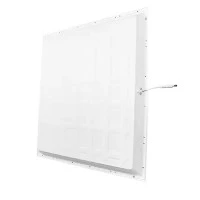
The fundamental difference between sealed dust‑resistant LED ceiling panels and traditional open panel lights lies in the integrated closed structural design. This product adopts a reinforced 6063 aluminum alloy frame matched with an integral tensile sealed iron back plate, forming a fully enclosed lamp cavity structure without assembly gaps. Combined with multi‑layer composite lamination technology, it completely isolates the internal optical components and circuit systems from the external complex environment, fundamentally solving a series of problems such as dust pollution, insect intrusion, and moisture erosion that plague traditional lighting products, and laying a structural foundation for long‑term stable operation in medical and public building scenarios.
Fully Enclosed Integrated Sealing Structure
This high‑grade commercial LED ceiling panel cancels the traditional gap splicing process and adopts an all‑wrapped sealed installation structure. The surrounding of the tensile iron back plate is fixed with dense rivets, which closely fits the aluminum alloy frame and the middle optical layer, realizing zero gap sealing of the whole lamp body. Different from ordinary semi‑sealed products that only seal the local area, the overall closed cavity design of this product can effectively block fine dust particles, suspended impurities, tiny mosquitoes, and water mist in the air from entering the lamp interior. It completely avoids the dust accumulation problem of the light guide plate, diffuser plate, and LED light source layer, and there is no hidden dust dead corner inside the lamp body. While maintaining the internal cleanliness of the fixture, it fully meets the high hygiene standards of hospital environments and improves the overall environmental quality of public buildings.
Reinforced 6063 Aluminum Alloy Frame & Tensile Iron Back Plate
The product adopts high‑strength 6063 aerospace‑grade aluminum alloy frame, which has excellent structural rigidity and thermal conductivity. Compared with ordinary plastic and ordinary aluminum frames, 6063 aluminum alloy has stronger deformation resistance, which can avoid frame deformation and gap expansion caused by long‑term ceiling load and environmental temperature changes, ensuring the long‑term stability of the sealing structure. The matched integral tensile iron back plate has overall stamping and forming without splicing gaps, with good pressure resistance and airtightness. This structural design not only strengthens the firmness of the whole lamp body and avoids loose structural gaps caused by installation vibration and long‑term use but also builds an efficient passive heat dissipation system, which synchronously optimizes the dust resistance and heat dissipation performance of the product.
Multi‑Layer Composite Dust‑Proof and Anti‑Pollution Optical System
The internal part of the lamp adopts a standardized stacked composite structure from bottom to top: sealed iron back plate, EVA buffer isolation layer, high‑transmittance Chimei light guide plate, anti‑yellow aging diffuser plate, and high‑stability LED light source layer. The EVA buffer isolation layer not only plays a role of shock absorption and anti‑collision to prevent the optical plate from cracking and scratching during installation and use but also further isolates dust and moisture, forming a secondary protective barrier for the internal optical system. The fully closed optical cavity keeps the light guide plate and diffuser plate in a dust‑free and dry working environment for a long time, avoiding light transmittance reduction and local dark areas caused by dust adhesion, and ensuring the long‑term consistency of lighting effects.
Professional Performance Advantages Adapted to Hospital and Public Building Scenarios
Based on the sealed dust‑proof structure, this LED ceiling panel has achieved comprehensive upgrades in optical performance, temperature control stability, light decay resistance, and safety performance. It perfectly matches the core demands of hospital medical lighting and public building commercial lighting for comfort, stability, safety, and low maintenance, and has irreplaceable comprehensive advantages over traditional open lighting products.
UGR<19 Ultra‑Low Glare Lighting, Meeting Medical Eye Protection Standards
Medical staff need to work under indoor lighting for a long time, and patients are in a weak physical state and are more sensitive to glare and harsh light. Ordinary panel lights are prone to local bright spots and strong reflected glare due to uneven light guide and dust blockage, which easily cause visual fatigue, dizziness, and eye discomfort, affecting the work efficiency of medical staff and the rest experience of patients. This sealed dust‑resistant LED panel is equipped with a high‑precision anti‑glare diffuser plate, with a professional UGR<19 ultra‑low glare rating. The specially formulated diffuse reflection technology uniformly disperses the light source, completely eliminates dazzling bright spots and shadow areas, and presents soft and uniform surface luminous effect. Even after long‑term continuous operation, the light is still gentle and not dazzling, meeting the eye protection lighting standards of hospital wards, consulting rooms, and duty rooms, and creating a comfortable and safe light environment for medical staff and patients.
High Color Rendering & Uniform Luminous Output, Optimizing Public Space Vision
Hospital diagnosis, observation, and public building display and guidance scenarios have high requirements for light color restoration. The product adopts LM‑80 certified high‑quality LED chips, with a color rendering index CRI>80, which can truly restore the original color of objects, accurately present the skin tone of patients and the color of medical supplies, and provide accurate visual judgment conditions for medical diagnosis and nursing work. Equipped with original Chimei high‑transmittance light guide plate with 88%–90% ultra‑high light transmittance, the whole panel emits light evenly without mottling, dark edges, and local dimming problems. The sealed dust‑proof structure ensures that the light guide plate will not be polluted by dust in the later stage, so the luminous uniformity and brightness stability will not decline with the extension of service time, always maintaining high‑quality lighting effects for public halls, corridors, and medical rooms.
Efficient Heat Dissipation & Ultra‑Low Light Decay, Adapting to Long‑Term Operation
Long‑term uninterrupted operation is the biggest test for the service life of medical and public building lighting. Dust accumulation inside traditional lamps will block heat dissipation channels, resulting in continuous accumulation of operating heat, accelerated aging of LED chips, and rapid light decay. This product's fully sealed dust‑proof structure is matched with a 6063 aluminum alloy rapid heat dissipation system. The aluminum frame with high thermal conductivity can quickly export the heat generated by the LED light source, and the integral iron back plate assists in uniform heat dissipation, effectively controlling the long‑term continuous operating temperature of the lamp below 55℃. Low‑temperature operating environment greatly reduces the thermal aging rate of LED chips and circuit components. Verified by LM‑80 professional aging test, the product has an ultra‑low light decay rate, with a rated service life of up to 50,000 working hours. It can maintain more than 90% of the initial luminous brightness after long‑term use, avoiding frequent brightness attenuation and lamp replacement problems caused by dust heat blockage.
IP20 Professional Protection Grade, Safe and Hygienic for Indoor Public Spaces
This sealed LED ceiling panel has a formal IP20 protection grade, which is the most suitable safety protection standard for high‑standard indoor public and medical scenarios. It can effectively prevent fingers from touching internal live components and avoid electrical safety risks caused by human accidental contact. More importantly, the fully sealed structure derived from IP20 protection design can effectively block large particulate dust, suspended impurities, tiny flying insects, and water mist from invading the lamp cavity. It prevents circuit short circuit, component oxidation, and light source damage caused by dust and moisture erosion, and avoids the problem of dead insect residue and dust accumulation inside the lamp body that pollutes the indoor environment. For hospital sterile environments and public building high‑flow crowded spaces, this dust‑proof and anti‑pollution protection capability effectively guarantees indoor environmental hygiene and long‑term operational safety of electrical equipment.
Practical Value and Economic Benefits in Hospital & Public Building Projects
In engineering procurement and building operation management, the comprehensive cost performance of lighting products depends not only on the initial procurement cost but more on the long‑term operation stability, maintenance cost, and scenario matching value. Sealed dust‑resistant LED ceiling panels have obvious comprehensive advantages in medical and public building projects, which can create dual value of environmental quality improvement and operating cost reduction for building operation parties.
Zero Dust Accumulation, Reducing Environmental Hygiene Risks
Hospital environments have strict requirements for sterile and dust‑free management, and any hidden dust dead corner may become a potential carrier of bacterial growth. Traditional open ceiling lamps are easy to accumulate dust internally, and the air convection in the room will drive the dust inside the lamp body to diffuse outward, affecting the indoor air quality of wards and consulting rooms. The fully sealed structure of this product realizes internal dust‑free operation for life, completely eliminates the hidden danger of dust diffusion and bacterial breeding inside the lamp body, and assists hospitals and public buildings to maintain high‑standard environmental hygiene for a long time. It avoids the health risks and environmental rectification costs caused by lighting equipment pollution, and improves the professional grade of medical and public service environments.
Ultra‑Low Maintenance Cost, Saving Long‑Term Operating Expenses
The ceiling height of hospitals and large public buildings is generally high, and the maintenance and replacement of lighting fixtures require professional scaffolding or high‑altitude operation equipment, with high single maintenance cost and long construction cycle, which will interfere with the normal operation of the venue. Traditional open LED panels need manual dust cleaning and component inspection every 3–6 months, and a large number of lamps need to be replaced in 2–3 years due to aging and light decay. In contrast, sealed dust‑resistant LED ceiling panels have no internal dust accumulation, no need for frequent disassembly and cleaning, and the 50,000‑hour long service life can realize 8–10 years of stable operation in daily lighting scenarios. It greatly reduces the frequency of high‑altitude maintenance and lamp replacement, saves a lot of labor costs, material costs, and venue operation interruption losses for building property management parties, and has extremely prominent long‑term economic benefits.
Stable Lighting Consistency, Improving User Experience and Building Grade
Public buildings and hospital spaces are important windows for public service and medical services, and stable and high‑quality lighting environment is an important part of building service quality. Traditional lamps will have uneven brightness, yellowing light color, and local dark areas after being used for a period of time due to dust pollution and component aging, making the indoor light environment dim and messy, affecting the visual experience of patients and the public, and reducing the overall grade of the building. The sealed dust‑proof design of this product ensures that the optical components are always in a clean and stable working state. The light color is pure and consistent, the brightness is stable for a long time, and there is no yellowing or dimming phenomenon in the later stage. It can maintain a uniform, soft, and high‑grade indoor lighting environment for a long time, improve the comfort of public service and medical treatment, and enhance the overall image and service quality of the building.
Scenario Application Comparison: Sealed Dust‑Resistant Panel vs. Traditional Open Panel
In order to intuitively reflect the scenario adaptability advantages of sealed dust‑resistant LED ceiling panels in hospitals and public buildings, this paper compares and analyzes the core performance, service status, and later operation effects of the two types of products in typical application scenarios, further verifying the applicability and superiority of sealed dust‑proof products in high‑standard public infrastructure projects.
Medical Ward and Consulting Room Scenario Comparison
Medical wards and consulting rooms require 24‑hour intermittent lighting, high environmental hygiene standards, and strict requirements for light comfort. Traditional open panel lights will accumulate a large amount of dust inside after 6 months of use, resulting in reduced light transmittance, dark corners on the lamp surface, and slightly yellow light color. Dust accumulation causes heat dissipation blockage, leading to increased lamp temperature, occasional flicker, and shortened service life. Regular manual cleaning is required, which is easy to cause secondary pollution to the ward environment. The sealed dust‑resistant LED panel has no dust accumulation inside after long‑term use, the light is always soft and uniform with UGR<19 low glare, the light color is pure and does not yellow, the operating temperature is stable and low, and there is no flicker failure. It does not need frequent disassembly and cleaning, which fully meets the long‑term stable lighting and hygiene management requirements of medical spaces.
Public Hall and Corridor Scenario Comparison
Public halls and corridors of hospitals and government buildings have large pedestrian flow, complex airborne pollutants, and 12‑hour long‑hour lighting every day. Open lamps are extremely susceptible to external dust and insect intrusion, resulting in internal component corrosion and aging, frequent light dimming and damage, and inconsistent lighting effects in public areas, affecting the overall visual beauty. The sealed dust‑proof lamp body structure can resist external pollutant erosion in high‑flow environments, maintain stable luminous efficiency for a long time, unify the overall lighting style of public spaces, reduce the failure rate of public area lighting, and ensure the continuous and stable operation of public building infrastructure.
Conclusion & Professional Purchasing Suggestions
Hospital and public building interior lighting is a systematic project that integrates hygiene safety, visual comfort, operational stability, and economic efficiency. The complex environmental conditions and high‑load operation modes of such scenarios make traditional open‑structure LED panel lights unable to meet long‑term high‑standard use demands, and problems such as dust accumulation pollution, rapid light decay, frequent failure, and high maintenance costs have become common pain points in public building lighting engineering. Sealed dust‑resistant LED ceiling panels, relying on integrated fully enclosed sealing structure, reinforced heat dissipation system, ultra‑low glare optical performance, and long‑life stable components, perfectly solve the various defects of traditional lighting products in medical and public scenarios.
In terms of functional value, this product realizes dust‑proof, anti‑insect, and anti‑moisture protection, ensures long‑term internal cleanliness of lamps, meets the strict hygiene standards of medical environments, and creates a safe and comfortable light environment. In terms of economic value, its ultra‑low light decay and long service life greatly reduce the later maintenance frequency and replacement cost, save a lot of operating expenses for building operation and management units, and have excellent long‑term cost performance. In terms of application effect, stable and uniform low‑glare lighting improves the service experience of public spaces and the professional grade of medical environments.
For engineering contractors, architectural designers, and property managers engaged in hospital construction and public building renovation projects, sealed dust‑resistant LED ceiling panels are the most reliable and cost‑effective preferred lighting solution. When purchasing medical and public building lighting products, it is necessary to abandon the low‑price priority purchasing concept, take sealing structure, dust resistance performance, heat dissipation efficiency, and long‑term stability as the core evaluation indicators, and select high‑standard sealed dust‑proof LED panel lights with formal protection grade, LM‑80 certified chips, and professional anti‑glare performance, so as to ensure long‑term stable, safe, and high‑quality lighting operation of public and medical buildings.

How To Cooperate With Us?
We are happy to have total control over the manufacturing process and the calibre of our products since we have our own facilities. Since we are producers rather than just brokers, we are dedicated to providing our customers with the best pricing. Since we are certain that the price and quality of our products are clear, we invite customers to see our samples first. Our commitment to quality and customer satisfaction drives us to continuously provide top-notch goods.
Our address
3rd Floor, 5th Building, Hebei Industrial Park, Hualian Community, Longhua District, Shenzhen, China