Introduction: Why Commercial LED Lighting Procurement Requires Professional Judgment
Commercial interior lighting differs fundamentally from household lighting in operating intensity, service life requirements, environmental complexity, and comprehensive cost assessment. A qualified commercial LED panel light must sustain 12–24 hours of continuous daily operation, maintain stable luminous performance for 5–10 years, adapt to high-traffic, dust-prone, and complex indoor environments, and comply with industrial standards for eye protection, safety protection, and color rendering. In contrast, low-grade civilian LED panels can only meet short-term intermittent use demands and are completely unsuitable for large-scale commercial engineering projects.
In the current lighting supply market, product quality is severely polarized. Many suppliers reduce costs by cutting corners on core materials, structural design, and production processes, resulting in a large number of inferior LED panel lights flooding the commercial procurement market. Most project procurement failures stem from stereotyped selection habits and professional blind spots: simply comparing unit prices, judging brightness by wattage only, ignoring internal structural differences, and neglecting long-term light decay and heat dissipation performance. These seemingly trivial procurement mistakes will evolve into major project defects after installation, such as uneven lighting, severe yellowing, frequent flicker, dust-induced failure, and high maintenance costs.
This article sorts out six core common pitfalls in commercial LED panel light procurement, interprets professional identification standards one by one, and takes high-quality sealed dust-resistant LED ceiling panels as a benchmark to provide actionable, project-oriented purchasing guidelines, helping engineering teams complete high-quality, low-risk, and cost-effective lighting procurement.
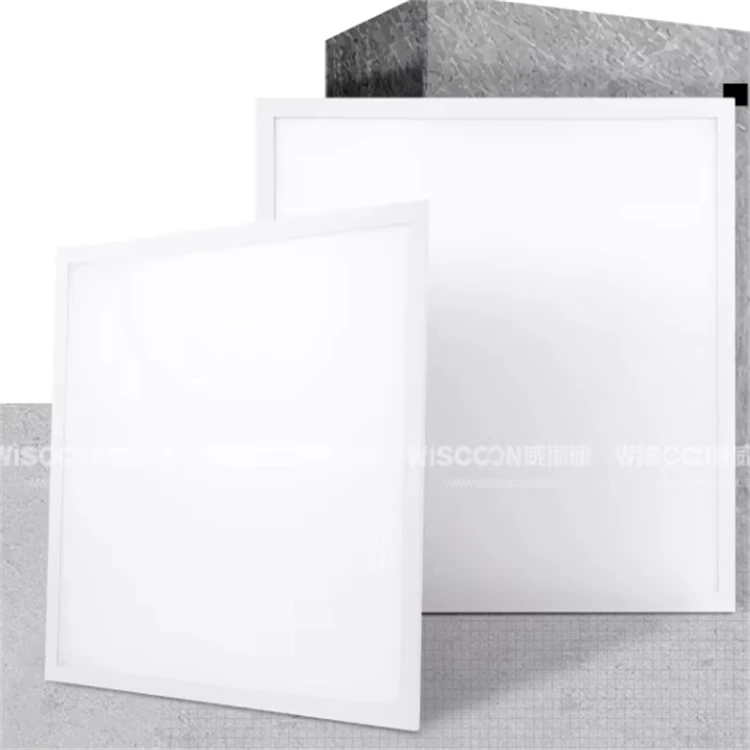
The Most Costly Procurement Pitfalls in Commercial LED Panel Selection
Most commercial lighting project losses are not caused by accidental product failures but by systematic misjudgment in the procurement stage. The following six pitfalls are the most common problems in engineering procurement, which directly determine the service life, lighting effect, and post-operation cost of the entire project lighting system.
Pitfall 1: Purchasing Based Solely on Low Upfront Price, Ignoring Lifecycle Cost
Price-oriented selection is the primary cause of failed commercial lighting procurement. For most primary purchasers, the most intuitive evaluation standard is the unit price of a single lamp, so they tend to choose ultra-low-priced LED panel lights to control initial project budgets. However, commercial lighting is a typical long-cycle investment project, and the true comprehensive cost includes initial procurement cost, installation cost, daily power consumption loss, maintenance cost, replacement cost, and project loss caused by lighting failure.
Ultra-low-priced inferior panel lights generally adopt low-cost configurations: recycled plastic frames, ordinary iron backplates without sealing treatment, low-transmittance recycled light guide plates, inferior drive power supplies, and uncertified low-grade LED chips. Although the initial procurement cost is 20%–40% lower than high-quality products, such products have fatal defects in actual operation. Seamless splicing structures lead to serious dust accumulation, inferior optical materials age and turn yellow within 1–2 years, unoptimized heat dissipation systems cause rapid chip aging, and unstable drivers lead to frequent flicker and burnout.
In practical engineering cases, ultra-low-priced LED panels need large-scale replacement within 2–3 years, accompanied by frequent high-altitude maintenance, site rework, and user complaint losses. The total lifecycle cost is far higher than that of high-standard sealed LED panel lights that can operate stably for 8–10 years. Professional commercial procurement must abandon the "low-price priority" thinking and establish a lifecycle cost accounting system to judge product value.
Pitfall 2: Judging Brightness by Wattage, Ignoring Luminous Efficacy and Optical Structure
Another common professional misunderstanding in procurement is equating high wattage with high brightness and high lighting quality. Many suppliers deliberately label high nominal power for low-quality products to mislead purchasers who lack optical professional knowledge. In fact, the core index to measure lighting brightness is lumen output and luminous efficacy (lm/W), not nominal power wattage.
Inferior LED panels with high wattage but low luminous efficacy consume more power but output dim and uneven light. Their recycled light guide plates have low light transmittance, with serious light loss and local dark areas. In contrast, high-quality commercial LED panels adopt premium Chimei light guide plates with 88%–90% ultra-high light transmittance and professional dot-matrix light guide technology. Even with moderate power configuration, they can achieve higher uniform luminous output, lower power consumption, and more stable light efficiency.
Moreover, many high-wattage inferior products have unbalanced light distribution, obvious bright spots on the lamp surface, and no anti-glare treatment, resulting in excessive local brightness and serious glare problems. Long-term exposure will cause visual fatigue for office workers, teachers, and medical staff, failing to meet commercial eye protection lighting standards. Purchasers must take luminous efficacy, uniform light output, and anti-glare performance as the core brightness evaluation indicators rather than simply referring to wattage parameters.
Pitfall 3: Ignoring Structural Sealing and Dust Resistance, Underestimating Environmental Corrosion Risks
Most purchasers only pay attention to surface parameters such as brightness and color temperature while ignoring the internal structural design of the lamp, especially the sealing and dust-resistant performance, which is the key factor determining the long-term stability of commercial lamps. Commercial spaces such as offices, hospitals, schools, and shopping malls have large pedestrian flow, complex airborne suspended particles, fine dust, flying insects, and humid air. Ordinary open-structured LED panel lights adopt gap splicing assembly, with a large number of hidden gaps inside the lamp body.
After 3–6 months of operation, open lamps will accumulate a large amount of dust and impurities inside the lamp cavity. Dust attached to the light guide plate and diffuser plate will reduce light transmittance, resulting in darker overall lighting and uneven brightness. Dust covering LED chips and circuit boards will block heat dissipation channels, causing continuous temperature rise of the lamp body and accelerating chip aging. In addition, humid air and tiny flying insects entering the lamp cavity will cause circuit oxidation, short circuit, and dead insect residue pollution, triggering frequent lamp failure.
This hidden structural defect is difficult to find in the initial acceptance stage but will completely collapse the lighting system in the later stage of the project. Most inferior commercial panels on the market have no integrated sealing design, lacking dust-proof and anti-pollution capabilities, and are completely unable to adapt to long-term high-load operation in complex commercial environments.
Pitfall 4: Neglecting Heat Dissipation Design and Long-Term Light Decay Performance
Light decay is the core killer of commercial LED panel life, and 90% of accelerated light decay is caused by unqualified heat dissipation systems. Many purchasers only check the initial brightness parameters of the product and ignore the long-term light decay test data and heat dissipation structural design, resulting in the brightness of the entire project's lighting system dropping sharply after 1–3 years of use.
Inferior LED panels use thin ordinary aluminum frames or plastic frames with poor thermal conductivity, matched with non-sealed thin iron backplates. The heat generated by LED chips during long-term continuous operation cannot be exported in time, resulting in long-term high-temperature operation of the lamp body (exceeding 65℃). High temperature will rapidly aging the LED chip phosphor layer, reduce luminous efficiency, and cause irreversible light attenuation and color shift. At the same time, high temperature will accelerate the aging of drive power components, increasing the failure rate of lamp flicker and burnout.
Professional commercial lighting procurement must focus on two core indicators: long-term operating temperature and light decay rate. High-quality commercial panels need an optimized passive heat dissipation structure to control the operating temperature below 55℃, and pass LM-80 aging certification to ensure ultra-low light decay, maintaining more than 90% of initial brightness after years of operation.
Pitfall 5: Overlooking Glare and Color Rendering Parameters, Sacrificing Lighting Comfort
Commercial lighting is not only for brightness lighting but also for creating a comfortable, safe, and high-precision visual environment, which depends on two key professional parameters: UGR glare value and CRI color rendering index. Most low-cost commercial LED panels on the market have no professional anti-glare design, with a UGR value higher than 22, accompanied by obvious surface bright spots and reflected glare.
Long-term work and study under high-glare lighting will easily cause dry eyes, visual fatigue, and decreased concentration, which cannot meet the lighting standards of modern offices, classrooms, and medical spaces. In terms of color rendering, many inferior products have a CRI below 75, which seriously distorts the true color of objects, affecting medical observation, commodity display, and office visual judgment.
Many purchasers ignore these invisible comfort parameters in procurement, resulting in qualified product parameters but unqualified actual lighting effects, triggering user complaints and project rectification costs. High-standard commercial projects must require UGR<19 ultra-low glare performance and CRI>80 high color rendering to ensure professional lighting comfort.
Pitfall 6: Blindly Trusting Supplier Publicity, Ignoring Certification and Actual Test Data
Most lighting suppliers exaggerate product performance in marketing copy, arbitrarily marking ultra-low light decay, high heat dissipation, and anti-aging functions, but lack authoritative test certification. Many purchasers blindly trust supplier publicity without verifying professional certification documents, resulting in serious inconsistency between actual product performance and publicity parameters.
Core product capabilities such as LED chip stability, light decay data, and optical performance must be verified by LM-80 professional aging tests. Structural protection capabilities need standardized IP protection grade certification. Products without authoritative certification are basically unqualified in long-term stability and cannot withstand the test of long-term commercial high-load operation.
Professional Procurement Standards: Benchmark with High-Quality Sealed LED Panel Lights
To avoid the above procurement pitfalls, project purchasers need to establish a complete set of professional evaluation systems, take high-standard sealed dust-resistant LED ceiling panels as the procurement benchmark, and screen products from structure, optics, heat dissipation, protection, and certification dimensions to ensure project quality.
Premium Sealed Structure: Solving Environmental Adaptability Problems
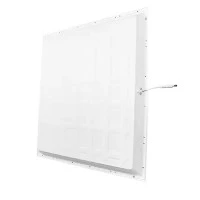
Qualified commercial LED panels must adopt integrated fully sealed structural design, abandoning the traditional open gap splicing process. The high-end product uses reinforced 6063 aluminum alloy frame + integral tensile sealed iron backplate, with dense rivets around the backplate for fully enclosed fitting, realizing zero-gap sealing of the whole lamp body. This structure completely isolates external dust, humid air, and flying insects, fundamentally avoiding internal dust accumulation and component corrosion, and solving the common failure problems of inferior lamps in commercial environments.
The matched EVA buffer isolation layer forms a secondary protective barrier, which not only prevents dust and moisture penetration but also plays a shock-absorbing and anti-cracking role, protecting the internal optical system from vibration damage during installation and long-term use. The fully sealed structure ensures that the internal light guide plate, diffuser plate, and LED chips are always in a dust-free and dry working state, maintaining long-term stable lighting effects.
Optimized Heat Dissipation System: Controlling Light Decay and Extending Service Life
Excellent heat dissipation performance is the core guarantee for the long service life of commercial lamps. The benchmark product adopts high thermal conductivity 6063 aluminum alloy frame with excellent heat conduction efficiency, matching the integral tensile iron backplate to form an efficient passive heat dissipation system. The multi-point uniform heat dissipation structure quickly exports the heat generated by LED chips, stably controlling the long-term continuous operating temperature of the lamp body below 55℃.
Low-temperature operating environment effectively inhibits the thermal aging of LED chips and drive components, greatly reducing the light decay rate. Verified by LM-80 professional aging certification, the product has a service life of up to 50,000 working hours, maintaining more than 90% initial luminous brightness after long-term operation, completely avoiding the common problems of rapid brightness attenuation and early failure of inferior commercial panels.
Professional Optical Configuration: Meeting Commercial High-Comfort Lighting Standards
In terms of optical performance, high-quality commercial LED panels are equipped with original Chimei high-transmittance light guide plate, with 88%–90% ultra-high light transmittance and precise dot-matrix light guide technology, realizing full-panel uniform light emission without dark edges, mottling, and local dark areas. The professional anti-yellowing diffuser plate adopts anti-aging and anti-oxidation materials, which will not turn yellow or deform after long-term use, maintaining stable light color and light efficiency throughout the lifecycle.
At the same time, the product achieves UGR<19 ultra-low glare performance through professional diffuse reflection technology, eliminating dazzling bright spots and reflected glare, effectively reducing user visual fatigue. Equipped with high-stability LM-80 certified LED chips, CRI>80 high color rendering accurately restores the true color of objects, fully meeting the high-standard lighting comfort requirements of offices, hospitals, schools, and public buildings.
Standardized Protection Grade and Safety Performance
Suitable for high-standard indoor commercial scenarios, the product has official IP20 protection grade, which can effectively prevent personnel from touching internal live components and avoid electrical safety risks. Combined with the fully sealed structural advantage, it resists dust accumulation, mosquito intrusion, and slight water mist erosion, ensuring long-term safe and stable operation of the lamp body in high-traffic and complex commercial environments, and reducing potential safety hazards and maintenance risks.
Core Purchasing Principles for Commercial LED Panel Light Projects
Based on the summary of common pitfalls and high-quality product benchmarks, commercial lighting project procurement needs to adhere to four core principles to fundamentally avoid project risks and improve long-term project value.
Adhere to Lifecycle Cost Priority, Not Unit Price Priority
Procurement personnel must establish a scientific cost concept. The low initial price of inferior products will bring huge hidden costs such as frequent maintenance, large-scale replacement, project rework, and user complaints. High-quality sealed LED panel lights have a slightly higher initial investment but ultra-low failure rate and maintenance cost, stable performance for 8–10 years, and far higher comprehensive cost performance than low-priced inferior products. Long-term stable operation can effectively save project operation costs and improve project benefits.
Take Structural Quality as the First Evaluation Index
Optical parameters can be optimized through debugging, but structural defects are irreversible. The sealed dust-proof structure, heat dissipation structure, and frame material determine the environmental adaptability and service life of the lamp, which are the primary indicators for screening commercial-grade products. When purchasing, priority should be given to integrated sealed structure, high-strength aluminum alloy frame, and integral backplate products to eliminate structural hidden dangers.
Verify Authoritative Certifications and Actual Test Data
Reject false publicity and parameter falsification of suppliers, and strictly verify LM-80 aging certification, IP protection grade certification, color rendering and glare test reports of products. Only products with professional authoritative certification can ensure stable performance in long-term commercial high-load operation and avoid parameter inconsistency.
Match Product Performance with Scenario Requirements
Different commercial scenarios have differentiated lighting requirements: medical and educational scenarios require ultra-low glare and high hygiene performance; office scenarios require high color rendering and low light decay; high-traffic public spaces require dust resistance and high stability. Purchasing must select targeted high-performance products according to scenario characteristics to ensure that lighting effects and product performance fully match project demands.
Conclusion
The common pitfalls in commercial LED panel light procurement are essentially the deviation between short-term low-price thinking and long-term project value demand. Most procurement failures are not caused by product quality accidents but by professional misjudgment in the selection stage. Blindly pursuing low prices, misjudging core parameters, ignoring structural performance, and neglecting long-term stability will bring irreversible losses to commercial lighting projects, including increased maintenance costs, reduced user experience, and discounted project quality.
High-quality sealed dust-resistant LED ceiling panels solve various industry pain points of inferior products through integrated sealed structure, efficient heat dissipation system, professional optical performance, and standardized safety protection. They perfectly adapt to the long-term high-load operation demands of modern commercial, medical, educational, and public building lighting projects. For professional engineering contractors and project procurement managers, scientific procurement logic should abandon low-price competition and take structural reliability, long-term light decay stability, scenario adaptability, and lifecycle cost performance as the core selection standards.
Avoiding procurement pitfalls is not only a key step to ensure project lighting quality but also an important way to reduce project operation risks and maximize long-term investment returns. Choosing commercial-grade high-standard sealed LED panel lights can create stable, comfortable, safe, and low-maintenance high-quality lighting systems for commercial projects, bringing lasting value and competitive advantages to engineering projects.

How To Cooperate With Us?
We are happy to have total control over the manufacturing process and the calibre of our products since we have our own facilities. Since we are producers rather than just brokers, we are dedicated to providing our customers with the best pricing. Since we are certain that the price and quality of our products are clear, we invite customers to see our samples first. Our commitment to quality and customer satisfaction drives us to continuously provide top-notch goods.
Our address
3rd Floor, 5th Building, Hebei Industrial Park, Hualian Community, Longhua District, Shenzhen, China