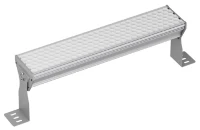
LED corn lights are commonly employed in high-output applications such parking lots, streetlights and industrial settings. Their multi-diode arrangement gives them the appearance of corn cobs, hence their name. LED corn lights use cutting-edge technology to reduce flicker and glare, which are problems associated with visual fatigue and safety hazards that are frequently present in less expensive LEDs. With the help of industry advancements and new research, this article examines how LED corn lights handle flicker and incorporate anti-glare qualities.
Comprehending LED flicker
Rapid variations in light output, or flicker, are a prevalent problem with inferior LEDs. It happens as a result of drivers' erratic current delivery, inadequate thermal control, or mismatched dimming systems. According to research on road lighting safety, flicker frequencies below 100 Hz are noticeable to humans and can cause headaches, eye strain, and even brief distraction in drivers. For example, flicker frequencies as low as 4–6 Hz dramatically enhance visual fatigue as evaluated by metrics like blink rate and eye-closure time, according to studies on low-mounting-height luminaires in tunnels.
How LED Corn Lights Address Flicker a. Stable Current and High-Quality Drivers
Precision-engineered drivers used in LED corn lights minimise voltage swings by maintaining a steady current. Corn lights put stability first, in contrast to less expensive LEDs, which frequently utilise inexpensive drivers that are prone to ripple currents. For instance, the OSLON® SSL LED series, which is utilised in sophisticated agricultural lighting systems, places a strong emphasis on low heat resistance and high dependability to guarantee steady operation under a range of loads. By smoothing out power supply, this stability immediately lowers flicker.
c. Control of Heat
Flicker is made worse by overheating, which damages LED drivers and components. LED corn lights include materials with low thermal resistance and sturdy heat sinks. For example, the OSLON® Square platform generates very little heat and has a 77% wall-plug efficiency (WPE), allowing for extended operation without performance degradation. Temperature variations, a major cause of flicker, are reduced by effective thermal design.
b. Elevated Flicker Rates
According to studies, flicker frequencies that are higher (like 6 Hz) than those that are lower (like 4 Hz) lessen visual tiredness. LED corn lights frequently run on frequencies higher than 200 Hz, which are invisible to the naked eye. This is performed by pulse-width modulation (PWM) or analog dimming methods, delivering flicker-free lighting even in dynamic surroundings.
Features of LED Corn Lights That Prevent Glare
Another serious issue is glare, which is brought on by an extreme brightness contrast (BC) between light sources and their surroundings. This is addressed by design and optical advances in LED corn lights:
a. Multidirectional LED Configuration
By distributing LEDs in a 360-degree circle, the corn cob construction lessens hotspots for intense light. This style softens sharp edges by evenly dispersing light when paired with diffusers or frosted lenses. In contrast, conventional single-directional LEDs frequently produce strong beams that exacerbate glare.
a. Reduction of Brightness Contrast
According to studies on road illumination, visual tiredness can be lessened by reducing the surface brightness of luminaires or raising the backdrop brightness. LED corn lights balance illumination without overpowering the surroundings by employing matte coatings or lower-intensity LEDs.
c. Spectral control and directional shielding
More sophisticated types reduce upward glare by directing light downward using reflectors or louvres. Directional control improves visual comfort, as evidenced by technologies such as the Avici lighting system, which employs OSLON® LEDs for exact spectrum calibration. Light is focused on certain regions to reduce stray emissions.
Evaluation of Less Expensive LEDs
Key components that cause flicker and glare are frequently compromised in less expensive LEDs. For example, their motors are usually inexpensive and produce erratic current, which causes observable flicker. On the other hand, consistent power delivery is ensured by the high-efficiency, ripple-free drivers used in LED corn lights. Similarly, corn lights use sophisticated heat sinks and materials with low thermal resistance to ensure constant performance, but less expensive LEDs suffer from poor thermal management-often missing effective heat dissipation.
Budget LEDs frequently have noticeable and uncomfortable flicker rates that are below 100 Hz. But because LED corn lights run at frequencies higher than 200 Hz, flicker is undetectable. Pulse-width modulation (PWM), a sophisticated dimming technology that preserves light quality while removing noticeable variations, is used to do this.
Another area of difference is the management of glare. Cheaper LEDs usually have great brightness contrast and little shielding, which makes for unpleasant viewing circumstances. In contrast, LED corn lights reduce glare by using directed shielding, diffused optics, and multidirectional diode configurations. Light dispersion is further softened by features like frosted lenses and matte finishes, which provide even illumination without being too bright.
Uses and Advantages
For environments that demand both high output and visual comfort, LED corn lights are perfect:
Street Lighting: Less flicker improves motorist safety, especially in tunnels where flicker and extended glare can be dangerous.
Industrial Facilities: Anti-glare features lessen eye strain during extended hours and increase worker efficiency.
Sustainable Agriculture: Although not specifically connected to maize lights, advancements like as OSLON® LEDs in plant fields show how scalable glare-controlled, flicker-free systems can be.
LED corn lights' extended lifespan and energy efficiency make them ideal for these applications, which support international sustainability objectives.
Final thoughts
LED corn lights use a mix of high-frequency operation, thermal stability, anti-glare optics, and sophisticated drivers to reduce flicker and glare. Their extended lifespan and energy efficiency demonstrate how these elements not only improve comfort and safety but also support sustainability objectives. A standard for high-quality illumination will be established as lighting technology advances via the incorporation of industry technologies like OSLON® platforms and research discoveries like brightness contrast optimisation.
LED corn lights are a prime example of how contemporary lighting solutions can overcome the drawbacks of less expensive alternatives by emphasising both technological accuracy and human-centric design, guaranteeing safer and more comfortable surroundings.