

LED tube lights have become increasingly popular in recent years due to their energy efficiency and long lifespan. But how do these lights actually work?
LED tube lights use a semiconductor material called Gallium Nitride (GaN) to produce light. When an electric current is passed through the semiconductor material, electrons are forced to move across the material from the negative to the positive side. As these electrons move, they release energy in the form of photons, which is the light that we see.
Unlike traditional fluorescent lights, LED tube lights do not require a ballast to regulate the flow of electricity. Instead, they use a solid-state driver that controls the amount of voltage and current that is supplied to the LEDs. This driver also ensures that the LED tube light operates at the optimal level of efficiency, which helps to extend its lifespan.
One of the key benefits of LED tube lights is that they emit directional light, meaning that the light is focused in a specific direction rather than being dispersed in all directions. This helps to reduce energy waste and ensures that the light is used efficiently.
Another benefit of LED tube lights is that they are highly durable and long-lasting. Unlike fluorescent lights that use fragile glass tubes, LED tube lights are made from solid-state materials that are less prone to breaking or damage. This means that LED tube lights can last up to 50,000 hours or more, which is significantly longer than traditional fluorescent lights.
Finally, LED tube lights are highly versatile and can be used in a wide range of applications, including commercial and residential lighting, as well as outdoor lighting. They can also be used in a variety of fixtures, including recessed lighting, track lighting, and pendant lighting.
In conclusion, LED tube lights work by using a semiconductor material to produce light, and are highly efficient and durable compared to traditional fluorescent lights. Their directional light and long lifespan make them an excellent choice for a variety of lighting applications.
How do LED tube lights work?
Dec 12, 2023
Previous: What is a Type A LED tube?
Send Inquiry
Related Knowledge
-
 When buying LED lights, do you really only look at the wattage?31 Mar, 2026
 -
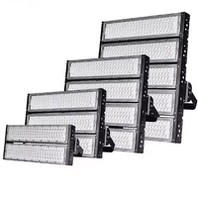 Professional Sports Lighting Guide: How 1000W LED Floodlights Are Redefining Large Venue Standards31 Mar, 2026
 -
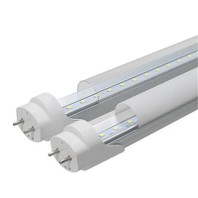 A Comparison of Lighting Effects: LED Tubes vs. Linear Fluorescent Tubes in Office Environments31 Mar, 2026
 -
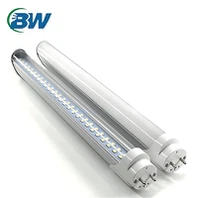 Upgrade Your Lighting: Why The Benwei 18W RGB T8 Tube Light Is A Smart Choice For Commercial & In...31 Mar, 2026