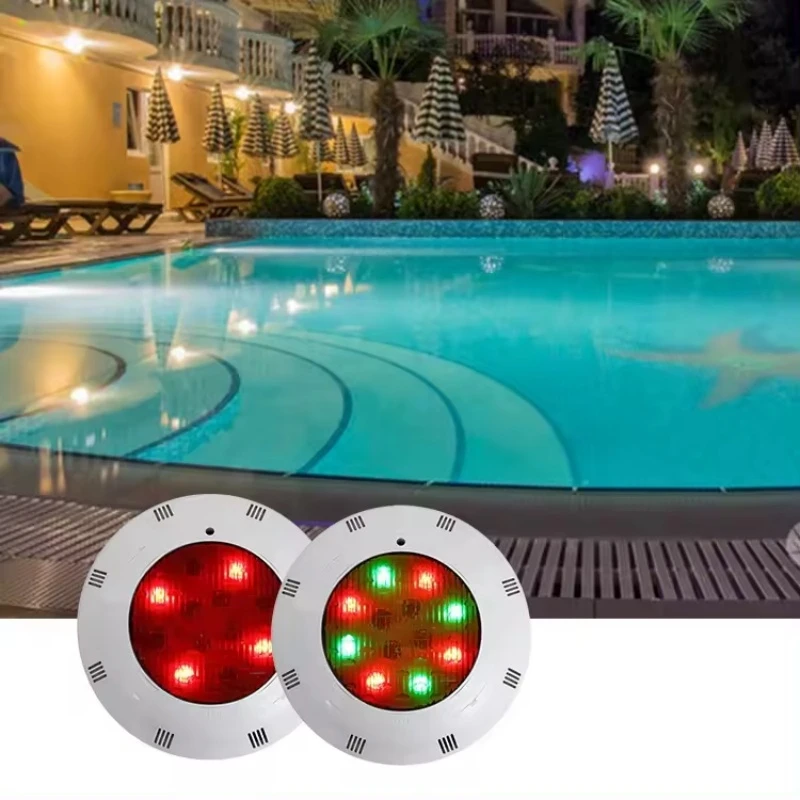
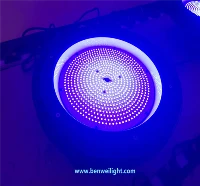
Pool lights may seem like a minor installation detail, but choosing the wrong size or wattage can lead to anything from compromised performance to the need for costly rework. Whether you are building a new pool or replacing old lights, these two parameters-size and wattage-directly determine whether the installation fits correctly and whether the lighting meets requirements. This article approaches the topic from a practical purchasing perspective to help you navigate the selection process.
Why Size and Wattage Affect Performance
The size of the pool light determines whether it fits into the existing niche; a mismatch means either recutting the niche or dealing with a loose, poorly sealed fixture that is prone to water ingress and failure over time. Wattage directly impacts brightness: if the wattage is too low, the water looks dim, compromising both safety and aesthetics; if it is too high, it wastes electricity and may even exceed the transformer's load capacity. Therefore, these parameters should not be selected in isolation but rather determined based on the specific conditions of the pool.
Estimating Required Wattage Based on Pool Size
A rough but practical rule of thumb is that approximately 15–20 lumens per square meter of water surface area are needed for basic visibility; for a brighter, more atmospheric effect, this can be increased to 25–30 lumens per square meter. For example, a residential pool of around 30 square meters using LED lights generally requires a total wattage of 30–50W for daily use. However, for commercial pools or those with significant depth (exceeding 1.8 meters), it is advisable to increase the wattage, as greater water depth causes more pronounced light attenuation.
Common Pool Light Sizes and Use Cases
Pool light sizes on the market are not arbitrary; they generally adhere to a few universal standards to ensure compatibility with existing niches:
Small-sized lights (approx. 100–120mm diameter): Typically used for small residential pools or spas; they require smaller mounting holes, making them ideal for renovation projects with limited space.
Standard-sized lights (approx. 170–180mm diameter): This is the most common specification for residential pools; they are compatible with most mainstream niches and are easy to replace. Large-format lights (diameter of 250mm or larger): Commonly found in commercial and hotel pools, these utilize higher wattage to provide broader illumination coverage.
The safest approach when purchasing is to measure the dimensions of the existing light niche-or confirm the specifications of the embedded niche with the pool contractor-before selecting a matching product. This prevents issues where the purchased light does not fit the installation space.
Power Comparison: LED vs. Halogen
Early pool lights predominantly used halogen bulbs, typically ranging from 300W to 500W; these were characterized by high power consumption, significant heat generation, and short lifespans. The industry has now largely shifted to LEDs. For the same level of brightness, LED power requirements drop to around 20W–35W-meaning LEDs achieve comparable illumination using less than one-tenth the power of halogen bulbs. Consequently, halogen wattage is rarely a primary consideration when selecting pool lights today; LEDs have become the default, cost-effective choice, particularly given the significant difference in long-term operating costs.
Other Factors Affecting Brightness Requirements
Beyond pool surface area and depth, several often-overlooked factors influence the choice of wattage:
Pool water and tile color: Light-colored tiles offer better reflectivity, resulting in greater perceived brightness at the same wattage, whereas dark pool bottoms require higher wattage.
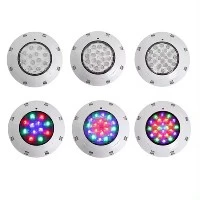
Usage scenario: If the goal is simply safety lighting for nighttime, a conservative wattage suffices. If the goal is ambiance (e.g., using RGB color-changing lights), multiple lights are usually arranged to create depth and layering, rather than simply increasing the wattage of a single light.
Ambient lighting: For outdoor pools, strong surrounding ambient light reduces the required brightness for underwater lights.
Determining the Number of Lights
Using a single high-wattage light often fails to provide the uniform illumination achieved by multiple medium-wattage lights, especially in elongated or irregularly shaped pools. A general rule of thumb is to install one light for every 3–4 meters of pool wall length; this minimizes dark spots and ensures a more natural transition of light. For pools with complex structures-such as irregular shapes, steps, or hydrotherapy zones-it is advisable to calculate requirements for each zone individually rather than applying a blanket calculation based on the total pool area.
Summary
When selecting the size and wattage of pool lights, the key is to follow this sequence: first measure the dimensions, then calculate the required wattage, and finally determine the quantity. The size must match the light niche, wattage should be estimated based on surface area and depth, and the quantity should be flexibly adjusted according to the pool shape and intended use. Due to their low power consumption and long lifespan, LED lights have become the preferred choice for most projects. Clarifying these variables helps avoid common pitfalls in the selection process.
If you are currently selecting pool lights for a project or need a wattage plan tailored to specific pool dimensions, please share your pool specifications and niche sizes with us. We can recommend suitable models and provide detailed technical specifications and price quotes; feel free to send us an inquiry at any time.
https://www.benweilight.com/professional-lighting/waterproof-stainless-steel-rgb-underwater-led.html