How to Choose the Right LED Driver?
Choosing the right LED driver is essential for achieving reliable brightness, stable dimming, long service life, and safe operation. The wrong driver can cause flickering, overheating, inconsistent light output, or premature LED failure.
Whether you are designing residential lighting, a commercial installation, an architectural feature, or an outdoor project, the selection process should go beyond matching wattage. You must also consider voltage, current, dimming compatibility, environmental conditions, thermal management, certifications, and future maintenance.
This guide explains how to choose an LED driver with a practical, step-by-step approach.
Table of Contents
Understanding the Role of an LED Driver
Key Specifications: Matching Your Load
Constant Voltage vs. Constant Current LED Drivers
Dimming Compatibility: Avoiding Flicker and Incompatibility
Environmental and Safety Requirements
Final Selection Checklist and Expert Tips
Frequently Asked Questions
Understanding the Role of an LED Driver
What is an LED driver?
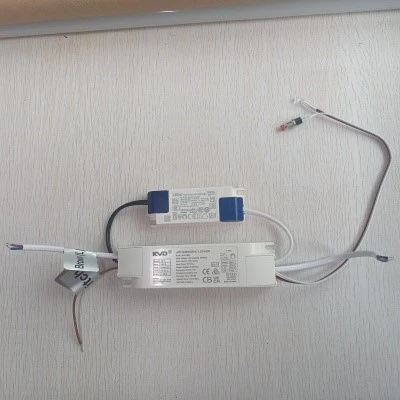
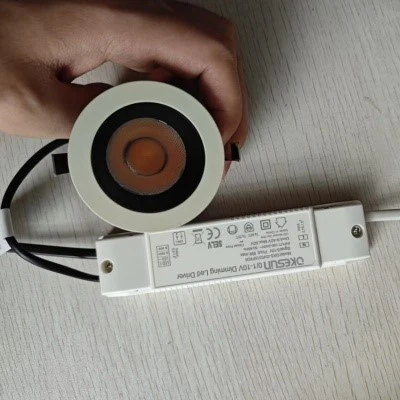
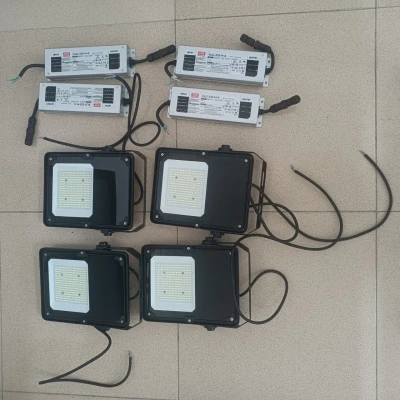
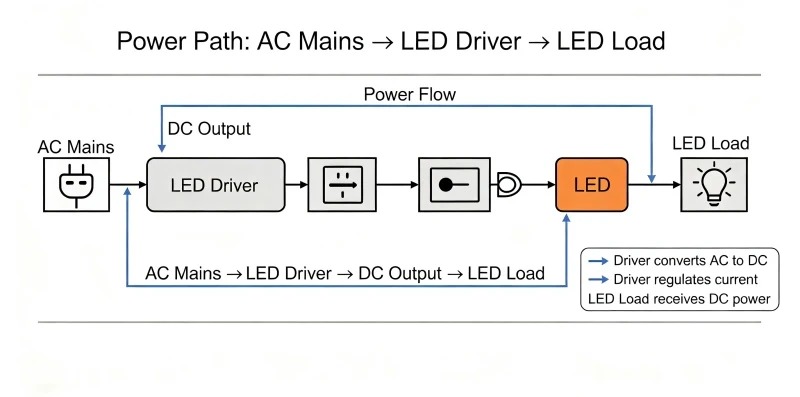
An LED driver is an electrical device that supplies LEDs with the appropriate voltage and current. It regulates power between the electrical source and the LED load, helping the LEDs operate consistently despite normal variations in the incoming supply.
In many applications, the driver converts alternating current from the mains supply into the direct current required by LED modules, strips, or fixtures. Some drivers also provide additional functions, including:
Current regulation
Voltage conversion
Dimming control
Short-circuit protection
Overload protection
Over-temperature protection
Surge protection
Power-factor correction
The driver is often described as the "heart" of an LED lighting system because it directly affects the performance and reliability of the light source.
For a broader introduction to LED technology, see our website. You can also review Benwei,when comparing available solutions.
What happens when the wrong driver is selected?
A driver that does not match the LED load may produce several problems:
Flickering or visible stroboscopic effects
Reduced light output
Uneven brightness
Audible buzzing
Excessive heat
Unstable dimming
Driver shutdown
Shortened LED or driver lifespan
Permanent damage to the LED module
For example, connecting a constant-current fixture to an unsuitable constant-voltage supply can allow excessive current to flow through the LEDs. Conversely, using a driver with insufficient output can cause voltage instability, overload protection, or intermittent shutdown.
The driver should therefore be selected as part of the complete lighting system-not as an afterthought.
Key Specifications: Matching Your Load
The most important part of how to choose an LED driver is matching the driver's electrical specifications to the LED load. Start by reviewing the LED product datasheet, installation instructions, and wiring requirements.
1. Match the output voltage
The driver output voltage must match the rated voltage of the LED product.
Typical constant-voltage systems include:
5 V
12 V
24 V
48 V
If an LED strip is rated for 24 V, use a compatible 24 V constant-voltage driver. Do not assume that a higher voltage driver will provide better performance. Applying excessive voltage can damage the LEDs and create a serious safety risk.
For constant-current systems, voltage is usually specified as an operating range rather than one fixed output value. The driver must provide the required current while remaining within the LED fixture's forward-voltage range.
2. Calculate the total wattage
Add the wattage of all LED products connected to the driver.
For example:
LED strip power: 12 W per meter
Total strip length: 5 meters
Total load: 12 W × 5 m = 60 W
A driver should not normally be operated continuously at its absolute maximum rating. A design margin helps accommodate temperature changes, production tolerances, startup conditions, and future adjustments.
A commonly used planning approach is to select a driver with approximately 20% more capacity than the calculated load:
Calculated load: 60 W
Suggested minimum driver capacity: 60 W × 1.20 = 72 W
The appropriate margin depends on the product manufacturer, application, ambient temperature, and installation conditions. Always follow the driver datasheet when its recommendations differ.
3. Check the output current
For constant-current LED drivers, the output current must match the LED fixture's required operating current.
For constant-voltage LED strips, the driver's maximum output current must be sufficient for the total load. You can estimate current using:
Current = Power ÷ Voltage
For a 60 W LED load operating at 24 V:
60 W ÷ 24 V = 2.5 A
In this example, the driver should provide at least the required current while maintaining a suitable design margin.
4. Consider voltage drop
Voltage drop becomes increasingly important as cable length and LED load increase. A long low-voltage cable run may cause the LED load to receive less voltage than intended, leading to dimming or color inconsistency.
To reduce voltage-drop problems:
Use an appropriate cable size.
Keep high-current cable runs as short as practical.
Divide large systems into separate circuits.
Add power injection points to long LED strips.
Consider a higher-voltage distribution system where compatible.
A larger driver alone will not correct voltage drop caused by undersized or excessively long wiring.
For technical guidance on lighting design and standards, consult resources from the ies.org and applicable requirements from the iec.ch.
Constant Voltage vs. Constant Current LED Drivers
One of the most important decisions is understanding constant voltage vs constant current LED drivers.
Although both types regulate power, they are designed for different LED configurations.
Constant-voltage drivers
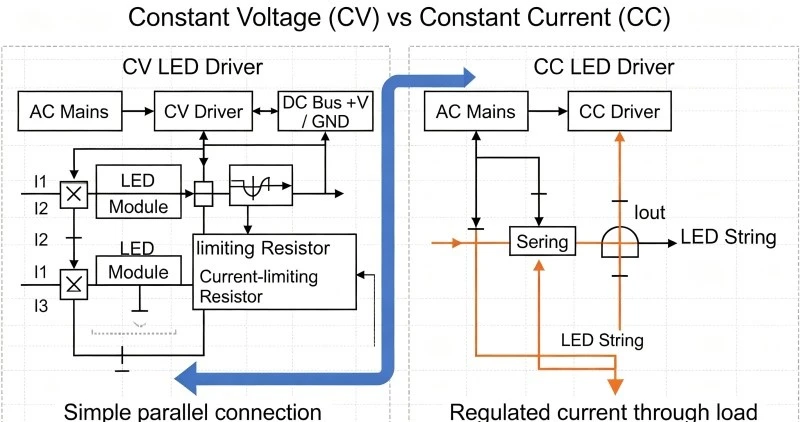
A constant-voltage driver maintains a fixed output voltage, such as 12 V or 24 V. The LED product typically includes resistors or internal circuitry that controls the current flowing through the LED components.
Constant-voltage drivers are commonly used for:
LED strips
Flexible linear lighting
Cabinet lighting
Certain LED modules
Decorative and architectural accent lighting
When using a constant-voltage system, the driver voltage must match the LED product voltage exactly.
Constant-current drivers
A constant-current driver regulates the output current, such as 350 mA, 500 mA, or 700 mA. The output voltage varies within a specified range to maintain the required current.
Constant-current drivers are commonly used for:
High-power LED modules
COB LED fixtures
Downlights
Streetlights
Commercial luminaires
Custom LED assemblies
A constant-current driver must be selected according to the LED fixture's required current and forward-voltage range. Connecting the wrong current level can damage the LED module.
CV vs. CC: When to Use Which
| Feature | Constant-voltage driver |
Constant-current driver |
|---|---|---|
| Output type | Fixed voltage | Regulated current |
| Typical ratings | 5 V, 12 V, 24 V, 48 V | 350 mA, 500 mA, 700 mA, and other specified values |
| Common applications | LED strips and modules | High-power LED fixtures and COB systems |
| Main selection requirement | Match voltage and calculate total wattage | Match current and confirm voltage range |
| Wiring approach | Parallel connections are commonly used | Follow fixture-specific series or dedicated wiring |
| Typical selection error | Using the wrong voltage | Using the wrong output current |
Dimming Compatibility: Avoiding Flicker and Incompatibility
Dimming is a frequent source of LED installation problems. A driver may provide the correct voltage and wattage but still perform poorly if it is incompatible with the control system.
Reliable LED driver dimming solutions begin with identifying the dimming method required by the project.
Common dimming protocols
TRIAC or phase-cut dimming
TRIAC dimming is widely used in residential applications and is often associated with conventional wall dimmers. The driver must be specifically designed to work with the selected leading-edge or trailing-edge dimmer.
A driver that is not phase-cut compatible may flicker, buzz, fail to dim smoothly, or have a limited dimming range.
0–10 V dimming
0–10 V is frequently used in commercial lighting systems. A low-voltage control signal determines the desired light output.
Before installation, verify:
Whether the driver supports sinking or sourcing control
The control voltage range
The minimum dimming level
Wiring requirements
Compatibility with the building control system
DALI
DALI is a digital lighting-control protocol used in many commercial and architectural projects. It can support individually addressable fixtures, scenes, scheduling, and two-way communication when the complete system is correctly configured.
The driver, control gear, commissioning software, and lighting-control network must be compatible.
PWM dimming
Pulse-width modulation rapidly switches the LED output to control perceived brightness. PWM is common in low-voltage LED strip systems and controller-based installations.
The PWM controller and driver should be rated for the same voltage and suitable for the total connected load.
Why mismatched systems flicker
In practical installations, flicker is often caused by a mismatch between the driver, dimmer, minimum load, or control protocol. For example, a wall dimmer may be compatible with incandescent lamps but unsuitable for an LED driver with a different electronic load profile.
A professional LED driver compatibility guide should therefore verify the entire control chain:
LED product
Driver
Dimmer or controller
Wiring method
Minimum and maximum load
Control protocol
Required dimming range
If flicker, buzzing, or poor low-level dimming occurs, do not immediately replace the LED fixture. First check the driver and control-system compatibility.
For research and educational resources on lighting quality and visual performance, consult the lrc.rpi.edu.
Need help checking compatibility? Contact Benwei. Provide the LED product model, total load, control method, and intended application so the technical team can recommend a suitable configuration.
Environmental and Safety Requirements
Electrical specifications are only part of the selection process. The installation environment also determines which driver is appropriate.
Indoor, outdoor, and wet-location requirements
For outdoor or damp applications, examine the driver's enclosure and ingress-protection rating. The IP rating indicates the level of protection against solid particles and water under defined test conditions.
When choosing a driver for outdoor projects, consider:
Rain and direct water exposure
Condensation
Dust and insects
Temperature variation
Salt air or corrosive environments
Ventilation
Accessibility for maintenance
Exposure to sunlight or heat
An outdoor-rated driver should still be installed according to its instructions. An appropriate IP rating does not make every installation method acceptable.
Thermal management
Heat is one of the major factors affecting driver life. Drivers installed in enclosed spaces, ceiling voids, cabinets, or outdoor enclosures may operate at higher temperatures than expected.
Before installation:
Check the rated ambient-temperature range.
Allow adequate ventilation where required.
Avoid placing the driver next to heat-producing equipment.
Do not cover ventilation openings.
Follow derating guidance in the datasheet.
Keep the driver accessible for inspection and replacement.
A driver that is technically powerful enough for the load may still be unsuitable if it cannot dissipate heat effectively.
Safety and compliance
Professional projects should use drivers with appropriate certifications and documentation for the target market. Depending on the location and application, relevant requirements may include:
Electrical safety certification
Electromagnetic-compatibility compliance
RoHS requirements
Surge protection
Short-circuit protection
Overload protection
Over-temperature protection
Local installation-code compliance
The exact certification requirements vary by country and project type. Verify markings and declarations against official documentation rather than relying only on product images or marketing descriptions. The iec.ch provides information about international electrotechnical standards and conformity frameworks.
Final Selection Checklist and Expert Tips
Before purchasing or installing an LED driver, review the following checklist.
LED driver selection checklist
Is the driver type constant voltage or constant current?
Does the output voltage match the LED product?
Does the output current match the fixture requirement?
Is the total wattage calculated correctly?
Is an appropriate operating margin included?
Has voltage drop been evaluated?
Is the dimming protocol compatible?
Does the driver support the required dimming range?
Is the driver suitable for the installation environment?
Are the IP rating and temperature limits appropriate?
Are the required safety certifications documented?
Is the driver accessible for maintenance?
Is the warranty suitable for the project?
Are the datasheet and installation instructions available?
Read the datasheet-not just the product label
Product listings often show only nominal wattage and voltage. A complete datasheet may also identify:
Minimum and maximum load
Output-current tolerance
Power factor
Efficiency
Dimming behavior
Operating temperature
Inrush current
Protection features
Wiring limitations
Installation orientation
Certification details
These specifications can make a significant difference in commercial, architectural, and high-use applications.
Frequently Asked Questions
How do I choose the right LED driver?
Start by identifying whether the LED load requires constant voltage or constant current. Then match the voltage or current, calculate the total wattage, include an appropriate design margin, verify dimming compatibility, and confirm that the driver suits the installation environment.
Can I use a higher-wattage LED driver?
A higher-capacity driver may be suitable if its output voltage or current is compatible with the LED load. However, capacity alone does not guarantee compatibility. Check the minimum load, output type, dimming behavior, wiring requirements, and manufacturer instructions.
What happens if an LED driver is oversized?
An oversized driver is not automatically unsafe, but it may operate inefficiently if the load falls below its minimum rating. Some drivers may also have poor dimming performance or unstable operation at very low loads. Always check the specified operating range.
What is the difference between a constant-voltage and constant-current driver?
A constant-voltage driver maintains a fixed voltage, such as 12 V or 24 V, and is commonly used with LED strips. A constant-current driver regulates a specific current and is commonly used with high-power LED fixtures and COB modules.
Why do my LED lights flicker when dimmed?
Flickering may result from an incompatible driver and dimmer, an unsuitable control protocol, an incorrect minimum load, unstable wiring, or a driver that does not support the required dimming range. Check the compatibility information for every component in the system.
Do outdoor LED drivers need a special rating?
Outdoor installations generally require a driver designed for the expected moisture, dust, temperature, and environmental conditions. Check the product's IP rating, operating-temperature range, enclosure instructions, and local electrical requirements.
Conclusion
Selecting the right LED driver is essential for safe, stable, and efficient lighting. The process begins with the LED product's electrical requirements and continues through load calculation, driver type, dimming compatibility, thermal management, environmental protection, and certification review.
The most reliable approach is to:
Identify the required constant-voltage or constant-current configuration.
Match the output voltage or current precisely.
Calculate total load wattage.
Include a suitable design margin.
Check cable distance and voltage drop.
Confirm compatibility with the dimmer or control system.
Verify environmental ratings and safety documentation.
Read the complete manufacturer datasheet before installation.
When the application is complex or the consequences of failure are significant, professional guidance can reduce risk and improve long-term performance.
For customized LED driver solutions, contact Benwei through benweilight.com to discuss your lighting requirements.