How does an LED work?
Despite being used in many aspects of modern life, such as lighting our homes, powering smartphone screens, and directing traffic, light-emitting diodes (LEDs) differ from more conventional lighting technologies like incandescent or fluorescent bulbs due to their sophisticated semiconductor physics. LEDs use a process known as electroluminescence, which is the emission of photons (light particles) when an electric current flows through a specially made semiconductor material. This is in contrast to incandescents, which produce light by heating a filament, or fluorescents, which use gas and UV radiation. We must first examine the fundamentals of semiconductors, the design of an LED, and the sequential procedure that converts electricity into visible light in order to comprehend how this occurs.
The Basis: Bands of Energy and Semiconductors
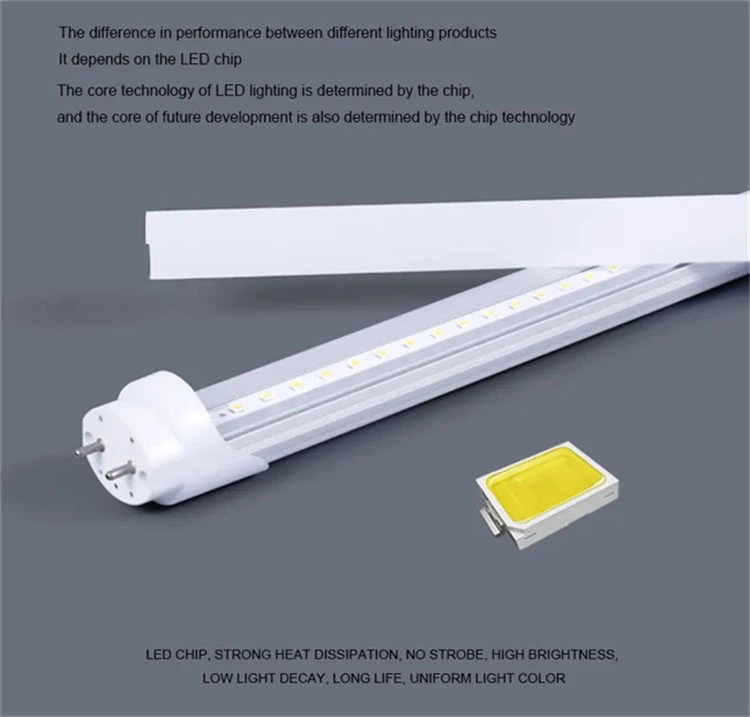
Every LED is powered by a semiconductor, a substance that conducts electricity poorer than conductors (like copper) but better than insulators (like glass). The electron energy bands-areas of energy that electrons can occupy-are essential to a semiconductor's distinctive behaviour. Electrons have distinct energy levels in all materials, but in solids, these levels combine to form two major bands: the conduction band and the valence band.
The material's atoms are held together in a crystalline structure by the electrons in the valence band, which are firmly attached to the atoms. Electrical conductivity is made possible by the electrons in the conduction band, which are free to flow through the substance. The band gap, a range of energy that electrons cannot inhabit, exists between these two bands. A material's band gap size determines whether it is an insulator, conductor, or semiconductor: semiconductors have a small, measurable band gap (electrons can cross the gap with a small input of energy, like an electric current), conductors have no band gap (electrons move freely between bands), and insulators have very large band gaps (making it difficult for electrons to jump to the conduction band).
The semiconductor used in LEDs is "doped", which is a procedure that modifies the material's electrical characteristics by adding trace amounts of impurities. Both n-type and p-type semiconductors are produced by doping. When elements with additional electrons, such as phosphorus, are doped into N-type semiconductors, they become free to move in the conduction band and give the material a net negative charge. Elements with fewer electrons, like boron, are used to dope P-type semiconductors. This results in "holes", or missing electrons in the valence band, which function as positive charges and can pass through the material as electrons fill them. An LED functions because of the p-n junction, which is the intersection of these two doped regions.
The LED's Structure: From Light Output to P-N Junction
The straightforward yet accurate design of an LED maximises light output while reducing energy loss. Its p-n junction is located in a thin layer of semiconductor material, typically gallium-based, such as gallium arsenide or gallium nitride. The substrate, a foundation material that provides support and aids in heat dissipation, is where this semiconductor layer is attached. This is important since overheating can shorten an LED's lifespan.
One electrode is attached to the p-type region (the anode, a positive terminal) and the other to the n-type region (the cathode, a negative terminal) on top of the semiconductor layer. An electric field is produced across the p-n junction when a voltage is supplied across these electrodes (the cathode being negative and the anode being positive). The n-type semiconductor's free electrons are pushed toward the junction by this field, while the p-type semiconductor's holes are drawn in the same direction.
In order for the light generated at the p-n junction to escape, the semiconductor layer must be transparent or semi-transparent (or have a reflecting layer on one side). Modern LEDs employ materials like gallium nitride (GaN), which are transparent to visible light and guarantee that the majority of photons reach the surface, in contrast to early LEDs, which frequently used opaque semiconductor materials that limited light output. The p-n junction of the semiconductor is where the primary light-generation process takes place, though some LEDs also have a lens or coating to focus the light or change its colour.
Step 1: Using Electron-Hole Recombination and Voltage
An external voltage given to the LED's electrodes initiates the light emission process by establishing a forward bias, which is the proper direction of current flow for the LED to function; reverse bias, on the other hand, stops current and produces no light. Free electrons from the n-type area are accelerated into the p-type region, and holes from the p-type region are accelerated into the n-type region by the electric field across the p-n junction when forward bias is applied.
These electrons and holes eventually come together at or close to the p-n junction as they travel in the same direction. A free electron from the conduction band of the n-type area "falls" into the hole when it collides with a hole from the valence band of the p-type region, changing from a higher energy state in the conduction band to a lower energy level in the valence band. The electron and hole cancel each other out during this transition, which is known as recombination, and the extra energy they lose is emitted as a photon.
The size of the semiconductor's band gap directly affects the energy of this photon, which gives the light its colour. A photon with a higher energy (and a shorter wavelength, such as blue or violet light) is created when an electron recombines with a hole and loses more energy due to a wider band gap. A photon with a longer wavelength, such as red or orange light, and less energy is produced by a smaller band gap.
For instance:

Due to its narrow band gap, gallium arsenide (GaAs) emits red light with a wavelength of about 650 nm.Because of its wider band gap, gallium nitride (GaN) emits blue or violet light with a wavelength of about 450 nm.
Manufacturers can modify the band gap to produce LEDs that generate green, yellow, or even white light by combining various semiconductor materials (such as gallium indium nitride, or InGaN) (more on white LEDs below).
Step 2: Efficiency and Light Extraction
Some of the photons generated by recombination are absorbed by the semiconductor material itself, while others reflect off the electrodes or p-n junction and are released as heat. Not all of these photons leave the LED as visible light. LED designers employ a number of strategies to enhance "light extraction" in order to optimize efficiency:
Substrates that are transparent: The majority of the light was trapped by the opaque substrates (such as germanium) utilized in early LEDs. Transparent substrates, such as silicon carbide or sapphire, are used in modern LEDs to let photons reach the surface.
Textured Surfaces: To lessen the quantity of light reflected back into the material, the semiconductor's surface is frequently etched with minute patterns, such as bumps or grooves. By altering the angle at which light strikes the surface, this increases the likelihood that it will escape rather than bounce back.
Reflective Layers: The back of the semiconductor is covered with a thin layer of reflection, often composed of metal such as aluminum or silver. This layer increases the quantity of light that leaves the LED by reflecting photons that would otherwise be lost through the substrate back toward the front of the LED.
Though far less than with incandescent lights, some energy is still lost as heat despite these advancements. Only 10–25% of energy is lost as heat in LEDs, with 75–90% of the energy being transformed into light, compared to 90–95% in incandescents. Because of their excellent efficiency, LEDs use a lot less energy than conventional lights.
How White LEDs Operate: A Unique Situation

The majority of LEDs only emit one colour, or monochromatic light, but white LEDs, which are used in headlights, TVs, and home lighting, need a different strategy because there isn't a semiconductor material with a band gap that directly creates white light. Rather, white LEDs employ one of two primary techniques:
Conversion of Phosphorus: A blue LED (made of gallium nitride) covered with yellow phosphor-a substance that absorbs light of one wavelength and emits light of another-is used in the most popular technique. The phosphor absorbs some of the blue photons emitted by the blue LED and re-emits yellow photons. Our eyes interpret the leftover blue photons as white light once they combine with the yellow photons. Manufacturers add trace amounts of red or green phosphors to the coating to change the colour temperature, or "warmth" or "coolness", of the white light. For instance, adding additional blue light produces cool white light (5,000K–6,500K), whereas adding red phosphor produces warm white light (2,700K–3,000K).
RGB Mixing: This less popular technique combines three different LEDs-red, green, and blue-into a single package. The three colours combine to create white light (or any other visible spectrum hue) by varying the brightness of each LED. Although this technique is more costly than phosphor conversion, it is employed in situations requiring exact color management, such as stage lighting or high-end displays.
The Distinctions Between LEDs and Conventional Lighting
Knowing how LEDs operate makes it easier to see why they perform better than fluorescent and incandescent bulbs in almost every category:
Energy Efficiency: LEDs use electroluminescence, which is naturally efficient; unlike incandescents, which spend energy heating a filament, fluorescents do not waste energy producing UV radiation.
Long Lifespan: LEDs don't burn out easily because they don't have any moving parts or delicate filaments. Unlike incandescents, which have a lifespan of 1,000–2,000 hours, LEDs have a lifespan of 50,000–100,000 hours due to the semiconductor material's extremely gradual degradation over time.
Instant On/Off: Unlike fluorescents, which require a few seconds to completely illuminate, LEDs have no warm-up time and activate to full brightness instantly.
Durability: Because LEDs are solid-state electronics, they can withstand shock, vibration, and high temperatures, which makes them perfect for outdoor applications or harsh settings (such as automobiles or factories).
LED Technology's Future
New developments are increasing the potential of LED technology as researchers and engineers continue to improve it. For instance:
QLEDs, or quantum dot LEDs: These improve brightness and colour accuracy by using quantum dots, which are small semiconductor particles. Researchers are trying to make QLEDs more energy-efficient for general lighting, and they are currently found in high-end TVs.
Micro LEDs: These incredibly tiny LEDs, which are only a few micrometres across, can be grouped in dense arrays to produce flexible illumination or high-resolution screens. Future smartphones and TVs are anticipated to use micro LEDs instead of OLEDs because of their longer lifespan and better output.
Perovskite LEDs: Compared to conventional gallium-based materials, perovskite is a new kind of semiconductor material that is less expensive to produce. Researchers are trying to increase the stability of perovskite LEDs for commercial usage since they have demonstrated promise in delivering bright, efficient light.
In conclusion
LEDs are very straightforward devices made of a doped semiconductor with a p-n junction that uses electron-hole recombination to transform electrical energy into light. They are among the most effective and adaptable lighting technologies ever developed, but their simplicity conceals the complexity of their construction, which includes everything from the engineering of light extraction to the exact regulation of the band gap. Knowing how LEDs operate allows us to grasp both the sophisticated science that underpins them as well as their useful advantages (longer lifespans, cheaper energy costs). As LED technology develops further, it will probably contribute even more to lowering global energy use, halting climate change, and influencing lighting design in the future-demonstrating that sometimes the most significant breakthroughs come from the most fundamental scientific principles.
Shenzhen Benwei Lighting Technology Co.,Ltd
Telephone: +86 0755 27186329
Mobile(+86)18673599565
Whatsapp :19113306783
Email:bwzm15@benweilighting.com
Skype: benweilight88
Web: www.benweilight.com