A Comparison of Lighting Effects: LED Tubes vs. Linear Fluorescent Tubes in Office Environments
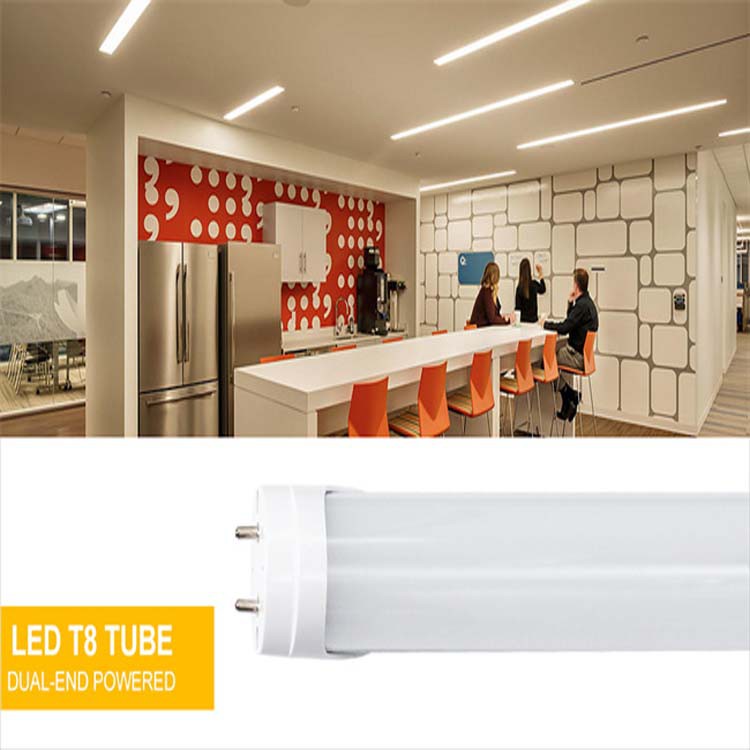
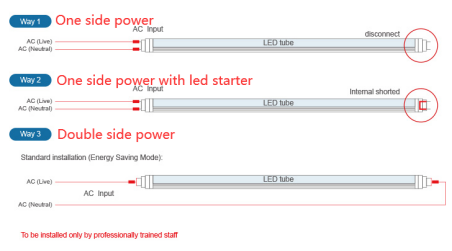
In an office setting, the lighting performance of an 18-watt LED tube surpasses that of a 32-watt T8 linear fluorescent tube, while the LED tube also consumes less energy than its T8 fluorescent counterpart. This study involved a simple, direct replacement of linear fluorescent tubes with LED tubes; however, if the unique characteristics of LED lighting were fully leveraged-rather than merely substituting existing fixtures-even superior results could be achieved. For instance, when designing lighting for newly constructed offices, innovative concepts such as "architectural lighting" should be adopted instead of merely perpetuating traditional fixture layouts, thereby maximizing the inherent advantages of LED technology. Regarding lighting retrofits for existing offices-particularly when aiming to minimize rewiring costs-if the office currently utilizes standard grid-style fixtures fitted with linear fluorescent tubes, the fluorescent tubes can be directly replaced with LED tubes.
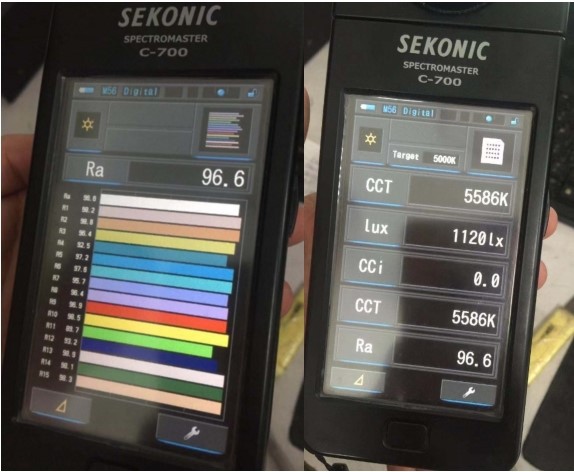
By substituting traditional linear fluorescent tubes with LED tubes, it is now possible to achieve-or even exceed-the lighting performance of traditional systems while consuming only a fraction of the energy, resulting in significant energy savings. Furthermore, given the rapid dimming capabilities and ease of control inherent to LED technology, intelligent lighting control systems can be implemented in office environments to fully capitalize on LED characteristics, thereby reducing lighting system maintenance costs as well as overall operational expenses. Tailoring the approach to the specific requirements of office lighting, and where conditions permit, offices can be designed to utilize a "zoned general lighting" strategy: general ambient lighting is distributed throughout the entire office space, while supplementary task lighting is added at or around individual workstations to boost illuminance levels on work surfaces.
When integrated with intelligent lighting technology, this system can automatically adjust general lighting levels based on ambient daylight intensity or specific work requirements. Moreover, sensors can be employed to detect the presence of personnel at workstations-and thus determine whether task lighting is needed-enabling the automated switching of local lighting fixtures; this approach effectively satisfies the specific lighting demands of office work while simultaneously achieving a rational reduction in energy consumption.
https://www.benweilight.com/lighting-tube-bulb/high-quality-t8-led.html