Whether using LED lights indoors or outdoors, figuring out the ideal spacing between them is essential to getting the best illumination results. The type of LED lights, their intended function, the area to be lighted, and the desired lighting effect all affect how far apart LED lights should be placed. To assist you in choosing the ideal distance between your LED lights, we will examine each of these aspects in-depth in this post.
LED Light Types
LED strip lights are incredibly adaptable and frequently utilised for decorative, under-cabinet, and accent lighting applications. LED strip lights may be positioned very tightly together for general accent lighting, as around a mirror or along a stairway. An uniform and continuous light may be produced at a distance of 10 to 20 centimetres (4 to 8 inches). To provide enough illumination of the work area, a closer spacing of 5 to 10 centimetres (2 to 4 inches) could be required if the strip lights are being used for task lighting, such as beneath a kitchen cabinet.
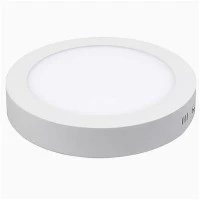
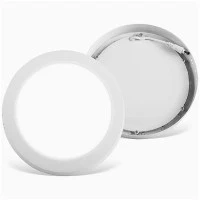
LED Downlights: LED downlights are frequently utilised to provide general overhead illumination in both residential and business environments. As a general guideline, downlights should be placed 4–6 feet (1.2–1.8 meters) apart in a standard-sized room, such as 12 feet by 12 feet or 3.6 meters by 3.6 meters. An uniform and balanced dispersion of light across the space may be achieved with this distance. To retain the same amount of lighting on the floor, however, the downlights might need to be placed a little closer together if the ceiling is higher.
LED floodlights are commonly utilised for outdoor lighting applications, such as illuminating expansive outdoor spaces, driveways, and gardens. The spacing can be somewhat considerable for floodlights with a wide beam angle (e.g., 120 degrees or more). Depending on the driveway's length, floodlights can be placed 8–10 feet (2.4–3 meters) apart to illuminate it. To prevent black areas in the lit region, the floodlights should be placed closer together if their beam angles are narrower.
Purpose
General Illumination: When a space's general illumination is the aim, the emphasis is on producing a uniform and cosy brightness level. For instance, the LED lights in a living room should be arranged such that there are neither sharp shadows nor areas that are too bright. As previously stated, a 4- to 6-foot spacing can be effective for LED downlights. A lovely glow may be produced by placing wall-mounted LED sconces for general ambient lighting in corridors three to five feet (0.9 to 1.5 meters) apart.
Task Lighting: A greater degree of illumination directed at a particular location is necessary for task lighting. LED desk lighting in an office should be positioned near the workspace, generally within easy reach. To maintain adequate illumination for reading, writing, and computer work in a workspace with several workstations, overhead LED lights can be arranged in a grid pattern, with a distance of two to three feet (0.6 to 0.9 meters) between lights above each desk.
Accent Lighting: Accent lighting draws attention to particular items or features. For instance, to get the intended effect while illuminating artwork on a wall using LED spotlights, the spotlights must be positioned at a suitable distance from the artwork. Depending on the size of the artwork and the light's intensity, spotlights can be placed 2 to 3 feet (0.6 to 0.9 meters) apart.
The Illuminated Area
Small Spaces: The LED lights may be placed closer together in smaller spaces. For example, to offer enough illumination for grooming in a small bathroom, LED vanity lights can be positioned 8 to 12 inches (20 to 30 centimetres) apart. LED string lights placed 6 to 12 inches (15 to 30 centimetres) apart can be used to create a warm and welcoming ambiance on small outdoor patios.
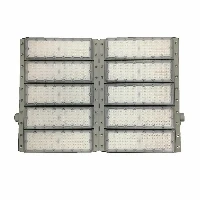
enormous Areas: A distinct strategy is required for enormous spaces, such as warehouses, gyms, or expansive outdoor fields. In warehouses, high-bay LED lights are frequently utilised. Depending on the ceiling height and the amount of lighting needed, these lights can be placed 10 to 15 feet (3 to 4.5 meters) apart. LED stadium lights are positioned at considerable distances, often between 50 and 100 feet (15 and 30 meters), in a huge outdoor sports field. However, they are positioned at very high altitudes and have incredibly strong outputs to cover the wide area.
The Lighting Effect That You Want
Soft and Diffused Light: LED lights may be placed somewhat farther apart and utilised with diffusers to produce a soft, diffused lighting effect, such as in a bedroom for a calming atmosphere. To disperse the light more evenly and lessen harsh shadows, for instance, diffusers can be added to a bedroom with ceiling-mounted LED lights that are 5 to 7 feet (1.5 to 2.1 meters) apart.
Bright and Focused Light: LED lights should be placed closer together and may have a narrower beam angle when a bright and focused light is needed, such as in a workshop or a retail display area. To make sure that every area of the workbench is well-lit, LED shop lights may be placed three to four feet (0.9 to 1.2 meters) apart in a workshop.
In conclusion, there is no one-size-fits-all solution when it comes to the ideal distance between LED lights. The type of LED lights, the intended usage, the area to be lighted, and the desired lighting effect must all be taken into account. You may create the ideal lighting arrangement for any area by carefully weighing these variables, improving both use and appearance.
What is the ideal spacing between LED high bay lights? Write a piece of 1000 words.
Large indoor locations like factories, warehouses, gyms, and big-box retailers frequently employ LED high bay lights. Finding the perfect distance between them is essential to getting consistent and effective illumination. We'll go into more depth about a few important factors in this post that affect how far apart these lights should be positioned.
Lumens and Light Output
LED high bay lights' light output, expressed in lumens, is a key determinant of how far apart they should be placed. Greater distances between fixtures are possible because lights with higher brightness ratings can cover bigger areas. An LED high bay light with 15,000 lumens, for instance, can light up a larger area than one with 10,000 lumens. A 10,000-lumen high bay lamp could be placed 10 to 12 feet apart in a medium sized warehouse where a lesser level of ambient lighting is enough. To guarantee that every area is well-lit, 15,000 lumen or even greater output lights might be positioned 12 to 15 feet apart in a plant with complex machinery and operations that require more intense and targeted illumination.
Photometric data, which describes how light spreads and illumination levels at various distances, is frequently supplied by manufacturers. This information aids in precisely arranging the spacing to satisfy a space's unique lighting needs. Facility managers may use this information to determine the ideal distance to prevent under-lighting, which can result in safety risks and decreased productivity, as well as over-lighting, which wastes energy.
Height of the Ceiling
The distance between LED high bay lights is directly influenced by ceiling height. The lights can be placed closer together in areas with lower high bay ceilings, which are usually between 15 and 20 feet. This is because a narrower spacing guarantees a more uniform dispersion and the light has less distance to go before reaching the floor. Eight to ten feet might be the typical distance between each high bay light in such settings.
On the other hand, lights must be more powerful and placed farther apart in spaces with extremely high ceilings, such as hangars for aeroplanes or big industrial buildings with ceilings of thirty feet or more. The light must illuminate a considerable vertical space at these heights, and if the lights are positioned too closely together, some places may have too much light while others may not. LED high bay lights, for example, may be positioned 15 to 20 feet apart in a warehouse that is 30 feet high. Each light would have a broad beam angle and a high lumen output to efficiently light the huge volume of area below.
The lights' beam angle
The dispersion of light from LED high bay lights is dependent on the beam angle. While lights having a wide beam angle, such as 120 degrees or more, will cover a larger area, those with a small beam angle, such as 60 degrees, will project light in a more focused way. Narrow-beam-angle high bay lights can be utilised in locations that need focused illumination on certain work areas or racks, such a parts storage warehouse. To guarantee that the light accurately reaches the intended storage spaces, they might be placed 8 to 10 feet apart.
However, high bay lights with a broad beam angle are better suited for open-floor gyms or big retail areas where consistent ambient lighting across the room is desired. Wide-beam, angle LED high bay lights might be positioned 12 to 15 feet apart in a big gymnasium to provide uniform lighting for the seating sections and playing surface.
The space's illumination needs
The amount of illumination required depends on the particular activities occurring in the area, which also influences how far apart the high bay lights should be placed. A higher degree of lighting is necessary in a manufacturing plant where employees handle small and intricate components in order to assure safety and prevent mistakes. Here, LED high bay lights with a pretty high lumen output would need to be placed closer together, maybe 10 to 12 feet apart.
On the other hand, a lower degree of lighting can be appropriate in a basic storage warehouse where moving big pallets is the primary activity. The high bay lights can be placed 12 to 15 feet apart in this situation. Additionally, to improve visibility and safety for people and cars passing through the area, regions adjacent to entrances, exits, and aisles can need more illumination or lights positioned closer together.
A Look at Energy Efficiency
Energy efficiency influences how far apart LED high bay lights should be placed, even if getting the right illumination is crucial. An excessive amount of lighting might result from placing the lights too close together, using more energy than is necessary. Facility operators may achieve a balance between sufficient illumination and energy savings by carefully determining the ideal spacing based on the previously listed variables. For instance, installing high-efficiency LED high bay lights at the proper distance between can eventually result in a considerable reduction in power costs, particularly for big buildings that run their lights for long periods of time every day.
In summary, a thorough evaluation of light output, ceiling height, beam angle, space illumination needs, and energy efficiency objectives is necessary before installing LED high bay lights. Facility managers may design a lighting system that is both economical and energy-efficient while providing the appropriate quantity of light in the appropriate locations by taking these aspects into consideration.