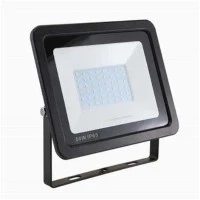
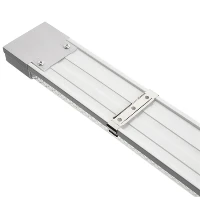
The path to sustainable cannabis farming is being illuminated by LEDs. Compared to conventional lighting systems, which are not only inefficient but also bad for the environment, they are proven to be more affordable, ecologically beneficial, and maintenance-free.
In advance of the UN Climate Change Conference (COP26), The Guardian just released an article titled "The climate catastrophe is here." Leaders from the public and private sectors come together at the conference to talk about climate change.
The world "has warmed by an average of about 1.2°C since pre-industrial times, pushing humans beyond almost all historical boundaries," according to The Guardian, explaining the scale of the impending climate disaster.
According to the analysis, it is impossible to get the temperature of the whole world to this level in only one century; doing so would be like bombarding our seas with five Hiroshima bombs every second.
Climate calamity is already here, not coming. Leaders from all fields and sectors must understand that we must use all available means to reduce our carbon emissions.
marijuana carbon emissions increase
We urge everyone to employ the cutting-edge, effective lighting technology that is already available and improving all the time, particularly when it comes to cannabis growing. When it comes to carbon emissions, the sector is just as nasty as coal. In Colorado, the marijuana sector actually emits 30% more carbon dioxide than the coal mining industry.
A Colorado State University research found that whereas coal created 1.8 metric tons of carbon dioxide, marijuana growing produced 2.6 metric tons of carbon dioxide equivalent.
For example, the Colorado research, which was reported in the journal Nature Sustainability, calculates that cultivating one ounce of marijuana indoors equals burning a tank of gasoline in terms of carbon emissions.
Related Article: Cannabis green rush fuels explosive growth in the horticultural SSL industry
Calls for environmental regulation of the cannabis business on par with those of the energy sector have arisen in response to this frightening fact.
The best method to save energy is via lighting.
Today, a simple fix is easily accessible. From 2018 to 2020, the average energy usage decreased by more than 20% as a result of cannabis farmers using modern LED technology. This indicates that if the industry made a complete switch to LED lighting, its energy use would significantly decrease and its effect on the environment would much improve.
Additionally, the cannabis sector might benefit financially from the use of LED technology. Given the decreased power use and enhanced product quality, the higher upfront fixture costs are readily justifiable. When cannabis farmers move from high-pressure sodium (HPS) to LED-based solid-state lighting, the usual payback time is less than 12 months, according to a straightforward ROI calculator offered by California Lighting.
LED adoption is accelerating across the remainder of the lighting industry. As of 2018, "installations of LED products in all applications increased, roughly doubling to 2.325 billion units, or 30.0 percent of all general lighting," according to the Department of Energy's (DOE) LED Adoption 2020 Report. The DOE also claimed that by 2030, LEDs might cut the energy needed for general illumination by almost half.