How Long Can a Light Stay On After a Power Outage? How to Choose the Right Emergency Inverter Bulb?
The "last light" that shopping malls, hotels, and factories must have – much more than just a bulb
1. What Is an Emergency Inverter LED Bulb?
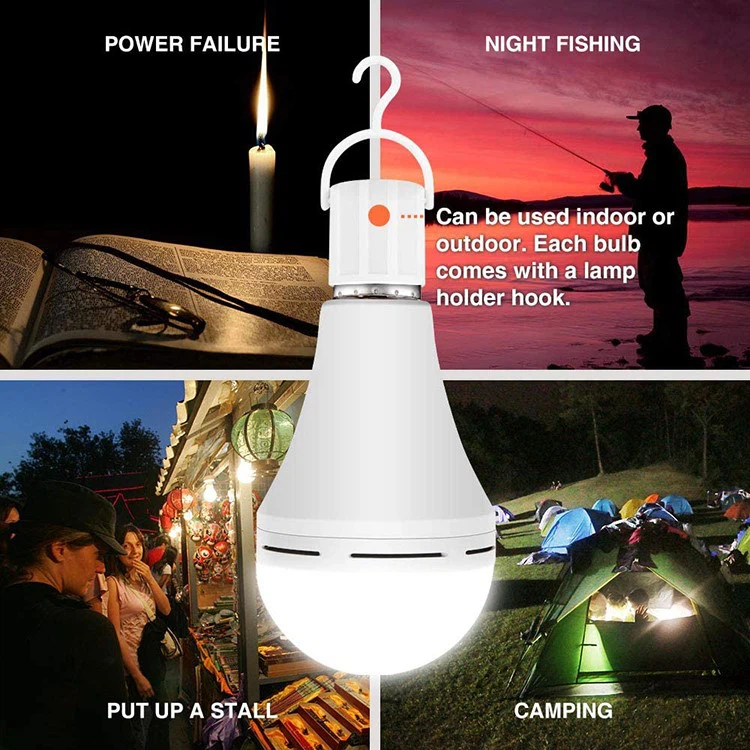
An ordinary LED bulb goes out immediately when the power fails. An emergency inverter LED bulb integrates a battery + charging circuit + inverter driver inside. Under normal conditions, it illuminates like a regular bulb while charging its battery. When the mains power is cut, it automatically switches to battery power and continues to light for a certain period (typically 90‑180 minutes). In essence, it is a "bulb with a built‑in backup power supply" – no need for separate emergency light boxes.
2. Key Parameters – Understand These Three Points and You Won't Be Misled
| Parameter | What It Means | Recommended Value |
| Emergency power | Brightness when running on battery (usually lower than normal mode) | 3W‑5W (sufficient for escape lighting) |
| Emergency duration | How long the light stays on after a power cut | ≥90 minutes (required by many codes) |
| Battery type | Ni‑MH or Li‑ion | Li‑ion lasts longer and is lighter |
| Charging time | Time required to fully charge the battery | ≤24 hours |
| Switchover time | Time from mains failure to battery‑powered illumination | <0.5 seconds (imperceptible to the human eye) |
The Benwei emergency bulb uses a lithium battery, provides ≥3 hours of emergency duration, and has a switchover time of <0.3 seconds – well above basic standards.
3. How It Works – Lights Under Normal Power, Lights Also Under Power Failure
- Mains power normal – the AC‑DC driver powers the LED for illumination and simultaneously charges the battery.
- Mains power fails – a relay automatically switches; the battery drives the LED through an inverter.
- Mains power restored – automatically switches back to charging mode without affecting normal use.
Key design feature: constant‑current charge/discharge management prevents overcharge, over‑discharge and short circuits, ensuring battery longevity.

4. Application Scenarios – Where Must These Be Used?
- Shopping malls / supermarkets – evacuation routes, emergency exits (required for fire safety inspections)
- Hotels / B&Bs – corridors, stairwells, guest rooms (guest safety and peace of mind)
- Factories / warehouses – emergency lighting positions, avoiding the need for separate emergency systems
- Homes / rental units – temporary lighting during blackouts (prevents falls and injuries)
Many fire safety codes require evacuation lighting illuminance of at least 1 Lux. A single emergency bulb can meet that requirement for a small area.
5. Comparison: Ordinary Bulb vs. Emergency Inverter Bulb vs. Dedicated Emergency Light Box
| Feature | Ordinary LED Bulb | Emergency Inverter Bulb | Dedicated Emergency Light Box |
| Works after power cut? | No | Yes (90‑180 minutes) | Yes |
| Installation difficulty | Screw in | Screw in | Requires wiring and fixing |
| Cost | Low | Medium | High |
| Maintenance | None | Check battery every 2‑3 years | Periodic testing required |
| Best for | General lighting | Small‑area emergency lighting | Large areas / centralised control |
The Benwei emergency bulb perfectly fills the gap for "needs emergency function but doesn't want to install light boxes".
6. Selection & Usage Tips
- Look for fire safety certifications (e.g. CE, EN60598‑2‑22, or Chinese GB17945).
- Charge for 24 hours before first use to activate the battery.
- Perform a discharge test every six months to confirm emergency function.
- Emergency power is usually low – intended for escape indication, not for task lighting.
Summary
An emergency inverter LED bulb combines "normal illumination + emergency backup" in a single lamp at the cost of one bulb. The Benwei product offers ≥3 hours of emergency duration, long‑life lithium battery, and sub‑second switchover – the most economical and convenient solution for small‑area emergency lighting.