LED Driver Quality: The Hidden Weak Link in Long-Life LED Fixtures
On the path to achieving 50,000 or even 100,000 hours of LED life, most buyers focus all their attention on the LED chip brand and lumen maintenance. Yet real-world return and failure data point to a harsh truth: the driver often fails long before the LEDs.
If you disassemble an LED fixture that died young, you will often find that the LED chips still light up, but the driver has completely failed. This article focuses on driver selection and design to help you identify what truly makes a long-life LED driver and avoid falling into the "high brightness, low quality" trap.
1. Why Do Drivers Fail More Often Than LEDs?
The main function of an LED driver is to convert AC mains (or high-voltage DC) into a stable low-voltage DC current. During this process, internal components endure voltage spikes, current ripple, heat, and long-term aging stress.
The shortest‑lived component inside a driver is almost always the electrolytic capacitor. Electrolytic capacitors contain a liquid electrolyte. Over time and with increasing operating temperature, the electrolyte dries out, causing capacitance to drop and ESR (equivalent series resistance) to rise. Eventually, output ripple increases, power factor worsens, and the driver fails completely.
A rule of thumb: for every 10°C reduction in an electrolytic capacitor's operating temperature, its life roughly doubles. Conversely, in a hot, enclosed environment, a driver rated for 50,000 hours may last only 5,000–10,000 hours in practice.
2. Key Selection Criteria for Long-Life LED Drivers
2.1 Prioritize "Electrolytic‑Free" Drivers
Mature driver technology can completely avoid electrolytic capacitors, using only resistors, inductors, and ceramic capacitors. Such drivers naturally bypass the failure mode of dried‑out electrolytes, giving them a life that matches the LED chips (>50,000 hours). The trade‑offs are slightly higher cost and greater sensitivity to input voltage fluctuations. However, this has become a mainstream trend in high‑quality industrial lighting, horticultural lighting, and outdoor lighting.
Ask your supplier directly: "Does this driver use electrolytic capacitors? If not, what alternative solution is used?"
2.2 If Electrolytic Capacitors Cannot Be Avoided, Choose Solid or Film Capacitors
Solid capacitors (also called solid polymer capacitors) contain no liquid electrolyte and have a much longer life than ordinary electrolytic capacitors. For example, a solid capacitor rated for 10,000 hours at 105°C can achieve over 100,000 hours at a real operating temperature of 55°C. Film capacitors also offer extremely long life and low loss.
Recommendation: Ask the supplier for the brand and series of the capacitors used in the driver. Japanese brands (Rubycon, Nippon Chemi‑Con, Nichicon) and specialized solid‑capacitor brands (FPCAP, Samxon) are generally superior to low‑cost Taiwanese or Chinese capacitors.
2.3 Constant Current Drivers Are Better Than Constant Voltage Drivers (When Properly Current‑Limited)
LEDs are current‑driven devices. Constant current drivers output a stable current. Even when the LED forward voltage changes with temperature, the current remains constant, placing minimal stress on the LEDs. Constant voltage drivers output a fixed voltage (e.g., 12V or 24V) and must be used with current‑limiting resistors or linear regulators. If the resistor value is incorrect or the LEDs experience thermal runaway, overcurrent can quickly destroy them.
Long‑life recommendation: Use a constant current driver – or a constant voltage driver with a high‑quality constant current IC (not just ordinary resistors).
2.4 Protection Features Are Non‑Negotiable
A long‑life driver should have at least the following protections:
- Surge protection (MOV or TVS diodes) – withstands lightning strikes or switching surges on the mains.
- Over‑voltage protection – prevents output voltage from rising too high in no‑load conditions and damaging the LEDs.
- Over‑temperature protection – automatically reduces power or shuts down when the driver's internal temperature exceeds a safe threshold; self‑recovers after cooling.
- Short‑circuit protection – latches off or limits current when the output is shorted.
Drivers lacking these protections will experience widespread premature failure in regions with unstable power grids (e.g., Southeast Asia, Africa, parts of South America).
3. Direct Relationship Between Driver Life and Temperature (Reference Table)
The following table shows estimated life expectancy for a good quality electrolytic‑capacitor driver (e.g., Meanwell) at different case temperatures (Tc):
| Driver Case Temperature (Tc) | Expected Life (hours) | Suitable Application |
|---|---|---|
| 45°C | >100,000 | Well‑ventilated indoor lighting |
| 55°C | 70,000–90,000 | General industrial lighting |
| 65°C | 40,000–60,000 | Enclosed fixtures or high‑temperature environments |
| 75°C | 20,000–30,000 | Not recommended for long‑life design |
| 85°C | <10,000 | Design failure |
Key takeaway: Even with the best driver, if the fixture's thermal design is poor and the driver runs continuously above 75°C, the long‑life promise will be broken. This is why thermal management and driver selection must be optimized together.
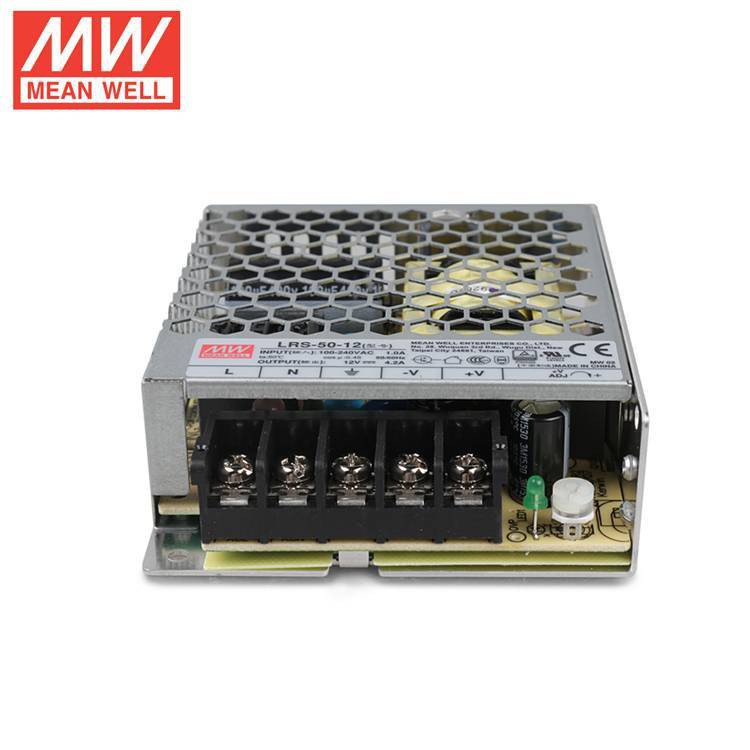
4. Why Is Meanwell Widely Recognized as a High‑Quality Driver?
In the LED industry, Meanwell is widely regarded as a premium driver brand. Its advantages include:
- Strict use of Japanese or solid capacitors.
- Full certifications: UL, CE, CCC, ENEC, and many others.
- Complete thermal derating curves and datasheets, allowing engineers to accurately calculate life.
- At case temperatures below 60°C, many models achieve 50,000–100,000 hours of life.
Of course, Meanwell is relatively expensive. For cost‑sensitive projects, you can choose other brands but must strictly follow the selection criteria above (electrolytic‑free or solid capacitors, complete protection, wide input voltage range).
5. Checklist for Buyers and Engineers
When evaluating the driver quality of an LED fixture, be sure to verify the following:
- Is the driver's rated life given at a specific case temperature? (e.g., 50,000 hours at Tc=60°C)
- What type of capacitors are used? Can the supplier provide the brand and series?
- Does it have surge protection? What is the surge rating (e.g., differential mode 2kV, common mode 4kV)?
- Is it a constant current output? What is the output current tolerance (e.g., ±3%)?
- Where is the driver mounted? Is it placed away from the heat source (not sharing a sealed cavity with the LEDs)?
- Does the supplier provide burn‑in test reports? (At least 24–48 hours under load)
6. Key Takeaways
- LED chips are rarely the first to fail – the driver is the real weak link.
- Electrolytic capacitors are the shortest‑lived component in a driver. Prioritize electrolytic‑free or solid‑capacitor solutions.
- Constant current drive + complete protection features are the foundation of long life.
- Driver operating temperature directly affects lifespan: every 10°C reduction in case temperature roughly doubles the life.
- Meanwell and other high‑quality brands are reliable choices, but more important is understanding the selection criteria – don't blindly trust a brand name.
For manufacturers: reducing driver failure rates directly lowers after‑sales costs and builds market reputation. For buyers: spending an extra 1–2onadrivercansave1–2onadrivercansave10 in repair and replacement costs.
Final thought: The next time you evaluate an LED fixture, don't just ask "What LED chip does it use?" – also ask "What driver and what capacitors are inside?"