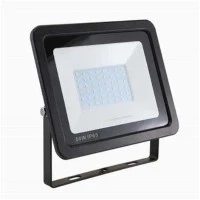
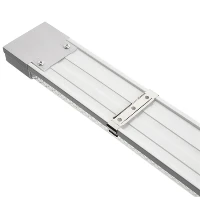
How Long Do LED Flood Lights Last? A Comprehensive Investigation

Both residential and commercial customers consider longevity when considering lighting systems, and LED flood lights have received a lot of praise for their alleged extended lifespan. LED flood lights are frequently marketed as having a lifespan of 50,000 to 100,000 hours, in contrast to conventional incandescent bulbs that only last 1,000 hours or halogen lamps that reach their maximum at about 10,000 hours. However, what is the true meaning of this number? Are there any hidden factors that could significantly reduce the usable life of an LED flood light, or do all of them live up to this promise? We must examine the definition of LED lifespan, the major determinants of it, the performance of these fixtures in the real world as opposed to their advertised claims, and doable measures to extend their lifespan in order to provide a thorough response to the question, "What is the lifespan of LED flood lights?"
First and first, it is critical to comprehend the measurement of LED flood light lifespan, as the term "lifespan" in the LED sector differs from "time until complete failure" for conventional bulbs. The term "lifespan" usually refers to the point at which an incandescent or halogen light bulb burns out and completely stops providing light. For LEDs, however, longevity is determined by L70, an industry standard that assesses the time it takes for an LED fixture to lose 30% of its initial lumen output (lumen depreciation). Once an LED flood light reaches L70, it is deemed to have reached the end of its useful life-even though it may still provide some light, its brightness is no longer sufficient for most uses. This distinction is important: When an LED flood light is marketed as having a 50,000-hour lifespan, it means that it will have faded to 70% of its initial brightness by that time, not that it will stop working. L70 is still the most widely used criterion for calculating useful lifespan, while some high-quality models may even achieve L50 (50% lumen decay) at 100,000 hours. Furthermore, the lifespan of LEDs is tested under controlled settings, often at a steady voltage and a constant temperature of 25°C (77°F). This may not accurately represent real-world usage, where fixtures are subjected to environmental stresses and temperatures fluctuate.
The promised 50,000–100,000-hour lifespan of LED flood lights is attainable, but it depends significantly on the quality of components utilized in the fixture. The driver, heat sink, and LED chips are the three most important parts that affect longevity; each has a distinct function in preserving long-term performance. Gallium nitride (GaN) and other semiconductor materials are used to make the LED chips, which constitute the fixture's central component. To guarantee constant performance, high-quality chips from reliable manufacturers (like Cree or Osram) are designed with homogenous semiconductor layers and placed through a thorough testing process. Under the appropriate circumstances, these chips can continue to be dazzling for decades. On the other hand, low-quality chips, which are frequently found in inexpensive flood lights, may have structural flaws that cause rapid lumen depreciation; an inexpensive LED chip may approach L70 in just 15,000–20,000 hours, reducing the fixture's lifespan by more than half. Another vital component for LED longevity is the driver, which controls voltage and transforms AC power into DC power. A good driver has built-in safety against overheating and voltage spikes, as well as long-lasting capacitors (such as solid-state capacitors rather than electrolytic ones). These drivers have a 50,000-hour or longer lifespan. Despite the fact that the LED chips themselves are still working, cheap drivers employ subpar electrolytic capacitors that dry out when heated and usually die within 10,000–15,000 hours. Last but not least, the heat sink is essential for dissipating heat from the LED chips because too much heat is the biggest threat to LED lifespan. A well-designed heat sink manufactured from high-conductivity aluminum with a large surface area can keep
LED chips cool, slowing luminosity degradation. A weak, tiny heat sink (found in many low-cost lights) retains heat and accelerates chip degradation; in severe situations, a subpar heat sink can shorten the life of an LED flood light to fewer than 10,000 hours.
Given that LED flood lights are frequently used outside, environmental factors can also significantly affect how long they last. The most significant environmental factor is temperature: LEDs function best at temperatures between 20 and 30°C, while outside flood lights may be exposed to extremely high or low temperatures (above 40°C in summer and below 0°C in winter). High temperatures accelerate the degradation of LED chips and driver components-for every 10°C increase in temperature above 25°C, the lifespan of LED chips might fall by 50%. For example, an LED flood light installed in a desert region where summer temperatures often approach 45°C may only last 25,000 hours instead of its promised 50,000 hours. Although less harmful, cold temperatures can still produce problems. For example, drivers may find it difficult to control power in freezing temperatures, which can result in flickering and increased wear, and plastic housings may become brittle and fracture, enabling moisture to sneak in. Dust and moisture pose serious risks as well. Poor sealing, which is typical in low-cost versions, can allow rain, humidity, or saltwater spray (in coastal areas) to enter an LED flood light even if it has an IP65 designation, which means it is dust-tight and water-resistant. Dust covers the heat sink and prevents heat dissipation, while moisture corrodes the printed circuit board (PCB) and short circuits electrical connections. A LED flood light subjected to persistent humidity or salt spray may fail in just 10,000–15,000 hours, regardless of component quality.

Installation and usage practices can potentially make or break the lifespan of LED flood lights. A typical installation error that reduces lifespan is placing a flood light too near a wall or other surface, which prevents airflow around the heat sink and traps heat. A tight corner without ventilation, for instance, might cause an LED flood light to reach temperatures 15–20°C higher than one placed in an open area, reducing its lifespan by 30–40%. Another crucial mistake is using the incorrect voltage; LED flood lights are made for particular voltage ranges, such as 120V for North America and 240V for Europe. A 120V fixture connected to a 240V circuit will overload the driver, leading to its failure in a matter of days or weeks. Over time, even small voltage variations-which are frequent in places with erratic power grids-can put the driver under stress and cause an early failure. Use patterns are also important. Although LEDs are meant to be used continuously, leaving an LED flood light on nonstop for 24 hours causes heat to accumulate and speeds up luminosity depreciation. A flood light used eight hours a day, for instance, for home protection, will survive longer than one used twenty-four hours a day, for instance, for a business parking lot. Furthermore, frequent on/off cycles might eventually wear down the driver's components, even if they are less damaging to LEDs than to conventional bulbs. This is particularly true if the driver does not use soft-start technology, which gradually increases power to the LED chips rather than giving them full power all at once.
LED flood lights' actual lifespan frequently deviates from their promised lifespan, and this discrepancy is mostly caused by marketing strategies and manufacturer practices. Some low-cost manufacturers overstate lifespans, marketing fixtures with 100,000 hours of lifespan when they actually only have 20,000–30,000 hours. These manufacturers rely on ideal lab data to market their goods, skipping testing under real-world settings and using subpar components (cheap chips, drivers, and heat sinks). A fixture evaluated at 25°C may not function as well in a hot, humid area since even respectable manufacturers may base their lifespan promises on laboratory testing that ignores environmental pressures.

The absence of uniformity in some areas is another problem; although agencies such as the Department of Energy (DOE) in the US or CE in the EU establish standards for LED testing, not all manufacturers follow them. Because of this, consumers could inadvertently buy an LED flood light that lasts far less time than promised. Finding fixtures with certificates like UL (Underwriters Laboratories) or ETL (Electrical Testing Laboratories), which guarantee the product satisfies safety and performance criteria, is one method to locate trustworthy items. In order to give consumers a more realistic view of the anticipated lifespan, reputable manufacturers also offer comprehensive datasheets that contain L70 testing results under various temperature settings.
Fortunately, regardless of the initial quality, users can take certain doable actions to extend the life of their LED flood lights. First, pick high-quality fixtures from reputable companies; these may be more expensive initially, but they are tested to achieve their lifespan claims and employ sturdy components. For severe outdoor circumstances, look for features like IP67/IP68 ratings, extruded aluminum heat sinks, and solid-state drivers. The second step is to properly install the fixture: make sure it is wired to the correct voltage, put it in an open space with adequate ventilation to avoid heat accumulation, and use a surge protector to protect against voltage spikes, particularly in regions that have regular thunderstorms. Third, do routine maintenance: check the housing for cracks or loose screws (to prevent moisture seepage), wipe the lens and heat sink every three to six months to remove dust and debris (use a soft cloth or compressed air to avoid hurting components), and look for wear on the wiring. Fourth, use the fixture wisely: avoid leaving it on 24/7 if feasible (use motion sensors to switch it on only when needed) and use dimmable types if you want to reduce brightness-dimming saves power usage and heat, increasing lifespan. Lastly, take quick care of problems: look for loose connections or driver damage if an LED flood light suddenly begins to flicker or dim. The lifespan can be increased by years by replacing a malfunctioning driver, which is much less expensive than buying a new fixture.
In conclusion, the lifespan of LED flood lights is a range rather than a fixed number; under ideal circumstances, it typically ranges from 50,000 to 100,000 hours, as determined by the L70 lumen depreciation standard. However, a variety of factors, including component quality, usage patterns, installation techniques, and climatic conditions, affect lifespan in the actual world. High-quality models that are installed and maintained correctly can last over 100,000 hours, whereas inexpensive fixtures with subpar chips, drivers, and heat sinks may only last 15,000 to 20,000 hours. Users may make sure their LED flood lights fulfill their promise of long-lasting, effective illumination by being aware of the factors that affect longevity and adopting preventative measures to safeguard the fixture. A carefully selected and maintained LED flood light may be a dependable, long-lasting investment for industrial, commercial, or residential security applications, demonstrating that its reputation for longevity is not merely marketing speak but a practical reality.
FAQ About LED Flood Lights
Q: Can we get a LED floodlight sample for reference?
A: We are glad to send samples for your inspection. Standard samples can be free, but you may need to pay the express fees.
Q: How to confirm the LED spotlight quality with us before starting to produce?
A: 1) We can provide samples and you can choose one or more, and then we will manufacture products according to the quality of the selected sample(s).
2) Send us your existing samples, and we will produce LED floodlights that match the quality of your provided samples.
Q: How to solve the quality problems about LED floodlight after sales?
A: Please take photos of the quality issues and send them to us. After we confirm the problems, we will provide a satisfactory solution within three days.
Q: What is the lead time of recessed floodlight?
A: The lead time is 20-25 days after the sample is confirmed.
Q: Can you print our brand on the flush mounted floodlight?
A: Yes, of course. We can print your brand logo on the flush mounted floodlight as per your requirements.
Q: What is the typical lifespan of your LED floodlights, and how is it measured?
A: Our high-quality LED floodlights typically have a lifespan of 50,000-100,000 hours, measured by the industry-standard L70 benchmark. This means the floodlight will retain 70% of its initial brightness after that time (not complete failure).
Q: Do your LED floodlights work well in extreme temperatures, like hot deserts or cold areas?
A: Our LED floodlights are designed to withstand a wide temperature range (-20°C to 45°C for standard models; -30°C to 55°C for heavy-duty models). For extreme environments (e.g., deserts or frigid regions), we recommend our IP68-rated heavy-duty series, which have enhanced heat sinks and cold-resistant drivers to avoid performance issues.
Q: What IP rating do your outdoor LED floodlights have, and is it suitable for coastal areas with salt spray?
A: Most of our outdoor LED floodlights have an IP65 rating (dust-tight and water-resistant for rain/splashes). For coastal areas, we offer IP68-rated models with anti-corrosive aluminum housings-these resist salt spray corrosion and ensure long-term use near the ocean.
Shenzhen Benwei Lighting Technology Co.,Ltd
Telephone: +86 0755 27186329
Mobile(+86)18673599565
Whatsapp :19113306783
Email:bwzm15@benweilighting.com
Skype: benweilight88
Web: www.benweilight.com