Introduction
The Hidden Pain Point of Ordinary Home Red Light Therapy Devices
With the rapid popularization of photobiomodulation technology, home Red-NIR light therapy equipment has completely moved out of professional clinics and entered ordinary families. More consumers choose portable desktop therapy panels to replace expensive salon and hospital phototherapy projects for daily skin care and physical sub-health conditioning. However, the homogenized and chaotic market leads to serious information asymmetry for ordinary users.
Most merchants only publicize superficial selling points such as wavelength function and appearance, but deliberately avoid core data such as actual service life and long-term light attenuation performance. Many users encounter universal problems after purchasing low-cost therapy lamps: the light brightness drops significantly after 6–12 months of use, the thermal effect is weakened, the skin and muscle recovery effects are greatly reduced, and even the lamp beads age and burn out within two years. This kind of short-lived equipment completely loses the long-term wellness value of phototherapy and becomes a disposable consumer product with extremely low cost performance.
The Core Value of Lifespan and Attenuation Performance
Different from ordinary household electrical appliances, the service life of red light therapy lamps is not only the working time of the equipment, but also the effective duration of therapeutic efficacy. The essence of phototherapy effect depends on stable radiant power density and accurate wavelength output. Light attenuation refers to the gradual loss of light energy and luminous efficiency of LED chips during long-term operation. Excessive attenuation will directly lead to insufficient irradiation energy, spectrum deviation, and complete failure of photobiomodulation effect.
Therefore, service life and light attenuation are the core indicators to distinguish inferior cottage products from professional clinical-grade therapy equipment. A high-quality home red light therapy lamp is not only required to have complete functions, but also needs ultra-long service life and ultra-low light loss performance to ensure that every daily treatment can maintain stable professional effects for many years. This article will elaborate on professional industry standards, product technical advantages and practical application values in detail.
Professional Definition and Industry Standard of Therapy Lamp Service Life
Official Industry Definition of LED Service Life
In the LED lighting and phototherapy industry, the service life of equipment does not refer to the complete burnout time of lamp beads, but follows the international universal L70/L80/L90 lumen maintenance standard. L70 means the cumulative working hours when the LED luminous efficiency decays to 70% of the initial output; L80 and L90 represent 80% and 90% of the initial luminous efficiency respectively. This standard is the authoritative basis for judging the effective service life of phototherapy equipment, because when the light output is lower than 70% of the initial value, the irradiation energy cannot reach the clinical effective dose, and the therapy equipment completely loses its practical value.
Civil ordinary LED lamps usually adopt L70 standard, while high-end medical-grade phototherapy equipment takes L80 and L90 stable attenuation as the core assessment index, which puts forward higher requirements for chip quality, heat dissipation structure and circuit stability of the equipment.
Market Lifespan Hierarchy of Home Red Light Therapy Lamps
At present, the home red light therapy lamp market presents an obvious three-level differentiation in service life, which directly determines the product grade and user experience:
The first level is low-end inferior products, which adopt low-grade civilian single-chip LEDs. The L70 service life is only 5,000–10,000 hours. In actual household use, effective attenuation failure will occur in 6–12 months, and the equipment will basically be scrapped within 2 years. The second level is mid-range ordinary products, with a rated service life of 20,000–30,000 hours, which can maintain basic efficacy for 3–5 years, but the light attenuation speed is fast, and the therapeutic effect declines year by year. The third level is professional clinical-grade equipment represented by our dual-chip therapy panel, with an ultra-long rated service life of 50,000 hours, achieving industry-leading L80 low attenuation standard, and supporting more than 10 years of stable effective use.
Conversion of Theoretical Lifespan and Actual Household Use
Many users cannot intuitively perceive the practical value of 50,000 hours of long service life. According to the daily household conventional use frequency (20–30 minutes per session, once a day), the annual use time of the therapy lamp is about 120–180 hours. Calculated based on this frequency, the 50,000-hour industrial-grade service life can support more than 30 years of long-term stable use.
Different from the short-life cycle of inferior products that need frequent replacement, this professional therapy panel realizes one-time purchase and lifelong stable wellness use, completely eliminating the repeated purchase cost and equipment replacement trouble, and creating ultra-high long-term cost performance for users.
Principle and Hazard of Light Loss and Attenuation of Therapy Lamps
The Essential Principle of LED Light Attenuation
Light attenuation (lumen depreciation) is an inevitable physical aging law of all semiconductor LED chips. During the long-term energized operation of the lamp beads, the internal chip will produce thermal stress, atomic migration and micro-structure aging, which will gradually reduce the photoelectric conversion efficiency, resulting in the decrease of luminous brightness and radiant power. For red and near-infrared phototherapy equipment, the harm of attenuation is far more serious than that of ordinary lighting lamps.
Ordinary lighting only needs basic brightness, while Red-NIR light therapy has strict requirements on wavelength accuracy and radiant power density. Slight chip aging and thermal deviation will lead to wavelength drift and energy attenuation, making the light deviate from the optimal therapeutic spectrum window of 660nm/850nm, unable to stimulate mitochondrial activity and produce effective photobiomodulation effect.
Core Causes of Rapid Light Loss of Low-End Therapy Equipment
Through professional technical analysis, the rapid light attenuation of inferior therapy lamps is mainly caused by two core design defects. The first fatal defect is unreasonable thermal design. Most low-cost products adopt plastic shell and fan active heat dissipation structure. The plastic shell has poor thermal conductivity, and the fan heat dissipation is uneven and easy to accumulate dust and aging. The long-term high-temperature operation of LED chips causes continuous thermal stress damage, which accelerates luminous efficiency loss.
The second defect is low-grade chip and unstable circuit drive. Inferior products use uncalibrated low-cost single-chip LEDs, with low spectral stability and poor pressure resistance. The simple circuit board has no constant current and voltage stabilization design, and the current and voltage fluctuate with the household power supply, resulting in frequent impact on the chips, accelerated aging and rapid light loss. After 10,000 hours of use, the luminous power of such products will drop by more than 40%, and the therapeutic effect will be completely lost.
Practical Hazards of Excessive Light Attenuation
Most users ignore the hidden hazards of light attenuation and only pay attention to whether the lamp is bright or not. In fact, the naked eye cannot accurately distinguish the subtle changes of red and near-infrared light energy. Excessive light attenuation will lead to three core use problems. First, the treatment efficiency is greatly reduced: insufficient light energy cannot penetrate the skin and deep tissues, resulting in ineffective skin care and muscle recovery.
Second, the treatment cycle is prolonged: users need to extend the irradiation time to compensate for energy loss, which increases the time cost of wellness care. Third, the spectrum drifts and causes invalid stimulation: the deviated wavelength cannot act on cell photoreceptors accurately, and long-term use will not produce health care effects, even causing skin and eye fatigue. These hidden problems make low-attenuation design the core hard indicator of high-quality therapy equipment.
Product Core Advantages: Ultra-Long Lifespan and Ultra-Low Attenuation Technology
Industrial-Grade Dual-Chip LED: Hardware Foundation of Long Service Life
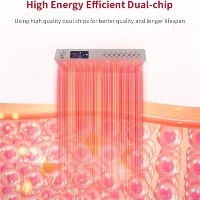
This professional home Red-NIR light therapy panel adopts upgraded medical-grade dual-chip integrated LED beads, which is fundamentally different from the single-chip beads of ordinary products. Each lamp bead integrates precise 660nm red light and 850nm near-infrared light, with strict spectral calibration and high photoelectric conversion efficiency. The chip has excellent high temperature resistance, pressure resistance and aging resistance, meeting the industrial 50,000-hour ultra-long service life standard.
Compared with low-grade single-chip LEDs, the dual-chip structure has more stable internal circuit layout, lower operating thermal resistance, and stronger anti-aging ability. It can maintain stable photoelectric conversion efficiency and spectral accuracy during long-term continuous operation, avoiding rapid aging and light failure of ordinary chips, and laying a solid hardware foundation for ultra-long service life and low attenuation performance.
Fanless Aluminum Alloy Passive Heat Dissipation: Core Technology to Suppress Light Attenuation
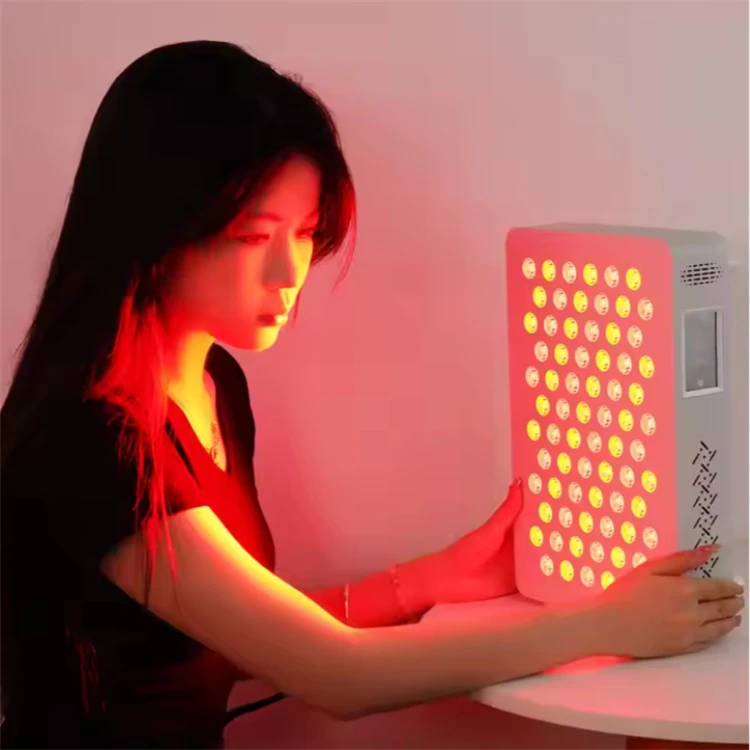
Heat is the biggest killer of LED chip aging and light attenuation. This product abandons the flawed fan active heat dissipation scheme of ordinary products, and adopts full aluminum alloy honeycomb passive heat dissipation system. The high thermal conductivity aluminum alloy shell is integrated with large-area honeycomb heat dissipation holes on both sides, forming a natural air convection heat dissipation channel.
This structural design can quickly export and dissipate the heat generated by chip operation in real time, keep the chip working at a constant low temperature, completely eliminate thermal stress damage, and fundamentally suppress the light attenuation caused by overheating. The fanless design has no vulnerable mechanical parts, no dust accumulation and no heat dissipation failure risk, ensuring long-term stable heat dissipation efficiency. Relying on this advanced thermal management technology, the product achieves an industry-leading low attenuation curve.
Stable Constant Current Drive Circuit: Guarantee Long-Term Consistent Light Output
In terms of circuit design, this therapy panel is equipped with professional intelligent constant current and voltage stabilization drive board, with built-in over-current, over-voltage and surge protection modules. It can automatically adjust the current and voltage according to the household power supply fluctuation, output stable and constant power for the LED chips, avoid chip impact and aging caused by power fluctuation, and ensure the consistency of light output power and wavelength accuracy in the whole life cycle.
Different from the simple and crude circuit of inferior products, the high-standard circuit protection system effectively reduces the electronic loss of the equipment, delays the aging speed of the circuit and lamp beads, and further optimizes the light attenuation performance, making the long-term therapeutic effect more stable.
Professional Attenuation Data: Long-Term Stable Efficacy Verification
After professional aging test verification, this dual-chip therapy panel has excellent low attenuation performance. After 10,000 hours of continuous operation, the light output power still maintains more than 85% of the initial state, far exceeding the 60% attenuation level of ordinary products in the same period. After 30,000 hours of operation, it still retains more than 75% of the initial radiant power, meeting the L80 high-standard lumen maintenance requirement of medical-grade equipment.
In the whole 50,000-hour service life cycle, the product has no obvious wavelength drift and efficacy degradation. Whether it is daily home skin care, post-exercise muscle recovery or long-term joint conditioning, it can maintain professional clinical-grade therapeutic effects, realizing real long-term value retention.
Auxiliary Structural Design to Extend Equipment Service Life
Reinforced Metal Shell and Bracket: Anti-Aging and Anti-Deformation
The whole machine adopts rigid metal shell and reinforced 360° rotatable metal bracket, which is completely different from the easy-yellowing and easy-deforming plastic shell of inferior products. The metal shell has excellent thermal stability, aging resistance and scratch resistance, and will not deform, fade or damage after long-term thermal cycling and daily use. The reinforced hinge structure of the bracket can withstand frequent angle adjustment without loosening and shaking, ensuring the stable placement of the equipment for many years.
The excellent mechanical durability matches the ultra-long service life of the lamp beads, avoiding the problem that the equipment is scrapped due to structural damage before the lamp beads are aged, and maximizing the service life and use value of the whole machine.
Scientific Use Specifications: Further Reduce Light Loss and Aging Speed
On the basis of excellent hardware performance, standardized use can further delay equipment aging and light attenuation. The product is suitable for dry indoor environments with an ambient temperature of 10–30℃. Keeping the honeycomb heat dissipation holes unobstructed during operation can ensure efficient heat dissipation and avoid local heat accumulation accelerating chip aging. In addition, avoiding long-term continuous overload operation and regular dust cleaning can effectively maintain the optimal working state of the equipment.
With scientific use and maintenance, the product can easily achieve more than 30 years of stable effective use, far exceeding the service cycle of all similar low-end products on the market.
Lifespan and Attenuation Value Comparison: Why This Product Is More Cost-Effective
Service Life and Attenuation Contrast Between Different Grade Products
Low-end cheap therapy lamps have a low initial purchase cost, but their service life is only 1–2 years, with rapid light attenuation and obvious efficacy degradation, requiring frequent replacement and repeated investment. Mid-range ordinary products can be used stably for 3–5 years, but the attenuation speed is fast, and the later therapeutic effect is significantly reduced, with limited long-term value.
This professional dual-chip therapy panel breaks the industry short-life bottleneck. With 50,000-hour ultra-long service life and ultra-low attenuation performance, it can maintain stable and efficient therapeutic effects for more than 10 years. The one-time purchase cost covers decades of daily wellness use, with almost no later maintenance and replacement cost, and the long-term comprehensive cost performance is far ahead of similar products.
Long-Term Wellness Value Return
The core value of low attenuation and long service life lies in stable long-term therapeutic return. Phototherapy wellness is a long-term persistent conditioning process, and only equipment with stable efficacy for many years can help users continuously improve skin state, relieve muscle and joint fatigue, and regulate sub-health state. Short-life and high-attenuation products will make the long-term wellness plan interrupted frequently, resulting in wasted user time and energy.
This product relies on industrial-grade durability and stability to provide users with lifelong consistent professional phototherapy services, allowing every daily treatment to produce effective health care effects, and truly realizing the value return of health investment.
Conclusion
The service life and light attenuation performance of home red light therapy lamps are the core criteria to measure product quality and practical value, and are also the essential differences between professional clinical-grade equipment and inferior disposable products. Ordinary low-end therapy lamps rely on low-cost chips and flawed thermal design, resulting in short service life and rapid light loss, which cannot meet the long-term daily wellness needs of users.
This upgraded dual-chip Red-NIR light therapy panel, with industrial-grade 50,000-hour ultra-long service life, fanless passive constant temperature heat dissipation technology, stable constant current drive system and ultra-low attenuation performance, perfectly solves the industry pain points of short equipment life and rapid efficacy degradation. It can maintain stable wavelength accuracy and light energy output for a long time, ensure consistent professional therapeutic effects in the whole life cycle, and has excellent mechanical durability and ultra-high long-term cost performance.
For users who pursue long-term stable home phototherapy wellness, choosing this high-durability and low-attenuation professional therapy panel is not only a simple equipment purchase, but also a long-term healthy and cost-effective investment, which can accompany users for decades of stable and efficient health care management.
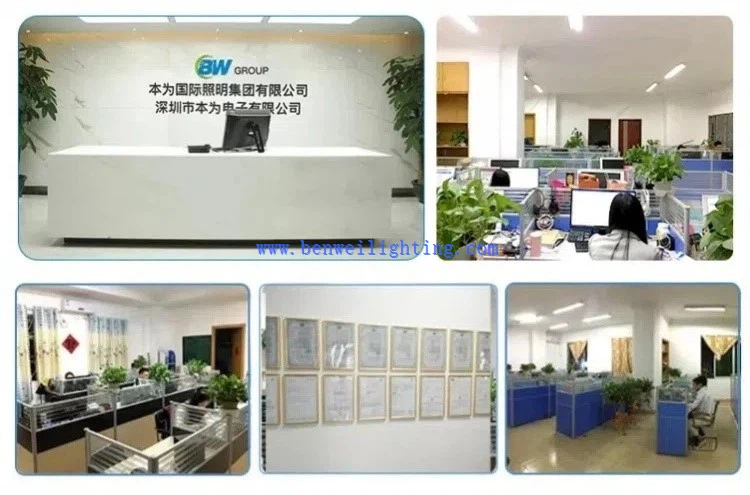
Our firm prides itself on owning its own factory, guaranteeing complete control over the production process and the quality of our goods. We are not only agents; we are manufacturers committed to offering our clients the most competitive rates available. We invite consumers to evaluate our samples first, as we are assured that the quality and pricing of our items are self-evident. Our dedication to excellence and client satisfaction compels us to consistently perform at our best and provide superior quality products.
Our address
3rd Floor, 5th Building, Hebei Industrial Park, Hualian Community, Longhua District, Shenzhen, China