How scientific lighting can improve egg production and reduce breeding losses in hens
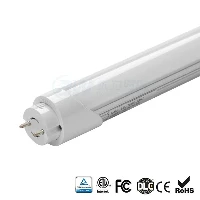
Professional LED lights for poultry farms are completely different from ordinary household and office lighting. They are not merely tools for brightening up spaces, but professional farming supporting equipment that combines poultry physiological characteristics, farm environmental adaptability and optoelectronic technology.
Most farmers and purchasers only focus on price and power when selecting lights, ignoring key factors. Chickens' vision is different from humans'. The humid and corrosive environment in chicken houses, as well as light flicker and color temperature, directly affect chicken growth, laying rate and survival rate.
This article focuses purely on universal industry knowledge of poultry lighting, without introducing specific products. It helps you understand the scientific lighting logic, standard selection rules and common pitfalls of poultry farming lighting.

1. Visual Characteristics of Chickens: Why Ordinary Household Lights Are Not Suitable for Poultry Farming
1.1 Chickens are more sensitive to light and can see invisible spectrums for humans
Human visible light range is limited, while chickens have much more sensitive vision and can perceive ultraviolet, red and blue light.
Light directly affects chickens' physical conditions, controlling their feeding intake, mood, stress response and feather pecking behavior. Most importantly, it directly determines the egg production rate. In short, improper lighting leads to reduced feed intake, aggressive behavior, lower egg yield and more defective eggs.
1.2 Light flicker: the invisible killer in poultry farming
Lights that look flicker-free to human eyes may keep flickering at high frequency from the perspective of chickens.
Chickens are extremely sensitive to flicker. Long-term exposure to flickering lights will cause the following problems:
- Restless flocks, frequent feather pecking and fighting, resulting in higher mortality
- Decreased appetite, less feed intake and higher feed waste
- Hormone disorder, shorter egg production cycle, more soft-shelled and broken eggs
- Weakened immunity and higher disease incidence
Industry Standard: Large-scale chicken houses must adopt flicker-free lighting and eliminate flickering lamps completely.
1.3 Different color temperatures correspond to different growth stages of chickens
Simply put: the lower the color temperature, the yellower the light and the higher the red light ratio; the higher the color temperature, the whiter the light and the higher the blue light ratio. Different light colors have totally different effects on chickens and cannot be used universally in all areas.
- 2600–2800K Warm Yellow Light (For Laying Hens): Sufficient red light calms flocks, reduces fighting, stimulates ovarian development, stabilizes peak egg production, thickens eggshells and reduces broken and soft eggs, specially designed for laying hens and breeding hens.
- 3900–4200K Neutral Light (For Chicks & Growing Chickens): Soft and transparent light helps chicks find feed and water easily, promotes balanced bone and body growth and prevents premature sexual maturity, ideal for young chicken breeding stages.
- Cool White Light above 4500K (Not Recommended): High blue light content causes chicken stress and restlessness in long-term use, directly leading to reduced production. Formal large-scale chicken houses prohibit long-term application.
1.4 High CRI lighting is the foundation of healthy farming
CRI (Color Rendering Index) refers to the ability of light to restore real object colors. The CRI of natural sunlight is 100.
- CRI < 85: Distorted light colors make it hard to distinguish feed, manure and sick chickens, reducing chicken appetite and hindering growth and egg production.
- CRI ≥ 90: Natural and realistic light improves chicken feeding activity and allows farmers to observe flock health conditions quickly, which is a standard configuration for standardized chicken farms.
2. Harsh Chicken House Environment: Mandatory Lighting Standards for Waterproof, Anti-Corrosion and High-Temperature Resistance
Chicken houses feature long-term humidity, ammonia corrosion from manure decomposition and regular high-pressure water gun disinfection. Ordinary indoor lamps will get moldy, waterlogged, burned or dim within months and are completely unsuitable for poultry farming scenarios.
2.1 IP Rating: Core Selection Standard for Chicken House Lights
|
Protection Rating |
Dustproof & Waterproof Performance |
Applicability for Chicken Houses |
|
IP20/IP40 |
Basic dustproof, non-waterproof |
Strictly prohibited; easily damaged by water flushing |
|
IP65 |
Fully dustproof, splash-proof |
Only for temporary use in dry houses, unable to resist high-pressure flushing and long-term corrosion |
|
IP67 |
Fully sealed, high-pressure waterproof, short-time immersion resistant |
Minimum standard for large-scale chicken houses, suitable for year-round humid and disinfection scenarios |
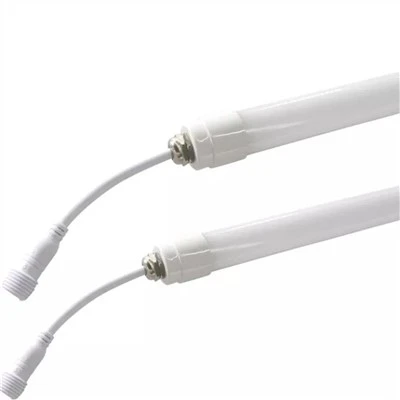
IP67 lamps adopt a fully sealed structure to completely isolate moisture and ammonia, protect internal circuits from corrosion and greatly improve durability.
2.2 Ammonia corrosion: main cause of lamp damage
Long-term fermentation of chicken manure produces corrosive ammonia gas. Ordinary plastic lamp covers turn yellow and fuzzy rapidly with decreased brightness; ordinary bare circuits will blacken, short-circuit, flicker or burn out completely.
Professional farming lights are equipped with corrosion-resistant aluminum housing, anti-aging PC covers and fully potted internal circuits to resist ammonia corrosion in chicken houses.
2.3 Heat dissipation directly determines lamp service life
Closed chicken houses get extremely hot in summer. LED lamps are sensitive to high temperature - the higher the temperature, the shorter the lamp lifespan.
Full-plastic lamps have poor heat dissipation, resulting in serious heat accumulation and rapid light decay. Professional LED lamps with aluminum heat dissipation structures release heat quickly, maintaining stable brightness for many years.
2.4 High power factor for large-scale farm batch lighting
Qualified farming LED lights have a power factor above 0.9, bringing practical advantages:
- Stable voltage without tripping or power failure when hundreds of lamps are turned on simultaneously
- No interference with farm temperature control and ventilation equipment
- 85–265V wide voltage adapts to global power grids, suitable for domestic and overseas farms, ideal for foreign trade and large breeding bases

3. Two Dimming Modes for Different Scales of Chicken Farms
Fixed brightness is not suitable for poultry breeding. Light intensity needs to be adjusted according to chicken growth stages. Two mainstream dimming technologies are widely used in the industry:
3.1 Triac Dimming
Suitable for small and medium-sized chicken houses, compatible with ordinary dimming switches with low renovation cost. The minor defect is slight current fluctuation at low brightness, not recommended for independent use in high-standard large farms.
3.2 0–10V Linear Dimming (High-End Farm Standard)
Fully flicker-free with smooth brightness gradient, simulating natural sunrise and sunset with gradual brightening and dimming.
Core advantages: no sudden light change to avoid flock stress, panic and stampede casualties. It supports intelligent timing dimming systems and perfectly adapts to the whole growth cycle of chicks, growing chickens and laying hens.
Industry Preferred Solution: Dual dimming compatibility (Triac + 0–10V), adapting to new and old farm renovation and meeting global high-end breeding standards.
4. Scientific Lighting Management: Standard Duration & Brightness for Different Growth Stages
Three core factors determine farming efficiency: lighting duration, lighting brightness and color temperature. Reasonable matching maximizes survival rate and egg production rate.
4.1 Standard lighting duration by growth stage
- Brooding Stage (0–6 weeks): 20h light + 4h dark to extend feeding time and improve chick survival rate
- Growing Stage (7–17 weeks): Gradually reduce to 12h light to prevent premature maturity and undersized initial eggs
- Laying Stage (After 18 weeks): Stable 14–16h light to maintain hormone balance and high egg production rate; less than 13h light causes sharp production decline, while more than 17h light leads to feather pecking and prolapse
4.2 Standard lighting brightness by growth stage (Lux)
|
Breeding Stage |
Standard Illuminance |
Management Purpose |
|
0–2 Weeks Chicks |
30–40lux |
Sufficient brightness for quick feed and water finding, improve survival rate |
|
3–17 Weeks Growing Chickens |
5–10lux |
Reduce brightness to calm flocks and reduce pecking and restlessness |
|
Laying Hens |
15–20lux |
Stimulate follicle development, stabilize egg production and reduce stress |
|
Breeding Mating Area |
20–25lux |
Improve fertilization rate of breeding hens |
4.3 180° wide-angle lighting eliminates dead zones
In multi-layer cage chicken houses, narrow-angle lights only illuminate vertically downward, leading to insufficient light for lower-layer chickens, uneven growth and unbalanced egg production.
180° wide-angle light distributes evenly throughout the house with minimal brightness difference between upper and lower layers, ensuring uniform growth and egg production of the whole flock.
5. Long-Term Cost-Effectiveness of Professional Farming LED Lights
5.1 Power consumption and lifespan comparison of different light sources
- Incandescent Lights: High power consumption, most energy converted into heat, extremely short lifespan, not suitable for modern large-scale farming
- Fluorescent Lights: Flickering, high energy consumption, unsuitable spectral light affecting farming efficiency
- Professional Farming LED Lights: High luminous efficiency up to 140lm/W, saving over 60% electricity with the same brightness, perfectly matching poultry physiological needs
5.2 Simple explanation of lamp lifespan standard
The industry defines lamp lifespan by 70% luminous decay instead of complete burnout. Ordinary low-quality LED lights dim significantly within 2–3 years and require batch replacement. Professional farming LED lights feature low light decay and high stability, serving steadily for more than 8 years and greatly reducing replacement and maintenance labor costs.
Conclusion: Low-cost lamps only save initial procurement cost, but bring high electricity bills, frequent replacement and production loss in the long run. Professional farming LED lights have lower comprehensive costs and higher farming benefits for long-term operation.
6. Industry Purchase Avoidance Guide
- Never use commercial household LED lights for poultry farming: Non-waterproof, non-corrosion-resistant, flickering and spectrally unsuitable, causing high after-sales problems and production loss
- Do not judge brightness only by power: Same wattage with low luminous efficiency cannot meet standard farming illuminance requirements
- Do not use unified color temperature for all areas: Chicks and laying hens have different spectral needs; unified color temperature causes growth or production problems. Large farms recommend zoned color temperature matching
- Eliminate flickering lights completely: PWM flickering dimming lights fail modern farming standards and easily cause flock stress and production reduction
- Choose wide-voltage lamps for foreign trade: 85–265V wide voltage adapts to global power grids without extra transformers, suitable for all overseas farms
summary
Poultry farming LED lights are not simple lighting tools, but core supporting equipment to improve farming productivity, reduce loss and ensure flock health.
Modern large-scale farming relies on matched spectral color temperature, flicker-free lighting, waterproof and anti-corrosion structure, and scientific phased lighting management to achieve high survival rate, high productivity and low operation cost, which has become the unified standard for large domestic and overseas breeding bases.
Product Details :https://www.benweilight.com/professional-lighting/poultry-led-light/chicken-shed-light.html
✨Contact✨
🙋♀️Harriet
📫Email: bwzm88@benweilighting.com
📞Whatsapp: +8613007285242