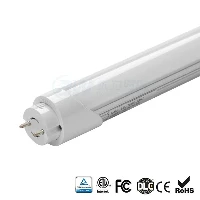
Wattage is the most intuitive reference indicator for most customers to judge LED brightness. People take it for granted that two LED lights marked with the same wattage will produce identical brightness. However, it is extremely common in actual engineering and daily use: two 50W or 100W LED lamps show obvious brightness gaps, even if their outer labels display the exact same power parameter. Many buyers regard this as false labeling or product quality defects, while ignoring multiple hidden factors affecting real luminous output. Marked wattage is not equal to actual working power, and input power cannot be fully converted into effective visible light. This article thoroughly explains why identical wattage leads to different brightness, with an intuitive brightness comparison chart and detailed factor analysis table to help buyers avoid common lighting selection traps.
Core Definition: Nominal Wattage vs Actual Working Wattage
The primary root cause of unequal brightness is the gap between nominal wattage and actual working wattage. Nominal wattage is the printed rated power on lamp labels for marketing and classification purposes. Many low-cost LED manufacturers adopt power virtual marking: they mark 100W on the lamp, while the real stable working power is only 60W-70W.
Even for LED lights with consistent real input power, brightness still varies due to different luminous efficacy, optical loss and driver efficiency. Wattage only reflects total electricity consumption, rather than the amount of light finally emitted by the lamp. More power input does not mean more light output, and same power never guarantees same brightness.

Six Key Factors Causing Different Brightness Under Same Wattage
This table sorts out all decisive factors, compares performance differences between high-quality and low-quality LED fixtures with the same marked wattage, and explains how each factor changes final lighting brightness:
|
Influencing Factor |
High-Quality LED Lamp |
Low-Quality LED Lamp |
Impact on Final Brightness |
|---|---|---|---|
|
Actual Working Power |
Consistent with nominal wattage, no virtual power |
Serious virtual standard, actual power 30%-40% lower |
The biggest reason for brightness gap, directly cuts total light output |
|
Luminous Efficacy (lm/W) |
130-140 lm/W, high photoelectric conversion rate |
70-90 lm/W, more electricity wasted as heat |
Low luminous efficacy turns most power into heat instead of visible light |
|
Driver Power Factor |
PF>0.95, high power utilization rate |
PF<0.7, severe reactive power loss |
Low PF wastes input power without producing extra brightness |
|
Lens Light Transmittance |
High-transmittance lens, <5% internal light loss |
Ordinary blurry lens, 15%-20% light blocked |
Qualified chips cannot make up for light loss caused by poor lenses |
|
LED Chip Grade |
High-bin chips, high initial brightness per watt |
Low-bin recycled chips, low single-chip brightness |
Same current input, low-grade chips produce less original light |
|
Working Temperature Rise |
Good heat dissipation, stable brightness output |
Overheating leads to real-time brightness attenuation |
High temperature reduces luminous efficiency during long operation |
Detailed Analysis of The Top Three Main Causes
1. Virtual power marking (the most common industry trick)
To win price competition, most cheap LED manufacturers adopt virtual power marking. They match low-power LED chips with exaggerated wattage labels to lower product costs. Customers only see the same wattage parameter on the surface, while the actual power input is far lower than standard value. This is the most widespread reason for uneven brightness among same-wattage LED lights.
2. Different luminous efficacy of LED chips
Even with completely consistent actual input power, different chip grades bring different light output. High-bin commercial chips can generate nearly twice lumens than low-bin inferior chips under the same current. Simply relying on wattage cannot distinguish chip quality gaps, resulting in obvious brightness differences.
3. Internal light loss inside lamp housing
Light generated by LED chips needs to pass through lenses, reflectors and lamp covers before spreading out. Low-quality accessories absorb and block plenty of light. Even if chips output the same original lumens, the final effective brightness reaching the ground will be greatly reduced due to high internal light loss.
Common Wrong Purchasing Habits
Most buyers only compare wattage and unit price when selecting LED lights, ignoring actual lumens, luminous efficacy and power factor. They choose cheaper same-wattage LED products blindly, but finally get unsatisfactory dim lighting effects and have to add extra lamps to supplement brightness, which increases overall project cost instead.
How to Choose LED Lights Correctly Beyond Wattage
First, prioritize lumen value and luminous efficacy (lm/W) instead of nominal wattage. Lumens directly represent real brightness. Second, check power factor data; high PF drivers ensure effective power conversion. Third, avoid ultra-low-price LED lights with obviously unreasonable cost, as they are most likely to have virtual power marking. Finally, conduct on-site brightness comparison tests before bulk procurement to verify real lighting performance.
Conclusion
Same wattage never means same brightness for LED lights. Virtual power marking, different chip efficacy, driver loss, lens light transmittance and heat dissipation performance all lead to visible brightness gaps. Wattage only shows electricity consumption, while lumens and luminous efficacy reflect real lighting brightness. Abandoning the wrong habit of judging brightness purely by wattage, and focusing on lumen parameters and comprehensive lamp configuration, is the key to selecting matched and high-brightness LED lighting products accurately.