How to Achieve Long Life and High Reliability in LED Tubes?
Why do some LED tubes still perform like new after three years, while others become dim in just six months? The secret lies in the parts you can't see.
1. What Actually Determines the Lifespan of an LED Tube?
The LED tube is often advertized to have a lifespan of 50,000 hours, but in practice it often fails. There are three fundamental bottlenecks: lumen depreciation, driver failure, and environmental assault. For these, the life span is halved for every 10 degrees Celsius increase in junction temperature (inside the LED chip). So, the secrets to a long lasting tube is: heat dissipation + driver quality + protection. In this article, we will analyse these three hardcore designs by taking Benwei LED tube as an example.

2. Heat Dissipation Design: Aluminium Thickness & Area Are Not Just Marketing
The heat generated by the LED chips must be conducted away quickly. Benwei tubes use a dual heat‑sink structure: 6063 aluminium alloy housing + 1.2mm wall thickness + 19mm wide PCB.
| Heat Dissipation Comparison | Ordinary Thin‑Aluminium Tube | Benwei Thick‑Aluminium Tube |
|---|---|---|
| Wall thickness | 0.5‑0.8mm | 1.2mm |
| Thermal conductivity | ~180 W/m·K | ~200 W/m·K (6063 aluminium) |
| Junction temperature | >85°C | <75°C |
| Lumen depreciation at 50,000h | >30% | <20% |
Lower junction temperature means slower lumen depreciation and longer actual life.
3. Driver: Constant Current vs. Constant Voltage – Capacitors Make or Break It
LEDs require a constant‑current driver, but many cheap tubes use resistor‑capacitor (RC) droppers or poor‑quality constant‑current ICs, resulting in large current ripple and high flicker. Benwei uses Rubycon long‑life electrolytic capacitors + high‑efficiency constant‑current ICs to achieve:
- Flicker‑free (flicker depth <5%)
- Power factor >0.9
- Surge protection (withstands 4kV lightning surge)
The capacitor is the most ageing‑prone component in a driver. Rubycon capacitors can last 10,000 hours at 85°C, while ordinary capacitors often manage only 2,000‑3,000 hours.
4. Ingress Protection (IP) Rating: Higher Is Not Always Better – Match the Environment
Different environments require different levels of protection:
| IP Rating | Suitable Environment | Benwei Product Example |
|---|---|---|
| IP20 | Dry indoor (office, home) | Standard T8 tube |
| IP40 | Dusty, non‑condensing workshop | Dust‑protected tube |
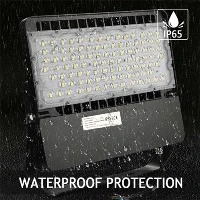
| IP65 | Outdoor, humid, washable (barn, parking garage) | IP65 waterproof tube |
| IP67 | Temporary immersion (underpass, water feature) | Potting‑sealed tube |
Benwei's IP65 tube uses full potting encapsulation + a waterproof breathable valve – it withstands high‑pressure water jetting and balances internal/external pressure to prevent condensation.
5. Practical Application Advice: How to Choose a Tube Based on Operating Conditions
- Ordinary office / retail store – IP20 + aluminium‑plastic tube + 5‑year warranty is sufficient.
- Cold storage / food workshop – IP65 + silicone sealing gasket, withstands -30°C.
- Outdoor billboard / bridge – IP65 + UV‑resistant PC cover + surge‑protected driver.
- Livestock barn (cow / poultry) – IP67 + anti‑corrosion coating + dimmable.
6. Summary: Three Hard Requirements for a Long‑Life LED Tube
- Heat dissipation – thick‑wall aluminium alloy (≥1.0mm) + wide PCB (≥18mm)
- Driver – constant current + Japanese or Taiwanese long‑life capacitors + flicker‑free
- Protection – choose IP rating according to environment; at least IP65 for outdoor use
Benwei tubes meet high industry standards in all three aspects – that is why the company confidently offers a 5‑year warranty.