Why Does Your Greenhouse Tomato Need "Red:Blue = 5:1" LED Supplemental Lighting?
Pain Point: Weak Light in Winter – Tomatoes "Can't Get Enough"
In winter and early spring, solar greenhouses are often shaded by insulation blankets, structural frames, old film, foggy or cloudy weather. Light intensity may be less than 50 % of the normal requirements. Tomato photosynthesis declines and the plants are leggy. Fruit set is poor and fruits are sour with poor colour. This affects profitability to a great extent. Artificial supplemental lighting is needed for overwintered tomatoes to stabilise yields and assure quality.
1.Light Quality – Red:Blue = 5:1, Customized for Tomatoes
The light quality of an LED lamp determines how efficiently plants use light. This trial used a combination of red light (peak 660 nm) : blue light (peak 440 nm) = 5:1 for the following reasons:
- Red light promotes stem elongation, dry matter accumulation, flowering and fruiting;
- Blue light regulates plant morphology, prevents leggy growth, and enhances stress resistance;
- The 5:1 ratio has been proven by multiple studies to be the best for tomato seedling growth, seedling strength index, and photosynthetic rate.
This red-blue combination is much better than regular white light or single red light lamps. The first step in supplemental lighting is to choose the right light quality.

2.Light Intensity – The Difference Between 100, 200 and 300
The trial established three light intensity gradients: 100, 200 and 300 μmol/(m2·s). Supplemental lighting was provided for 3 hr before opening the greenhouse in the morning and 3 hr after closing in the evening (total 6 hr) during the overwintering period. Control (CK) was without supplemental light.
Effect of different light intensities on tomato yield and average fruit weight
| Treatment | Light intensity (μmol/(m²·s)) | Yield (kg/hm²) | Increase over CK | Avg. fruit weight (g) | Increase over CK |
|---|---|---|---|---|---|
| CK | No supplement | 56,335.5 | - | 76.41 | - |
| T3 | 100 | 60,391.4 | 7.20% | 79.24 | 3.70% |
| T2 | 200 | 62,201.4 | 10.41% | 82.18 | 7.55% |
| T1 | 300 | 67,526.4 | 19.86% | 88.39 | 15.68% |
- The 300 μmol/(m²·s) treatment gave the highest yield – nearly 20% higher than no supplement, and average fruit weight increased by 15.68%.
- The 100 intensity treatment had limited effect, showing that supplementation must be strong enough to unlock yield potential.
3.Quality – Sweeter, Redder, More Nutritious
Supplemental lighting not only increases yield but also significantly improves internal fruit quality, directly affecting market price.
Effect of different light intensities on tomato quality
| Treatment | Vc (mg/kg) | Lycopene (mg/kg) | Soluble sugar (%) | Organic acid (%) | Sugar-acid ratio |
|---|---|---|---|---|---|
| CK | 84.2 | 85.1 | 4.22 | 0.85 | 4.96 |
| T3 | 101.9 | 84.6 | 4.77 | 0.71 | 6.72 |
| T2 | 135.3 | 124.1 | 5.01 | 0.67 | 7.69 |
| T1 | 151.7 | 156.9 | 5.15 | 0.61 | 8.21 |
- Vitamin C content increased by 80%, lycopene by 84% – fruits are redder and more antioxidant-rich.
- Organic acid decreased by 28%, soluble sugar increased by 22% – sugar-acid ratio rose from 4.96 to 8.21, giving sweeter, better flavor.
- Under high light intensity, photosynthetic activity is enhanced and primary metabolites accumulate, comprehensively improving quality.
4.Photosynthesis – Higher Light Intensity Means "Better Fed" Tomatoes
After 60 days of supplemental lighting, leaf photosynthetic indicators were measured. The 300 intensity treatment performed best:
- Net photosynthetic rate increased by 52.7%;
- Stomatal conductance increased by 58.8% (smoother CO₂ exchange);
- Transpiration rate increased by 76.1% (stronger water and nutrient transport).
This means that under low-light winter conditions, adequate supplemental lighting allows tomatoes to maintain their high photosynthetic capacity, laying the groundwork for high yield and quality.
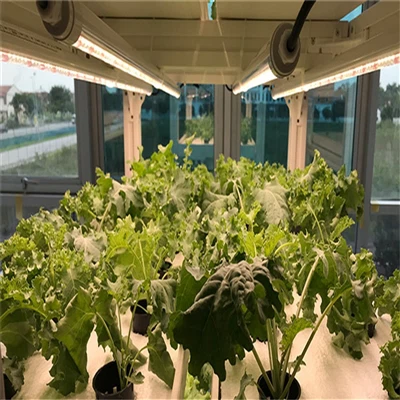
5.How to Use Red:Blue = 5:1 LED Lamps Effectively
- Light intensity selection – For overwintering tomatoes, 300 μmol/(m²·s) is recommended. If budget is limited, 200 can be used, but not below 100.
- Supplemental lighting period – 3 hours before opening the thermal blanket in the morning + 3 hours after covering in the evening, 6 hours total per day. Avoid hours when natural light is sufficient.
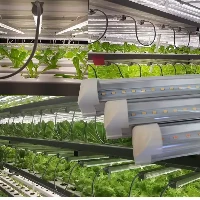
- Installation height – Keep lamps 30–50 cm above the plant canopy, and adjust as plants grow to ensure uniform light intensity.
- Number of lamps – For 300 intensity, approximately 25 W of LED power (red:blue = 5:1) is needed per square meter. A 60 m² plot requires about 16 lamps of 75 W each.
- Isolation and timer – Use shade cloth between plots with different intensities to avoid light interference. Use a timer for automatic control to save labor.
One‑Sentence Summary
Red:blue=5:1 light quality +300 μmol/(m2·S) intensity +3 hours morning and 3 hours evening – a scientific LED supplemental lighting solution can increase overwintering tomato yield by almost 20%, increase the sugar acid ratio by 65%, and double Vc and lycopene content. The investment will be worth it, and winter sales will no longer be a problem."