1. Light distribution. LED street lights are lamps that illuminate the road, different from spotlights. Spotlights require relatively concentrated light, which is what we usually call the "flashlight effect". The LED street lamp requires a large illuminated area and good uniformity. Broadly speaking, the road is a rectangle. According to the characteristics of the road, the road longitudinal (the direction in which the road moves) is required to have a large illuminated area, while the horizontal illuminated area of the road should be small. If the horizontal and vertical illuminated areas are the same, it will inevitably cause light. Waste. For the light distribution of LED street lights, it is how to reasonably configure the limited light of LED street lights.
2. Heat dissipation. The factor that has the greatest impact on the life of LED street light is temperature. The lower the temperature, the longer the life of the LED street lights and the smaller the light decay. The heat dissipation of LED street lights is a university question, and its importance and technical difficulty are no less than that of light distribution.
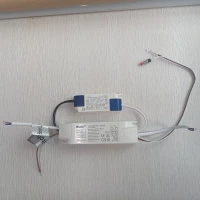
3. Power supply. The power supply is also an important factor to measure the quality of LED street lights. Only high-efficiency and high-precision power supplies can ensure the high energy saving and long life of LED street lights. PFC is also an important indicator in the large-scale application of LED street light. The level of PFC in LED street lights often becomes an important factor in whether the project can pass the approval.
4. Waterproof and dustproof. LED street lights mostly work outdoors and are often exposed to wind and rain, so waterproof and dustproof LED street lights are very important. Once the dust enters the lamp, it will cause the LED street lighting effect to decrease and the brightness to decrease. If water enters, it will lead to the scrap of the LED street lamp, so the protection level of the LED street lamp should be above IP65.