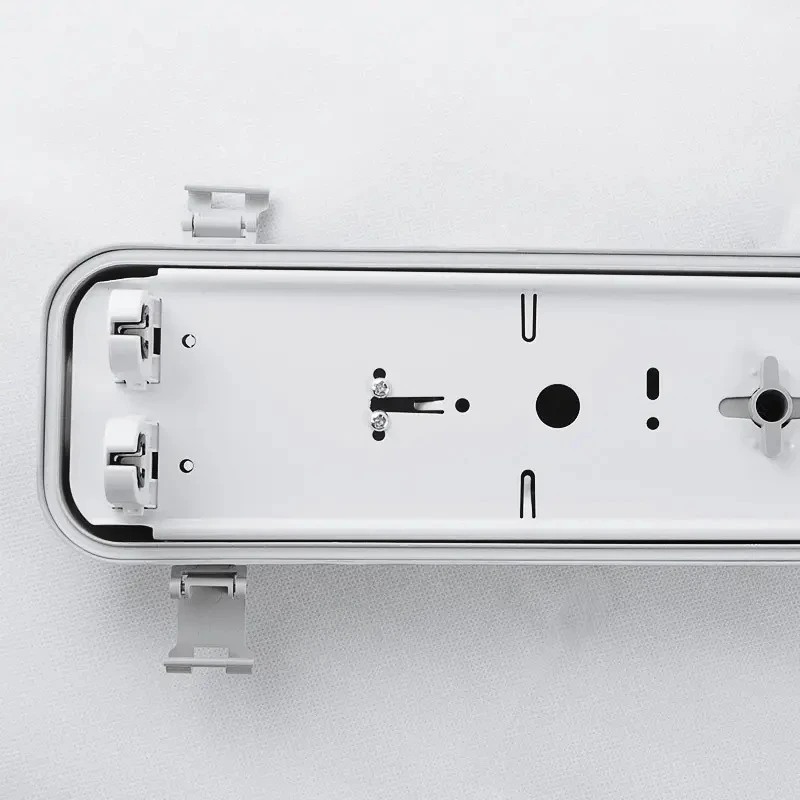
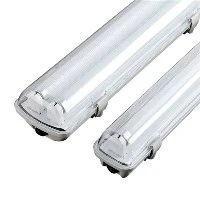
In cold storage facilities, lighting fixtures undergo dozens of thermal cycles-alternating between cold and warm-every single day. On farms, the air is saturated with ammonia and dust. In food processing plants, equipment is blasted with high-pressure water hoses at the end of every shift. Standard light tubes quickly succumb to issues like yellowing covers, moisture ingress (fogging), and driver burnout.
Consequently, many procurement professionals ask: Can "tri-proof" T8 LED tubes (designed to be waterproof, dustproof, and corrosion-resistant) actually handle these environments? The answer is yes-but it depends on the specific technical specifications and design details. Let's break it down by environment.
Defining "Tri-Proof": What exactly does it protect against?
"Tri-proof" refers to protection against water, dust, and corrosion. In real-world operating conditions, these correspond to specific risks:
Waterproof: Prevents condensation, spray, or wash-down water from entering the fixture and causing short circuits.
Dustproof: Prevents the accumulation of dust, feed particles, or flour, which can impair heat dissipation and light output.
Corrosion-resistant: Protects the light cover, end caps, and metal components from degradation caused by substances like ammonia, disinfectants, or salt spray.
It is important to note that "tri-proof" is not a strictly defined technical standard. The true indicators of performance are the IP (Ingress Protection) rating (e.g., IP65, IP66, or IP67) and the materials used (such as polycarbonate covers, PC/ABS end caps, and stainless steel clips). When sourcing, do not rely solely on the term "tri-proof"-ask the supplier for specific technical data.
Cold Storage: Key considerations for low-temperature environments
For a lighting fixture to be suitable for cold storage, it must be capable of operating reliably in low temperatures. Key factors include:
Operating temperature range: Cold storage facilities typically operate between -18°C and -25°C, with some flash-freezing units reaching even lower temperatures. It is safer to select models rated for operation down to -30°C or even -40°C.
LED performance in the cold: LEDs are inherently resistant to cold; in fact, their luminous efficiency often improves slightly at lower temperatures. The components most prone to failure are the LED driver and the material used for the light cover (diffuser).
Light cover material: Low-quality plastic can become brittle and crack at low temperatures. High-quality PC (polycarbonate) covers are resistant to low temperatures and impacts, making them better suited for cold storage environments.
Sealing and condensation: As doors open and close, lighting fixtures experience rapid temperature fluctuations. This causes the air inside to expand and contract, which can effectively "suck" moisture into the unit. A robust sealing structure combined with a well-engineered housing design helps minimize internal fogging.
Startup performance: Ensure that the LED driver can start reliably in low-temperature conditions without flickering or experiencing delays in illumination.
Farms and livestock facilities: Prioritizing corrosion resistance
Environments such as pig barns, poultry houses, and dairy farms present challenges for lighting fixtures that differ significantly from those in cold storage:
Ammonia and hydrogen sulfide: Gases produced by the fermentation of manure and waste can corrode metal contacts and standard plastics. It is recommended to use corrosion-resistant materials-such as PC or PC/ABS blends-for light covers and end caps, and to use stainless steel for any metal clips or fasteners.
Dust, feathers, and feed debris: Fixtures with smooth surfaces and no hard-to-reach crevices or "dead zones" are much easier to clean.
High humidity: In consistently damp environments, an IP65 rating is the minimum requirement.
Light color and efficacy: Livestock facilities typically use lighting in the 4000K–6500K range; this ensures good visibility for workers and makes it easier to monitor the condition of the animals. Some settings (such as layer hen houses) may require dimmable lighting-be sure to verify whether the fixtures support dimming.
Mounting height and impact resistance: In areas where fixtures are mounted at lower heights, consider the potential for accidental impact or damage during cleaning; the light covers must have sufficient impact resistance.
Wash-down areas: Precision in waterproof ratings
In food processing plants, slaughterhouses, car wash bays, and similar facilities, lighting fixtures may be subjected to direct water spray. It is crucial to distinguish between specific IP (Ingress Protection) ratings:
IP65: Protects against water jets; suitable for generally damp environments or areas subject to occasional wash-downs.
IP66: Protects against powerful water jets; suitable for areas that are frequently cleaned using high-pressure water hoses. IP67: Provides protection even during short-term immersion; suitable for areas prone to water accumulation.
Resistance to cleaning agents: Since chlorine-based or alkaline cleaning agents are frequently used during wash-downs, the light cover and sealing rings must be resistant to these chemicals; otherwise, the silicone seals may degrade, leading to water ingress.
Easy-to-clean surfaces: Given the strict hygiene requirements in the food industry, the surface of the light fixture should be smooth, with minimal crevices where grime can accumulate.
If the light fixtures are subject to direct high-pressure water jet cleaning daily, it is recommended to select units with at least an IP66 rating-do not cut corners on this specification.
Often-Overlooked Details During Selection
Many issues do not stem from the light fixture itself, but rather from the following areas:
Wiring and end-cap sealing: A waterproof housing does not guarantee that the wiring connection points are also waterproof; opt for waterproof connectors or an integrated end-cap design.
Internal vs. external driver: An internal driver allows for a compact design, while an external driver facilitates easier maintenance and replacement, and can be protected separately in harsh environments.
Installation method: Most "tri-proof" (waterproof, dustproof, corrosion-proof) lights are integrated units; ensure that the sealing rings are properly compressed during installation so that the intended protection rating is not compromised.
Length and wattage: Common lengths include 0.6m, 1.2m, and 1.5m. Wattage and brightness should be calculated based on the area size and required illuminance levels-bigger is not necessarily better.
Certifications and warranty: Look for certifications such as IP, CE, and RoHS, and verify the warranty period-pay close attention to the specific warranty terms for harsh operating environments.
Summary
Returning to the initial question: Are T8 "tri-proof" lights suitable for cold storage, farms, and wash-down areas?
Cold storage: Suitable; focus on the low-temperature operating range, the use of PC (polycarbonate) covers, and the integrity of the sealing design.
Farms/Livestock facilities: Suitable; focus on corrosion-resistant materials and an IP rating of 65 or higher.
Wash-down areas: Suitable; however, an IP66 rating or higher is recommended, and you should verify the fixture's resistance to cleaning agents. General Note: Don't just rely on the term "tri-proof" (ruggedized/protected); always check specific technical parameters such as the IP rating, materials, and operating temperature range.
Need selection advice or a price quote?
If you are looking to purchase T8 "tri-proof" (IP-rated/protected) LED tubes for use in cold storage facilities, farms, or food processing plants, please get in touch with us. Simply let us know your operating environment (temperature range, whether the area is subject to wash-downs, and the presence of any corrosive gases), the quantity required, and the necessary length. Our team will recommend the most suitable model and provide you with samples and a price quote.