How to Choose Lights for High‑Humidity Greenhouses? Why is the IP67 Waterproof Rating the "Safety Baseline" for Plant Grow Lights?
In greenhouses, open‑air farms, or hydroponic systems, plant grow lights face not only long operating hours but also persistent high humidity, spraying operations, and even heavy rain. If the waterproof rating is insufficient, the consequences range from short circuits and tripped breakers to fire hazards – not to mention the downtime and labour costs of frequent replacements. What does the IP67 waterproof rating mean? How important is it in plant lighting? This article provides a detailed explanation.
1. What Exactly is IP67? – Understanding the Standard
IP (Ingress Protection) ratings consist of two digits: the first for dust protection (0–6), the second for water protection (0–8). IP67 means: complete dust‑tight (level 6) + protected against temporary immersion (level 7).
The specific test criteria:
- Dust test (IP6X) – The luminaire is placed in a sealed dust chamber with negative pressure for 2 hours; after the test, no dust enters the interior.
- Water test (IPX7) – The luminaire is fully immersed in water at a depth of at least 1 metre for 30 minutes; after removal, no water ingress is allowed.
Compared with IP65, IP67 offers a significant step up in protection:
| IP Rating | Dust Protection | Water Protection | Typical Applications |
|---|---|---|---|
| IP65 | Dust‑tight | Protected against water jets (from any direction) | General outdoor use, standard greenhouses |
| IP67 | Dust‑tight | Protected against temporary immersion (1m depth for 30 minutes) | Rainy regions, hydroponic systems, wash‑down greenhouses |
Important note: IP67 protects against temporary immersion but may not withstand high‑pressure water jets – high‑pressure washers generate far greater force than normal spraying. If you need to use a pressure washer, check whether the product is specifically rated for high‑pressure washing.
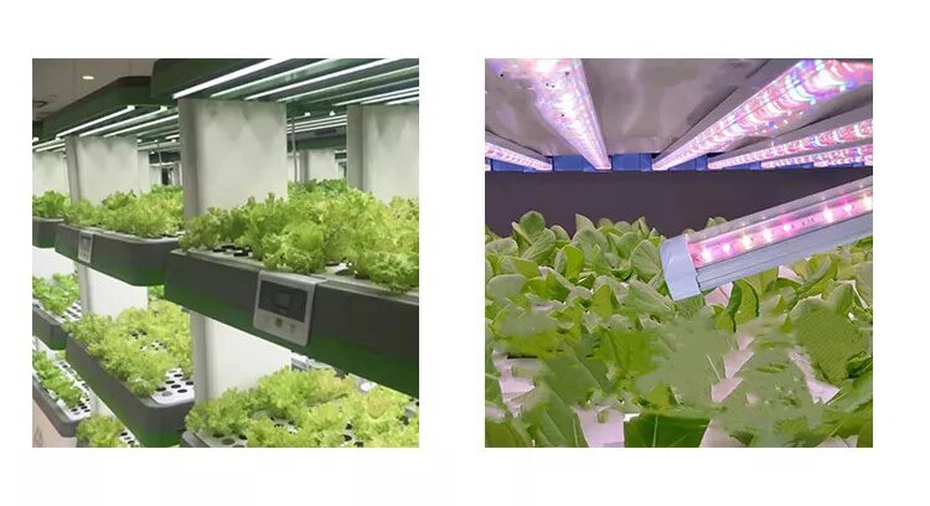
2. Key Applications of IP67 in Plant Lighting
2.1 High‑humidity greenhouses
Greenhouse humidity often ranges from 70%–95% RH. Condensation continuously forms on luminaire surfaces. Ordinary IP44 or IP65 lights in such environments can slowly allow moisture ingress through joints, leading to oxidation of LED chips and corrosion of the driver. The fully sealed construction of IP67 luminaires effectively blocks moisture penetration, ensuring long‑term reliable operation.
2.2 Open‑air cultivation in rainy regions
For outdoor fruit trees, flowers, or field crops, lights are directly exposed to wind and rain. IP67 ensures the lights work normally even during heavy rain, avoiding downtime and safety hazards. Some studies have shown that IP67 lights can provide essential supplemental light during rainy days, with energy savings up to 40% compared to conventional solutions.
2.3 Hydroponic systems and plant factories
In hydroponic environments, nutrient solution circulation and misting devices generate a lot of moisture and splashing. When installing grow lights above water tanks or channels, IP67 is a basic requirement – if a light accidentally falls into water or is hit by splashing, the waterproof rating directly determines safety.
2.4 Wash‑down clean greenhouses
Some commercial greenhouses require regular washing of interior walls and growing racks with water jets to prevent mould and pests. IP67 luminaires can withstand such washing without needing to be removed, significantly reducing maintenance workload.
3. Spectrum Composition and Plant Growth Effects
The Benwei IP67 grow light provides detailed data on how each spectral band affects plants, which can serve as a scientific basis for supplemental lighting:
| Spectral Band | Wavelength Range | Main Effects on Plants |
|---|---|---|
| UV‑C | approx. 100nm | Causes rapid wilting (not recommended) |
| UV‑B | 275–320nm | Kills bacteria but is harmful to plants |
| UV‑A | 320–420nm | Regulates photoperiodic effects, inhibits stem elongation |
| Blue Light | 420–520nm | Highest absorption by chlorophyll and carotenoids, greatest impact on photosynthesis |
| Green Light | 520–610nm | Excellent penetration, low pigment absorption |
| Red Light | 610–720nm | Strongly affects photosynthesis and photoperiod regulation |
| Far‑Red Light | 720–1000nm | Low absorption, inhibits seedling growth and flowering |
| >10000nm | – | Only generates heat, no plant effect |
The product uses a full spectrum scheme and supports customisable spectral ratios, allowing optimisation according to the physiological characteristics of different plant species. It is suitable for tissue culture laboratories and automated light control systems in plant factories.

4. Waterproof Construction: How IP67 is Achieved
Benwei's IP67 grow light uses multiple waterproofing measures to ensure reliability:
- Waterproof LED driver – The driver is potted with imported waterproof compound, sealing the power module.
- Waterproof PCB – The PCB is encapsulated with imported compound for complete circuit‑board protection.
- Aluminium + PC sealed housing – The aluminium heat sink and PC clear cover are sealed at all joints to ensure overall airtightness.
With a power factor >0.95, the light achieves high power utilisation and low harmonic pollution to the grid, reducing electricity costs over long‑term operation.
5. Selection Guide – Recommended IP Ratings for Different Applications
| Application Scenario | Recommended IP Rating | Key Considerations |
|---|---|---|
| Indoor home growing | IP20–IP44 | Low humidity, basic moisture protection |
| Commercial greenhouse (standard) | IP65 | Protected against water jets for routine humidity and washing |
| Rainy‑region greenhouse / open‑air | IP67 | Protected against temporary immersion for heavy rain and standing water |
| Hydroponic systems | IP67 | Protection against accidental dropping into water or splashing |
| Wash‑down clean greenhouses | IP67 (check high‑pressure rating) | Frequent washing operations |
| Permanent submersion (e.g., inside water tank) | IP68 | Continuous immersion (special design required) |
For most commercial greenhouses and planting projects in rainy regions, IP67 is the optimal balance of safety and cost. As noted in this article, LED luminaires with advanced control systems can achieve total energy savings of up to 40% compared to high‑pressure sodium lights.

The IP67 waterproof rating is not a marketing gimmick – it is the "safety baseline" for reliable long‑term operation of plant lights in harsh environments. High‑humidity greenhouses, heavy rain, and hydroponic splashes – in these scenarios, IP65 may be barely adequate, but IP67 is the true peace‑of‑mind choice. With its fully sealed construction, Epistar chips, 5‑year warranty, and full‑spectrum solution, the Benwei IP67 LED grow light offers a reliable tool for growers and outdoor farms that can withstand both water and dust.
Should you have any demands for bulk purchase or customized lighting solutions, feel free to contact us for a detailed quote.