How to Choose Stadium Lighting
Struggling with uneven stadium lighting, glare issues, or frequent bulb failures? Unsure how to choose the right wattage, install safely, or cut maintenance costs?
Stadium lights are critical for sports performance, safety, and spectator experience – whether for professional arenas, community fields, or school courts. This comprehensive guide covers everything from light type selection, installation best practices, and troubleshooting to accessory matching, tailored for facility managers, installers, and procurement teams. Master the essentials to achieve optimal illumination, durability, and cost-efficiency.
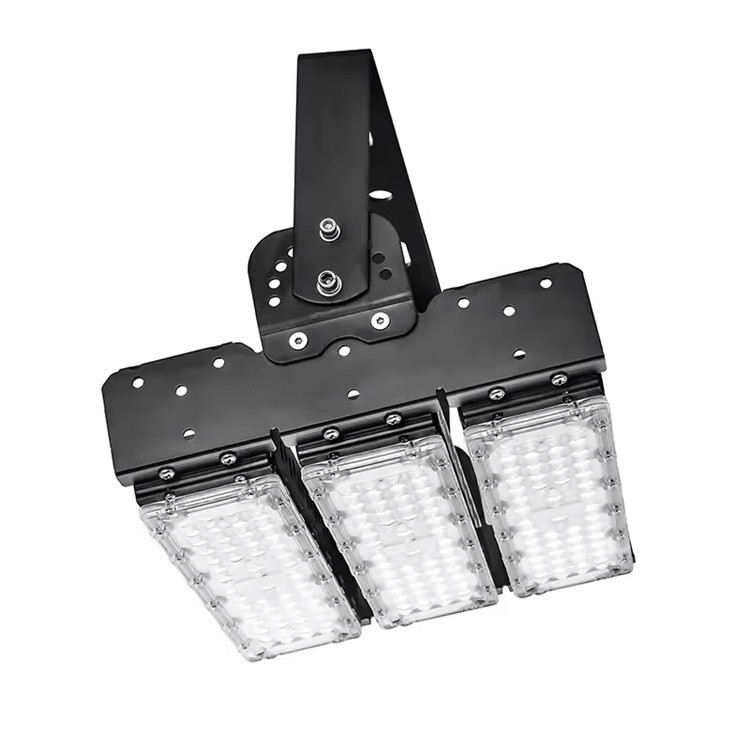
1. Stadium Light Basics: Key Knowledge Before Selection
Understanding core concepts ensures you pick the right product and avoid common pitfalls like insufficient brightness or incompatible installation.
1.1 Stadium Light Types & Application Scenarios
Different sports and venues demand specific lighting solutions. The three primary types:
LED Stadium Lights: Energy-efficient (50%+ savings vs. traditional), long lifespan (50,000+ hours), ideal for professional stadiums, football fields, and multi-purpose courts.
Metal Halide Lights: High brightness but shorter lifespan, suitable for small community fields or temporary venues with lower budgets.
High-Pressure Sodium (HPS) Lights: Warm light, low cost, but poor colour rendering-mostly used on non-professional training grounds.
Match the type to your venue size (small court vs. large stadium) and sport (football needs uniform coverage, and tennis requires anti-glare).
1.2 Core Technical Parameters for Stadium Lights
Key specs directly impact performance and safety:
Lumen Output: Measured in lumens (lm) – professional stadiums need 100,000+ lm per fixture; community courts 30,000–60,000 lm.
Colour Temperature (CCT): 5000–6500K (cool white) for optimal visibility; avoid below 4000K (warm yellow) for competitive sports.
CRI (Colour Rendering Index): ≥80 for accurate colour perception (critical for ball tracking).
IP Rating: IP65+ for outdoor use (dustproof, waterproof); IP67 for harsh weather conditions.
1.3 Power Supply & Voltage Requirements
Stadium lights require stable power to avoid flickering or burnout:
Voltage: 120V/240V (residential courts) or 277V/480V (commercial stadiums) – confirm grid compatibility before purchase.
Wattage: 100W–1000W+; calculate total wattage based on venue area (e.g., a 1000 sq. ft court needs 200–300W total LED power).
Power Factor (PF): ≥0.95 for energy efficiency and grid stability.

2. Stadium Light Installation: Step-by-Step Guide
Professional installation ensures safety, optimal light distribution, and compliance with industry standards.
2.1 Pre-Installation Preparation
Site Survey: Measure venue dimensions, mark mounting positions (even spacing for uniform coverage), and check ceiling/pole load capacity.
Tool & Material List: Crane/lift, mounting brackets, waterproof cables (14/2 AWG or thicker), wire nuts, silicone sealant, and multimeter.
Safety Checks: Turn off main power, verify pole stability, and wear PPE (a helmet, gloves, and safety harness).
2.2 Standard Installation Steps
Mounting Brackets: Secure brackets to poles/ceilings (use stainless steel bolts for outdoor use) with a load capacity of ≥2x the fixture weight.
Fixture Mounting: Lift lights (use a crane for high poles) and fix them to brackets – ensure horizontal alignment for even light spread.
Wiring Connection: Connect power cables to fixtures (follow colour-coding: black = live, white = neutral, green = ground). Seal joints with silicone to prevent water ingress.
Grounding: Mandatory for safety – connect fixture ground wire to pole/grid ground to avoid electric shock.
Test Run: Power on to check brightness, coverage, and no flickering; adjust angles if needed.
2.3 Installation Safety & Compliance
Follow local electrical codes (NEC, IEC) and sports lighting standards (EN 12193, FIFA requirements).
For poles over 20 ft, use certified lifts and trained operators – never climb unsteady structures.
Avoid overloading circuits: calculate total fixture wattage and ensure breaker capacity matches.
3. Stadium Light Troubleshooting: Common Issues & Solutions
Quickly resolve problems to minimise downtime and maintain venue usability.
3.1 Troubleshooting Flowchart
Follow this logic for efficient diagnosis:
No light → Check power supply → Inspect wiring connections → Test fixture bulb/driver.
Flickering → Verify voltage stability → Tighten loose wires → Replace faulty driver.
Uneven coverage → Adjust fixture angles → Add supplementary lights → Check for obstructions.
Glare → Install anti-glare shields → Reposition fixtures → Switch to low-glare LED models.
3.2 Top 4 Common Faults & Fixes
|
Fault |
Causes |
Solutions |
|
Dim Lighting |
Dust accumulation, voltage drop, aging bulbs |
Clean fixtures, upgrade wire gauge, replace bulbs/drivers |
|
Water Damage |
Poorly sealed joints, low IP rating |
Reseal with silicone and replace with IP65+ fixtures |
|
Overheating |
Blocked vents, overloading, incorrect installation |
Improve ventilation, reduce load, reposition for airflow |
|
Driver Failure |
Power surges, poor-quality drivers |
Install surge protectors and use branded drivers with 5-year+ warranty |
4. Stadium Light Accessory Buying Guide
High-quality accessories enhance performance, durability, and safety.
4.1 Core Accessories Selection
Drivers/Ballasts: Match to fixture wattage. LED drivers should be dimmable (for adjustable brightness) and waterproof.
Mounting Brackets: Choose adjustable-angle brackets (360° rotation) for flexible positioning and stainless steel for outdoor corrosion resistance.
Surge Protectors: Essential for outdoor use – select a 20kV+ surge rating to protect against lightning/power spikes.
Anti-glare shields reduce light pollution and improve visibility; they are mandatory for stadiums near residential areas.
4.2 Procurement Tips
Prioritise energy efficiency: LED fixtures with DLC/ENEC certification ensure quality and energy savings.
Balance cost and lifespan: the LED upfront cost is higher but saves 50%+ on electricity and maintenance over 5 years.
For professional venues, choose fixtures with a 10-year warranty – it avoids frequent replacements.

5. Stadium Light Maintenance: Extend Lifespan & Performance
Regular maintenance reduces costs and keeps lights operating at peak efficiency.
5.1 Routine Maintenance Schedule
Monthly: Inspect for loose wires, dust accumulation, and physical damage.
Quarterly: Clean fixtures (use non-abrasive cloth) and test brightness/coverage.
Annually: Check drivers/ballasts, reseal joints, and replace ageing bulbs (even if functional – LEDs dim over time).
Every 3–5 years: Full system audit – replace inefficient fixtures, upgrade accessories, and recalibrate light distribution.
5.2 Lifespan Extension Tips
Avoid frequent on/off cycles (shortens LED lifespan) – use motion sensors for low-traffic venues.
Keep fixtures away from direct water spray (even IP67 models) and ensure proper ventilation.
Use voltage stabilisers to protect against power fluctuations, which are common in outdoor environments.
6. FAQ: Common Questions About Stadium Lights
Q1: How many stadium lights do I need for a football field?
A1: A 100x60m field needs 8–12 LED fixtures (500–1000W each) for professional games and 4–6 for training.
Q2: Can I replace metal halide lights with LEDs directly?
A2: Yes-match lumen output (not wattage) and ensure voltage compatibility; use LED retrofits for cost savings.
Q3: How can one reduce stadium light energy costs?
A3: Choose LED fixtures, install dimmers/motion sensors, and optimise light angles to avoid waste.
Q4: What's the ideal height for stadium light poles?
A4: 15–25 ft for small courts; 30–50 ft for large stadiums – higher poles = wider coverage.
Conclusion
Stadium light success hinges on three core principles: right type selection, professional installation, and regular maintenance.
By following this guide, you'll achieve uniform illumination, reduce energy costs by 50%+, and extend fixture lifespan to 50,000+ hours. For custom lighting designs, professional installation services, or bulk procurement advice, contact our technical team for tailored solutions – ideal for stadiums, schools, and community facilities.
http://www.benweilight.com/lighting-tube-bulb/high-lumen-ip65-led-projector-housing.html