How to improve the visual environment of classrooms in order to prevent myopia
According to research conducted by authoritative institutions, the myopia rate in my country has been increasing year by year, and the myopia rate of high school and college students has even reached 60% to 70%, and there is a trend of younger age. Myopia seriously affects the physical and mental health of children, which is a big problem related to the future of the country and the nation.
In response to myopia, national leaders made important instructions: take good care of the children’s eyes and let them have a bright future. The Ministry of Education and other departments formulated the "Implementation Plan for the Comprehensive Prevention and Control of Myopia in Children and Adolescents", which clarified the prevention and control measures that families, schools, medical and health institutions, students, and relevant government departments should take.
The Ministry of Education and other departments formulated the "Implementation Plan for the Comprehensive Prevention and Control of Myopia in Children and Adolescents", clarifying that by 2030, we will strive to reduce the overall myopia rate of children and adolescents across the country by more than 0.5% per year on the basis of 2018, and provinces with a high incidence of myopia will be reduced by 1 per year. More than a percentage point.
The prevention and control of myopia requires the whole society to act together. Among them, schools require the improvement of the visual environment: improve teaching facilities and conditions, provide students with a learning environment that meets the requirements of eye hygiene, and strictly follow the construction standards of ordinary primary and secondary schools and secondary vocational schools to implement classrooms, The dormitory, library (reading room) and other lighting and lighting requirements, use lighting equipment that is conducive to healthy eyesight, and the school classroom lighting hygiene standard rate is 100%.
In the process of each child's growth, in addition to the lighting at home, the longest and most easily overlooked thing to accompany them is the lighting in the classroom. Studies have shown that in addition to subjective factors such as genetics, excessive eye use, and eye use habits, the classroom lighting environment has a crucial impact on vision. Most classroom lighting in domestic schools has some flaws, which affect the quality of classroom lighting.
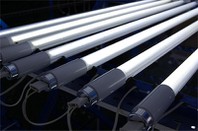
Many classroom lighting uses simple fluorescent lamp brackets, and there is no professional blackboard lighting, and even some classrooms are not equipped with blackboard lighting at all. The light source of the fluorescent lamp bracket is directly exposed to the outside of the luminaire without any anti-glare measures. The efficiency of the luminaire is low and the illuminance cannot meet the national standard (the classroom maintains illuminance>300lx, illuminance uniformity ≥0.7; blackboard maintains illuminance>500lx, illuminance uniformity ≥ 0.8) requirements.