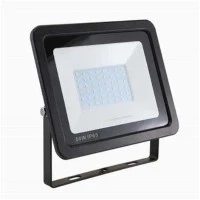
Lighting typically accounts for over 10% of household electricity use, and even more in commercial buildings. How much can switching to LEDs really save? This short guide provides quick answers with data and tables.
1. Why Are LEDs More Efficient?
Incandescent bulbs waste about 90% of electricity as heat; LEDs convert over 90% directly into light. The key metric is luminous efficacy (lumens per watt).
| Technology | Typical Efficacy (lm/W) | Waste Heat |
|---|---|---|
| Incandescent / Halogen | 10–15 | ~90% |
| CFL | 70–90 | ~80% |
| Mainstream LED | 130–200 | Very low |
| High-end Commercial LED | 200–230 | Very low |
2. Per Bulb: How Many kWh Saved Per Year?
Based on 800 lumens (equivalent to a 60W incandescent) and 2.5 hours of daily use:
| Lamp Type | Power | Annual kWh | Annual Cost ($0.11/kWh) | Lifespan (hours) |
|---|---|---|---|---|
| Incandescent | 60W | 55 | $6.07 | 1,000 |
| CFL | 14W | 13 | $1.41 | 10,000 |
| LED | 9W | 8 | $0.91 | 25,000 |
LED vs. incandescent: saves 47 kWh per bulb per year
LED vs. CFL: saves 5 kWh per bulb per year
Replacing 10 bulbs at home saves 470 kWh per year – enough to power a refrigerator for 4 months.

3. Residential Scenario: Typical 3‑Bedroom Home (20 fixtures, 3 hrs/day)
| Lighting | Total Power | Annual kWh | Annual Cost ($0.15/kWh) |
|---|---|---|---|
| Incandescent | 1,200W | 1,314 | $197 |
| CFL | 280W | 307 | $46 |
| LED | 180W | 197 | $30 |
Annual savings: 1,117 kWh → 167Over10years:saves>11,000kWhand>167Over10years:saves>11,000kWhand>1,600.
4. Commercial & Industrial: Savings Multiply
Office building (100 lights, 8 hours/day)
| Technology | Power per Fixture | Annual kWh (100 lights) | Annual Cost ($0.15/kWh) |
|---|---|---|---|
| Fluorescent T8 | 32W | 9,344 kWh | $1,402 |
| LED tube | 15W | 4,380 kWh | $657 |
| Annual savings | – | 4,964 kWh | $745 |
Warehouse parking lot (20 lights, 12 hours/night)
| Technology | Power per Fixture | Annual kWh (20 lights) | Annual Cost ($0.15/kWh) | 10‑Year Energy Cost |
|---|---|---|---|---|
| Halogen | 300W | 26,280 kWh | $3,942 | $39,420 |
| LED | 100W | 8,760 kWh | $1,314 | $13,140 |
| Annual savings | – | 17,520 kWh | $2,628 | $26,280 |
Real case: Shanghai's Jiading District replaced 330 streetlights with LEDs, saving $48,000 per year, payback period 4.2 years.
5. Additional Hidden Savings
Maintenance: LED lifespan 25,000–100,000 hours (25x longer than incandescent). A facility with 100 fixtures saves 125 labor hours over 10 years → ~$6,000.
HVAC: LEDs emit almost no heat, reducing air conditioning load.
No hazardous materials: LEDs contain no mercury (unlike CFLs).
6. Global Impact: How Much Could the World Save?
By 2030, global LED adoption is projected to save nearly 1,500 TWh per year – equivalent to Japan's annual electricity consumption, or the yearly usage of 150 million homes, while cutting hundreds of millions of tons of CO₂ annually.
7. How Fast Is the Payback?
| Application | Typical Payback Period |
|---|---|
| Single household bulb | 6–18 months |
| Small commercial retrofit | 1–3 years |
| Large commercial project | 1.5–3.7 years |
| Municipal street lighting | 3–5 years (rebates available) |
8. FAQs
Q: How much less energy do LEDs use than incandescent bulbs?
A: For the same brightness, LEDs use 75%–90% less energy.
Q: How many kWh does one LED bulb save over its lifetime?
A: A 9W LED replacing a 60W incandescent saves nearly 1,200 kWh over 25,000 hours.
Q: Is LED maintenance more expensive?
A: No – their long life drastically reduces labor and material costs.
Q: Do LEDs contain hazardous materials?
A: No. They can be disposed of as general e‑waste.
Conclusion: Every LED switch saves money and reduces emissions
From homes to factories, streetlights to warehouses, switching to LEDs is one of the most cost‑effective energy‑saving measures available today. With rising electricity prices and tighter efficiency regulations, the question is no longer "Should I switch?" but "How soon can I start saving?"