How to protect children's eyes from blue light?
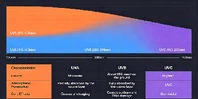
Blue light is widely found in artificial light sources around us, such as computer screens, mobile phone or tablet screens, and energy-saving lamps or LED lamps. Blue light is a high-energy light with a short wavelength. It is a high-energy visible light with a wavelength of 400-500nm, which can penetrate the cornea and lens and reach the macula. Under such light, the retinal pigment epithelium toxicity is greatly increased. The damaging effect of blue light is a chain reaction, first causing the death of light-sensitive cells, and then causing retinal macular degeneration, which in turn leads to gradual decline or even complete loss of vision.
The cumulative effect of blue light?
The damage of blue light to the eyes is irreversible. At the same time, the damage of blue light has a cumulative effect, that is, the cells affected by blue light will not disappear, but will accumulate layer by layer, resulting in chronic damage to the photoreceptors of the eyes. Just like savings, the usual blue light damage accumulates day by day and reaches a certain critical point, which will lead to macular degeneration, which will lead to vision loss or even blindness. Therefore, the sooner the protection against blue light starts, the better, and it is necessary to adhere to the protection from time to time, and it should not be taken lightly.
How to protect children's eyes from blue light?
To protect children's eyes from blue light damage, mothers should pay attention to the following points:
1) Blue light cannot be completely avoided, but blue light hazards can be prevented
All white light is a mixture of red, green, and blue light. Blue light is widely present in various natural or artificial light sources, and it is impossible to completely filter out blue light. But we can take the right approach to minimize blue light hazards.
2) Don't let children come into contact with electronic products too early.
The light of the electronic screen contains a lot of blue light, and children cannot bear the damage caused by this blue light to the eyes. It is better not to let infants and young children come into contact with electronic products. When your child is 4 years old or older, do not allow your child to be exposed to a computer for more than half an hour.
3) Children need to use electronic products, just prevent them on electronic products and reduce blue light
When children have to face the screen of a computer or mobile electronic product for a long time, it is best to cover the electronic screen with an anti-blue light moisturizing film. The technology of these products can balance the blue light in the light, so as to ensure the true color With the brightness of the light, it can avoid blue light hazards.
4) Be especially careful of the blue light hazard caused by the lamps and lanterns used by children
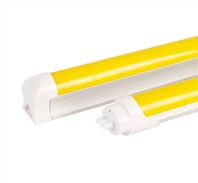
The lamps used by children have been accompanying them in their study and life, and their tender eyes are also exposed to the light of lamps for a long time. General fluorescent lamps work by alternating current, not only with serious stroboscopic and radiation, but also with high-energy blue light. Ordinary LED lamps rely on blue light with a wavelength of 450~455nm to excite phosphors to emit light. In order to pursue brightness, businesses usually strengthen the blue light intensity of LED light sources. Human eyes study and work under such light sources for a long time. Vision damage is huge! Therefore, choosing a lamp with soft light and avoiding blue light hazards is the primary consideration for mothers to choose lamps for their children. Do not blindly pursue brightness or low prices.
BENWEI LED eye protection classroom lamp adopts a unique ratio of lamp beads and phosphors, which can make the light closer to the sunlight at noon, and can better protect children's eyesight. In addition, it should be noted that the famous LED eye protection classroom lamp has no blue light hazard.
In the campus lighting system project, BENWEI lighting uses high-efficiency, energy-saving and high-quality LED light sources, with soft light, no blue light, high illumination, no glare, and no glare. In addition, the classroom lighting design comprehensively considers the viewing angles of students and teachers, tries to avoid reflections on the blackboard, and at the same time ensures uniform illumination on the desktop.