The field must be adequately lit for any baseball game played after nightfall.
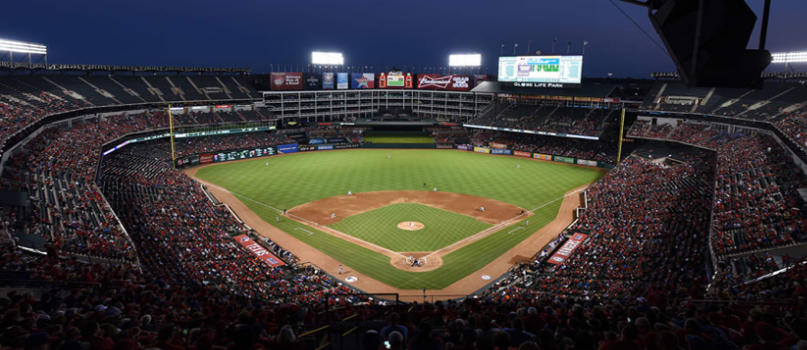
The lighting system must provide enough illumination for players, officials, and spectators to enjoy the game safely and pleasantly. Your baseball field lighting may be updated with LED stadium lights to provide a variety of benefits, including improved visibility, enhanced energy efficiency, and lower maintenance costs. The steps you may take to retrofit LED stadium lights into your baseball field lighting are listed below.
How to Upgrade Your Baseball Field Lighting Using LED Stadium Lights
The initial step is to comprehend your baseball grounds' lighting requirements.
The quantity of light that reaches a surface is measured in foot-candles, which is how much light is required for baseball fields.
The following lighting is required for baseball fields:
On a baseball pitch, the outfield requires the least amount of illumination.
A minimum of 15 to 30 foot candles should be present, with 30 foot candles being the most common.
The infield needs more illumination than the outfield because of the faster pace of play. A minimum of 30 to 50 foot candles should be present, with 50 foot candles being the most common.
Pitcher's Mound: The pitcher's mound on a baseball field needs the most illumination. At least 75 to 100 foot-candles are recommended, with 100 foot-candles being the most common.
Batter's Box: The batter's box must also be well-lit to ensure that the batter can see well. At least 50 to 70 foot-candles are recommended, with 70 foot-candles being the most common.
Bullpens and Dugouts: These areas of the field don't need as much light as other areas need. At least 10 to 15 foot-candles are recommended.
It's important to keep in mind that these foot-candle recommendations are meant to be used as broad guidelines only. The actual lighting requirements for a baseball field may vary depending on factors including the size of the field, the level of play, the type of lighting system used, and more. By consulting with an experienced lighting designer or engineer, you can make sure that your baseball field lighting system fits the requirements of your unique needs.
How to Upgrade Your Baseball Field Lighting Using LED Stadium Lights
Next, understand why LED baseball field illumination was chosen.
Baseball fields no longer have the typical lighting options of metal halide (MH) and high-pressure sodium (HPS) lights; instead, LED lighting is fast displacing them.
The following explanations explain why LED baseball field lighting is becoming more and more common:
Energy Efficiency: LED lights use a fraction of the energy of traditional lighting sources. Compared to high-pressure sodium (HPS) and metal halide (MH) lights, LED lights may use up to 60% less energy and up to 75% less energy, respectively. Accordingly, using LED lights may significantly reduce energy expenditures and produce long-term cost benefits.
Extended Lifespan: LED lights have a substantially longer lifespan than traditional lighting fixtures. High-pressure sodium (HPS) lights having a lifespan of up to 24,000 hours, compared to up to 20,000 hours for metal halide (MH) lights. A 50,000-hour lifetime is possible for LED lighting. This suggests that LED lights require less frequent replacement, which reduces maintenance costs and downtime.
Better Visibility: LED lighting provides brighter, more uniform illumination than traditional lighting fixtures, which enhances visibility for players and spectators. LED lights provide more contrast and color accuracy because they have a high color rendering index (CRI), which means that the light they produce closely resembles that of natural daylight. The ability to see the ball and execute precise plays will be made easier for players as a consequence.
Instant On/Off: LED lights switch on and off instantly, unlike traditional lighting fixtures, which need some time to warm up and cool down. Because LED lights may be switched on and off as needed, LED lighting systems are more adaptable and use less energy.
Less Light Pollution: LED lights provide a more concentrated beam than traditional lighting, which reduces light pollution. This helps the environment and can decrease the harm that light pollution does to surrounding ecosystems.