Fixing a reversing light
Although they are not often required by law, reversing lights are helpful. They have two functions: to alert other drivers that you're about to reverse, and to offer illumination if you're doing so at night.
One or two rear light units are controlled by a switch, making the circuit simple to investigate if something goes wrong. The switch is situated on the gearbox of the majority of cars and is activated automatically when reverse gear is selected. The switch might be a manually operated one installed on the dash if the lights were added after the car was constructed.
Lightbulb blown Switch probe
Select reverse gear with the ignition on and make sure the reverse switch is operational. Connect the test lamp's one side to the earth, then investigate one terminal at a time. When a terminal is touched, the switch should light up.
The most frequent issue is a blown bulb. Take it out of the holder, then use a short extension wire to connect it across the battery terminals to test it. If the bulb turns on, another component of the circuit is broken.
First, make sure the wiring terminals and bulbholder are spotless and well-lit. Refit the bulb and retest after cleaning any corrosion with wet or dry paper.
The fuse might have blown if the lightbulb still won't turn on. A blown fuse should also be considered if two reversing lights are on at the same time.
Fuses
The fuse that guards the reverse lights frequently also protects other accessories. (see your car handbook to find out which ones). Replace the fuse and retry the test if none of these work. It may be simpler to have an auto-electrician to locate the short circuit if the fuse explodes as soon as you test it, as this indicates that there is one someplace.
Use a test bulb to inspect the remainder of the circuit if any of the other components the fuse protects are still functional.
latest check
To prevent the coil from overheating, turn on the ignition and remove the feed wire. Choose reverse or the "R" position on an automatic transmission.
Probe the live terminal in the bulb holder while attaching the test lamp to a reliable earth point. If the test lamp illuminates, the bulb is receiving current. If the lightbulb has a separate earth lead, there is where the problem must be.
Run a brief wire from the bulbholder earth to a spot on the car body to test the earth. Replace the bulb, then recheck. Replace the earth lead if the lamp is functional.
Check the wiring
You must recheck the rest of the circuit if no current was flowing to the bulb holder.
Find the color and location of the reversing wires in your workshop manual. Probe the wire slowly all the way through. Most of the time, the wire will vanish into the main weave, out of your reach. By splicing in a new wire, you might get around the problem if you discover that it is within the loom.
A switch test
Check the gearbox switch if there is no current flowing through the wires. There will be two switch connections on a manual automobile. There will be four on an automatic, and two of them are for the inhibitor circuit and shouldn't be disturbed. (unless you are adjusting the switch - see sideline, left). To identify the proper terminals for testing, consult your manual.
The car may be raised more easily using axle stands. Then start the engine and shift into reverse. Probe each terminal in turn after connecting the test bulb to the ground. If the bulb illuminates on both terminals, the wiring between the switch and the reverse lights is faulty. Examine the wiring between the fuse and switch if the lamp won't even turn on at all. The switch is either damaged or has to be adjusted if the lamp only illuminates on one terminal.
Disconnect the wiring before unscrewing the switch or, if a locknut is present, releasing it to replace a reversing light switch. Adjust the switch first, then swap it out.
Feature
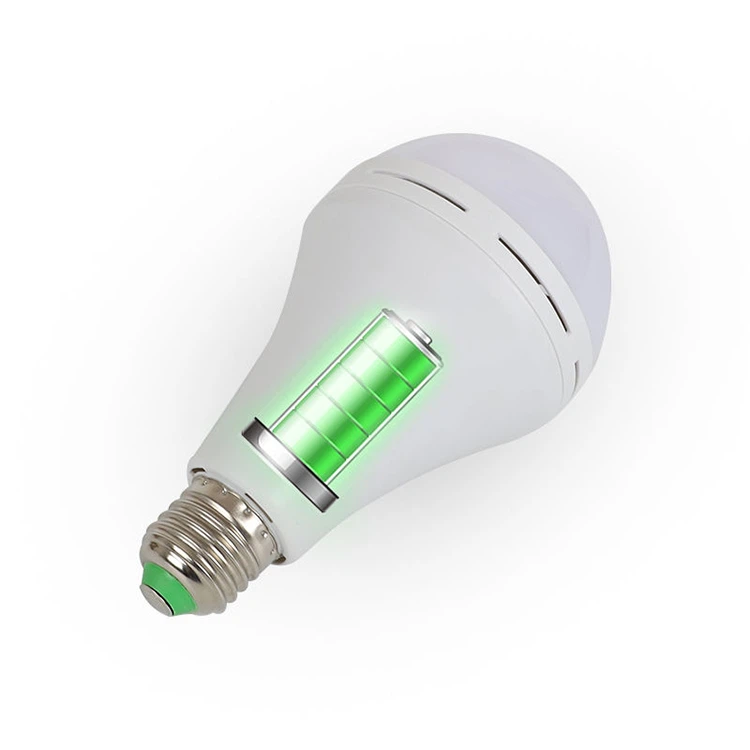
● Convenient, keep the lights on even when the power goes out.
● Automatically Get ON Within 0.1 Second when power outage.
● Offer emergency light up to 5-6 Hours, 3.5 Hours at high brightness.
● Once the power is restored, it will revert to work as normal bulb and automatially recharge the battery.
● High quality Lithium Battery, extended emergency time.
● 2.5KV Surge protection, avoiding damage caused by voltage fluctuation and lightning strike.
Specification
| Power | 8W /10W 12W |
| Efficacy | 110Lm |
| Emergency Time | 5-6 Hours |
| Emergency Power | 50% |
| Voltage | 100-277VAC |
| PF | >0.95 |