How to use reasonable LED classroom eye protection lights to prevent myopia
According to the National Health Vision Report released in 2019, the myopia rate of Chinese adolescents has been increasing in recent years. The myopia rate of high school and college students has exceeded 70%, and there is a trend of younger age. Studies have shown that in addition to subjective factors such as genetics, excessive eye use, and poor eye use habits, the impact of the classroom lighting environment on vision is also crucial. China is facing a severe visual health crisis. The prevalence of myopia in Chinese adolescents remains high, which not only affects the contemporary era, but also endangers the health of the people in the future. It will have a major impact on society, economy and even national security, and bring direct medical costs. The burden of social security and social security will cause loss of behavior and affect labor capacity and quality of life. The report estimates that in 2019, the socio-economic costs caused by various types of vision defects are about 680 billion yuan, accounting for 1.3% of the GDP (gross domestic product) that year.
For children, in addition to causing physiological changes, poor lighting environment can also interfere with the brain's central and advanced nerve functions, making people feel upset, short-tempered and causing headaches. This kind of damage is especially obvious to infants and young people because their nervous system is not fully developed and mature, and poor-quality lights can easily cause inability to concentrate or focus for a long time, which leads to a decline in learning efficiency and even develops into children's hyperactivity.
The student period is the most important stage of body growth. Relevant studies have proved that the spectral composition has an important influence on the growth of animals and plants, and it cannot be ignored for humans. The study found that after one year of improving the classroom lighting environment, the average visual acuity of the experimental group students was higher than that of the control group. This shows that improving the classroom lighting environment level can reduce the rate of decline of students’ visual acuity and prevent the incidence of myopia among non-myopic students. Other studies have shown that the classroom lighting environment also has a considerable impact on students' learning. According to a year-long foreign experiment, after improving the lighting environment, students' concentration, length of time and behavior have been significantly improved: reading speed has also increased by 35%, and error rate has dropped by 45%. Activity dropped by 76%.
What are the issues that need to be paid attention to in classroom lighting?
Desk illuminance: average illuminance, low illuminance, maintenance illuminance, uniformity of illuminance (consider the influence of desks and chairs, people, temperature, dust, age, various obstructions on the wall, etc., as well as the influence of book angles);
Illumination of writing board: average illuminance, low illuminance, maintenance illuminance, uniformity of illuminance (considering the influence of student's position);
Glare: direct glare, indirect glare (reflection of walls/books/writing boards, etc.);
Flicker (stroboscopic): At present, most classrooms use fluorescent tubes. Due to their AC input characteristics, they cause high-frequency stroboscopic. This stroboscopic is the direct cause of eye fatigue.
Color temperature: Different color temperatures have different effects. Only under different conditions, can you get good results with appropriate color temperature and illuminance. It is recommended to use 5000K color temperature; color rendering: Ra>90 (R9>50), color quality Color tolerance, etc.;
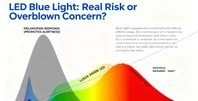
Photo biological safety: blue light hazard, noise;
Energy saving: 50% energy saving compared with traditional inductive fluorescent lamps;
Environmental protection: Does not contain mercury, lead and other heavy metal substances, making it more environmentally friendly;
Intelligent control: multi-mode operation, simple and practical.