Is Red LED Light Useful for the Growth of Weaned Pigs?

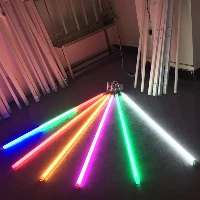
The light environment is an important component of the pigsty environment. Nowadays, controlling light factors such as light sources, light waves, and light intensity has become a very important aspect of daily production management in some modern pig farms. Lighting sources mainly include incandescent lamps, fluorescent lamps, and LED lights. The spectrum is essentially electromagnetic waves (light waves). Visible light, when passed through a prism, can present a spectrum composed of seven colors visible to the naked eye: red, orange, yellow, green, cyan, blue, and violet, with wavelengths ranging from 760 to 390 nm. Red light has a central wavelength of 660 nm and a wavelength range of 760–620 nm. This article aims to explore the effect of red light on pig growth.
From January 15th to February 9th, 2021, a red light irradiation experiment was conducted at the Hubei Academy of Agricultural Sciences Animal Husbandry and Veterinary Medicine Research Institute's original breeding pig farm.The pigs used in the experiment were Large White nurseries from a purebred pig farm, who had completed the feed and environmental transition after weaning. Experimental Methods: 96 healthy nurseries were selected and divided into experimental and control groups, with 48 pigs in each group. They were further divided into 6 pens (6 replicates) according to the same weight gradient, with 8 pigs per pen. Each replicate had similar weights and a consistent male-to-female ratio. Weighing, grouping, and enrollment were conducted on January 15th, and weighing and the experiment concluded on February 9th, lasting 25 days. The control group received natural light, with approximately 10 hours of natural light per day from 8:00 AM to 6:00 PM, without additional light sources. In the experimental group, a 3W red LED bulb was suspended 1.8 m above the center of each pen, with a waterproof and dustproof lampshade focusing the light across the entire pen surface.

Supplemental lighting was provided for a total of 7 hours per day from 5:00 AM to 8:00 AM and from 6:00 PM to 10:00 PM, controlled by a smart switch, for a total of 17 hours of illumination. Both groups were kept under the same temperature, humidity, and ventilation control and feeding conditions. They were fed automatically with free access to feed and watered automatically with water. Feed was added twice daily, once in the morning and once in the afternoon, and the daily feed intake was recorded. During the experiment, the red light experimental group exposed to artificial LED lights consumed an average of 15.77 kg of feed per head, gained an average of 9.77 kg per head, and had a feed conversion ratio of 1.61. The control group without light exposure consumed an average of 13.58 kg of feed per head, gained an average of 8.12 kg per head, and had a feed conversion ratio of 1.67. The feed conversion ratio of the experimental group was 3.59% lower than that of the control group.


The experiment shows that a 17-hour light exposure duration is suitable for daily weight gain. Furthermore, piglets with longer daylight hours showed higher daily weight gain and better immune performance than those with shorter daylight hours. Red light is a suitable supplemental treatment for nursery pigs. Pigs have two types of cone cells. The photoreceptors in their bodies are more sensitive to light with wavelengths of 439 nm (blue) and 556 nm (green), but not sensitive to light with wavelengths greater than 650 nm (red). In the early 1990s, Hungarian livestock experts irradiated pigs with red light during the growth and fattening stage. The feed utilization rate increased by 1.51% and the daily weight gain increased by 43 g. However, when irradiated with white light and blue light, the daily weight gain only increased by 26 g and 13 g, respectively, while the feed utilization rate decreased by 0.85% and 1.98%, respectively.
When irradiated with red light, the mortality rate of pigs decreased and the behavior of piglets was calm. When irradiated with blue light, the behavior of pigs was frightened and the mortality rate was the highest . When pig houses were irradiated with 600-1000 nm light, the mortality rate was lower. Red light can penetrate the pig's skull, causing an increase in intracranial temperature and activity , and the photothermal effect promotes pig growth. For pig farmers, purchasing LED lights with red light can not only increase pig weight but also reduce feed consumption and save costs.
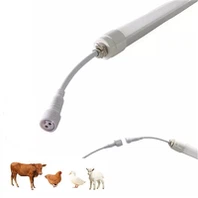
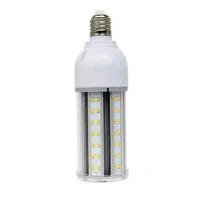
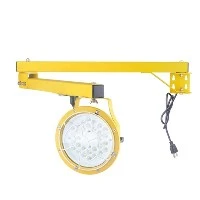
Through experiments, we have determined which manufacturers produce high-quality LED lights that are effective for pig farming. If needed, you can purchase lighting fixtures from this manufacturer. This manufacturer offers high-brightness lighting with a suitable spectrum, waterproof properties, and a long warranty period. Purchase links and website are provided below.
https://www.benweilight.com/lighting-tube-bulb/ultra-slim-full-spectrum-led-aquarium-light.html
FAQ
Any question or wanna send an inquiry!
Q1. How soon is the lead time?
A: For sample order, 7-17 days if no stock. For bulk order, 15-30 days.
Q2. Can your products' label, packaging, design be customized?
A: Yes, we offer customization service on these.
Q3. How can we guarantee quality?
A: Always a pre-production sample before mass production; Always final Inspection before shipment.
Q4. How do you ship the goods and how long does it take to arrive?
A: We usually ship by DHL, UPS, FedEx or TNT. It usually takes 3-5 days to arrive. Airline and sea shipping also optional.
Q5. What is your payment way?
A: Paypal / Visa / Western Union / online transfer / apply pay / T/T all works for us for payment.