The Culprit Behind Frequent Burnouts and Flickering: How to Read the LED "Heart" – The Driver Power Supply
When shopping for LED lighting fixtures, many people focus entirely on the brand of the LED chip or the material of the housing. However, there is a famous saying in the lighting industry: "The chip determines how long a light can emit light, but the driver determines how long the light will stay lit."
According to lighting after-sales statistics, over 80% of all LED fixture failures are caused by damage to the driver power supply. As the "heart" of an LED light, the driver not only dictates the lifespan of the fixture but also directly affects electrical safety and visual health. So, what kind of power supply should you look for when picking an LED light? This article provides a comprehensive overview.

1. Core Science: Why Do LED Lights Absolutely Need a "Good Driver"?
An LED (Light Emitting Diode) is a semiconductor device that is extremely sensitive to current and possesses a negative temperature coefficient. This means that as the fixture operates and its temperature rises, its internal resistance decreases. If connected directly to the mains power supply, the current flowing through the LED would spike exponentially, burning it out instantly.
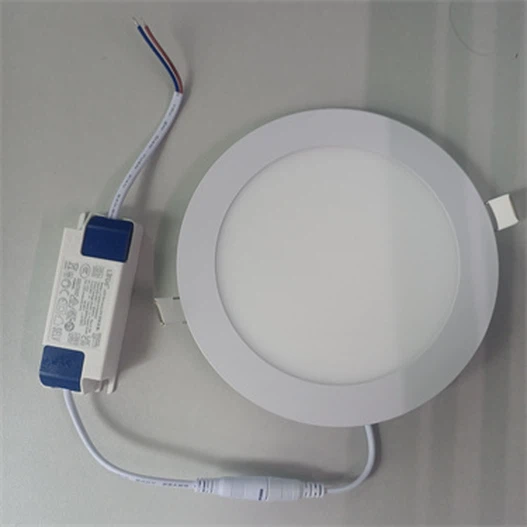
Therefore, an LED must rely on a driver to convert high-voltage alternating current (like AC 220V/110V) into low-voltage, stable direct current (like DC 24V/36V). A high-quality driver must perform three core tasks:
- Constant Current Output: Regardless of grid voltage fluctuations, the current delivered to the LED chip must remain constant. This is the absolute foundation for preventing light decay and ensuring a long lifespan.
- Flicker Control: It must smoothly smooth out the ripples of alternating current, converting it into a flat, continuous direct current to protect human eyesight.
- Safety Isolation: It must physically separate the high-voltage zone from the low-voltage zone to eliminate the risk of electric shock when users touch the fixture or during humid conditions.
2. Industry Data Chart: Comparison of Mainstream LED Driver Technologies
When sourcing LED lights, the cost and internal design of drivers vary drastically. The table below outlines the three most common driver solutions in the market along with their key performance indicators:
| Evaluation Metric | Premium Isolated Constant Current Driver | Standard Non-Isolated Constant Current Driver | Cheap RC Baseline / Linear High-Voltage Scheme |
| Circuit Structure | Transformer physical isolation, full protection circuitry. | Inductor non-isolated, basic protection circuitry. | No transformer; relies only on resistors, capacitors, or simple ICs. |
| Electric Shock Safety | Extremely High (Touching low-voltage light head carries no shock risk). | Lower (Output carries high voltage; requires strict insulation). | Extremely Low (The entire light carries dangerous high voltage; easily breached). |
| Flicker Performance | Flicker-Free (Ripple depth < 1%). | Design-dependent (Typically ripple depth < 10%). | Severe High-Frequency Flicker (Ripple depth can reach 30% - 100%). |
| Grid Adaptability | Excellent (Supports wide voltage ranges like AC 85V - 265V). | Good (Supports AC 180V - 240V). | Poor (Brightness fluctuates heavily with grid voltage shifts). |
| Power Factor (PF) | PF > 0.90 - 0.95 (High energy efficiency). | PF > 0.70 - 0.85 (Medium efficiency). | PF < 0.50 (Severely wastes electrical grid energy). |
| Average Lifespan | 35,000 - 50,000 hours | 15,000 - 25,000 hours | A few hundred to several thousand hours (Highly prone to burning out). |
| Recommended Scenarios | Desk lamps, classroom/office lighting, outdoor waterproof fixtures. | Conventional high ceilings, recessed downlights (Out of human reach). | Ultra-low-cost temporary lighting, low-end bulbs, free giveaways. |
3. Four Technical Requirements for Selecting LED Drivers
Whether purchasing for home use or analyzing engineering bid specifications, ensure you check for these four critical technical parameters on the product specification sheet or driver label:
3.1 Look for the "Isolated Constant Current" Stamp
- The Requirement: Residential lighting-especially for bathrooms, kitchens, children's rooms, and desk lamps-should strictly mandate the use of isolated power supplies.
- How to Identify: Check the driver label for a transformer symbol or an explicit "Isolated" mark. Even if an isolated driver burns out internally, it will not introduce high-voltage AC to the low-voltage light-emitting points, preventing fire and electric shocks.
3.2 The Power Factor (PF Value) Must Meet Standards
- The Requirement: Premium residential fixture drivers should have a PF value greater than 0.7, while high-power industrial or commercial lighting (such as high bays and floodlights) must have a PF value greater than 0.9.
- The Reason: The PF value represents how efficiently the driver utilizes electrical grid energy. A low PF value means massive heat loss inside the driver (shortening its life) and introduces harmonic pollution to the local grid, potentially causing interference with other appliances.
3.3 Reject the "Invisible Killer" - Choose Flicker-Free Drivers
- The Requirement: When picking fixtures for reading, working, or daily living, always verify that they are certified Flicker-Free or feature high-frequency constant current waveforms.
- The Danger: Low-quality Resistance-Capacitance (RC) step-down drivers produce periodic light fluctuations at 100Hz/120Hz. While your eyes might not consciously see it, your retinas constantly contract in response. Long-term exposure to this environment can lead to severe migraines, sharp drops in vision, and a lack of concentration.
3.4 Focus on the Core Component - Electrolytic Capacitor Lifespan
- The Requirement: Check the specification of the electrolytic capacitor inside the power supply. High-quality drivers use premium capacitors rated to withstand 105℃ or 125℃ with a lifespan greater than 5,000 hours.
- The Science: The most vulnerable component in any driver is the electrolytic capacitor; its internal electrolyte gradually evaporates (dries up) under high operating temperatures. Once the capacitor fails, the light will begin to strobe or stop working entirely. High-temperature-rated capacitors are the cornerstone of a fixture lasting past the 5-year mark.

4. Advanced Integration: Selecting Dimming Drivers
If you are planning a modern architectural lighting project utilizing liner light strips, architectural coves, or smart home integration, pay close attention to your smart dimming driver choices:
- 0-10V / 1-10V Dimming: An analog dimming method. The signal is stable with excellent compatibility, making it perfect for industrial, commercial, and high-end residential spaces.
- DALI / DALI-2 Dimming: A digital addressable lighting interface protocol. Each fixture has an independent address, allowing for highly precise, ultra-smooth dimming down to 0.1% brightness-perfect for high-end luxury smart spaces.
- Phase-Cut / Triac Dimming: Traditional leading-edge/trailing-edge phase-cut dimming. It is often used for retrofitting existing homes with smart lighting upgrades. However, ensure the driver is fully compatible with your wall dimmers, otherwise, low-frequency flickering or an annoying buzzing hum may occur.
Summary
When purchasing LED lighting fixtures, never judge them solely by their outer shell and price tag. A beautifully designed light equipped with a cheap RC step-down driver will likely become electronic waste within six months.
Procurement Guide: When buying, try to review the driver's technical specifications or independent casing. A high-quality driver should have a securely sealed enclosure (full potting is necessary for outdoor applications), carry prominent safety certifications such as CE, UL, or FCC, and clearly display its output voltage and current ranges. Allocating an extra 20% of your budget toward a premium driver delivers years of stable lighting performance and safeguards your eyes.