IS UV STERILIZATION EFFECTIVE FOR VIRUSES AND BACTERIA?
How well does UV sterilization work? Does it combat viruses and bacteria? What are the benefits and drawbacks? When individuals consider how filthy their cell phone gets, these are questions I frequently hear when working in the microbiology profession. You might be wondering whether UV sterilization goods are worthwhile to try as more and more of them enter the market. So let's get started!
Since the middle of the 20th century, UV radiation has been utilized for sterilization and disinfection. Its reliable long lifespan (thousands of hours) and reduced size (e.g. UV LED vs. standard UV bulbs) have increased its range of applications thanks to technological developments, particularly in the UV bulbs themselves. It is used to clean many different surfaces, including water, air, fruits, vegetables, medical instruments, tablet computers, and toys.
Not all UV wavelengths are efficient for UV sterilization. Why does that matter? Technically speaking, ultraviolet (UV) refers to a group of electromagnetic waves with a shorter wavelength (higher frequency and energy) than the visible violet light. UV stands for "beyond violet" and describes a range of electromagnetic waves. Three categories of UV are distinguished by decreasing wavelengths and rising energy. UVA, UVB, and UVC are the three. Only UVC (100–280 nm) has a high enough energy level for UV sterilization to efficiently kill bacteria. Make sure the UV sterilization product you choose to use in your home or place of business operates at a UVC wavelength, which is between 100 and 280 nanometers.
Is UV sterilization efficient against bacteria and viruses? Yes, and even more organisms, is the quick response. All foodborne pathogens, the natural microbiota, molds, and yeasts can be destroyed by UVC at 254 nm, according to studies. Each kind of microorganism requires a varied amount of time to be killed since they come in a variety of sizes and shapes that affect how much UV light they absorb.
What does UV sterilization involve? I'm happy you inquired! UV sterilization, sometimes referred to as UV disinfection or ultraviolet germicidal irradiation (UVGI), prevents microorganisms from reproducing by dissolving specific chemical bonds and jumbling the structure of DNA, RNA, and proteins. A microbe that is unable to reproduce is regarded as dead because it is no longer contagious and unable to reproduce inside of a host.
“Dead.” That is ideal, I think. How long does it take for this bad item to reach the "dead" status? Let's discuss specifics of destruction. Since UV sterilization employs UVC radiation to break down proteins, the amount of energy used, which is influenced by the duration of exposure time and the distance from the light source, determines how effective the procedure will be. For instance, sterilization of an E. coli-grown petri dish takes just 1-2 minutes if a UV lamp is used and is held just an inch above the dish.1 It could take 5 to 10 minutes to sterilize surgical equipment in a medium UV box. A typical recommendation is 30 minutes for sterilizing an 8-foot biosafety cabinet in a laboratory.
Another drawback of UV sterilization is that proteins and DNA/RNA are so severely damaged by UVC that biomedical goods cannot be produced using them. For instance, when viruses are sterilized with UVC, the surface proteins are severely damaged, making it impossible to employ the viruses as vaccines to elicit the desired immune responses. In biomedical products, viral surface proteins are preserved while viruses are efficiently inactivated using a distinct type of "UV inactivation" process. Because we wish to employ the intact viral proteins of the UV treated viruses for biomedical purpose, such as producing antibodies, this is also the process we use for our UV inactivated purified virus products.
Finally, UV sterilization is a fantastic alternative whether you're searching for a machine to clean your worktops, a wand to disinfect your dirty hotel bedding, or a device to clean your stale shoes. And never forget that it's crucial to adhere to the manufacturer's guidelines for light-source distance, exposure time, and safety measures for any equipment you buy.
Features:
● Surface mount high-power device
● Featuring high brightness combined with a compact size
● Suitable for all kinds of lighting applications such as general illumination, flash,spot, signal,industral and commercial lighting.
Specification:
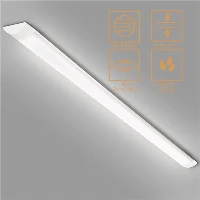
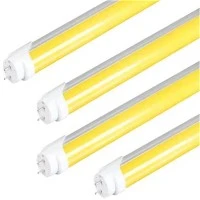
| Product Name | 280nm UV Light Tube |
| Size |
300mm(1Ft) 600mm(2Ft) 900mm(3Ft) 1200mm(4Ft) |
| Wattage | 18w |
| Wave length | 280nm |
| Material | Aluminum Alloy +PC cover |
| Cover | Clear |
| Beam angle | 120-180 degree |
| Voltage | 85-265V/ 110-277V AC |
| Led chips | SMD2835 |
| Warranty | 5 years |