What is UV-C Disinfection Lighting: The Basics
Describe UV illumination.
UV radiation is a form of electromagnetic radiation that occurs naturally in sunshine and accounts for around 10% of the total amount of light the sun produces. UV light is electromagnetic radiation having wavelengths that are longer than x-rays but shorter than visible light.
This light's wavelength falls into three sub-bands: UV-A (near), UV-B (middle), and UV-C (far). Its wavelength ranges from 10 nm to 400 nm.
The term "germicidal" refers to the properties of UV radiation with wavelengths less than 290 nm (more on this below). Because the ozone layer of our planet blocks most of the UV-C and UV-B emitted by the sun, ultramagnetic radiation with wavelengths shorter than 290 nm is absorbed by the Earth's atmosphere.
Discover all of the uses for UV light right here.
When was the first UV light created?
Since Downes and Blunt identified the antibacterial effects of the shorter wavelengths of sunlight, UV lighting has been used to cleanse surfaces for more than 140 years. Soon later, it was established that microbes may be destroyed by the UV sections of the light spectrum.
The next step was to figure out how to duplicate the UV wavelengths that would result in the disinfection of surfaces, air, and water after it was established that UV lighting can kill germs. The germicidal light was created in 1904 using the first UV quartz lamp.
Germicidal lamps, like the ones used in this study to reuse N95 masks during the coronavirus pandemic, are a type of lamp that emits ultraviolet radiation (UV-C; 200nm to 280nm) that has disinfectant qualities.
What is lighting for UV disinfection?
The term "germicidal" refers to the ability of ultraviolet radiation with wavelengths less than 290 nm to kill microorganisms. Commonly, this form of light is used to eliminate germs from surfaces, the air, and water.
What is the process of UV disinfection lighting?
Cells are killed by ultraviolet radiation by causing DNA damage. Microorganisms' genetic makeup is altered when exposed to electromagnetic radiation (light) at specific UV wavelengths, which also renders them incapable of reproducing. The UV light causes specific thymine or cystosine dimers to form in DNA and uracil dimers in RNA, which renders microorganisms inactive by inducing mutations, cell death, and/or failure to reproduce. (source)
The DNA and RNA of germs are truly being attacked by UV radiation, thus all bacteria, including drug-resistant bacteria, can be killed by it, according to this report from the Centers for Disease Control (CDC). There have been no reports of microorganisms showing the ability to develop an immunity to light-based treatments, even if the amount of UV needed to kill a germ may vary depending on the size of DNA molecules.
UVGI stands for ultraviolet germicidal irradiation.
We have a whole blog article dedicated to UVGI right here.
In essence, UVGI is a technique for disinfection that employs UV-C radiation with a short wavelength to inactivate or eradicate germs and diseases. UVGI decontamination is the process of cleaning surfaces, water, and air by UV light that has sufficiently short wavelengths.
The Federal Emergency Management Agency (FEMA), the Centers for illness Control (CDC), and the United States Army have all advocated or employed UVGI for the isolation of illness and bio-defense systems for structures.
The amount of time a microbe is exposed to UV, together with the strength and wavelength of the UV radiation, all affect how efficient germicidal UV light is.
As these phrases are sometimes misused and can lead to uncertainty regarding the efficacy of UVGI (as well as the avoidance of potential legal repercussions), it is crucial to grasp the distinctions between sterilization, disinfection, and decontamination.
Sterilization
Sterilization, according to the CDC, is a technique that uses either physical or chemical means to eradicate all microbial life.
Disinfection
Disinfection, according to the CDC, is the process of getting rid of most or all pathogenic germs from inanimate things.
Decontamination
Decontamination is the process of removing, neutralizing, or destroying any dangerous material from a space or object to make it safe.
Decontamination is essentially the outcome of the sterilizing or disinfection operations.
According to the CDC, sterilization and disinfection are crucial for preventing the transmission of infectious pathogens to patients through medical and surgical devices. Healthcare policies must specify, primarily based on the products' intended use, whether cleaning, disinfection, or sterilization is recommended because sterilization of all patient care equipment is not required.
A useful method for contrasting the two UV-C light sources...
Consider pulsed xenon as a power washer and low pressure mercury lamps as a garden hose. Although it consumes less water, the power washer exerts a much higher PSI on the water it expels. In comparison to constant stream lamps, pulse lamps emit more intense light. of millisecond pulses, the capacitors of pulsed xenon lamps discharge UV-C light after storing their electrical charges. Pulsed xenon light disinfects faster because it produces more potent photons than LPM lamps, which prevent bacteria from reproducing or healing themselves.
Features:
● Surface mount high-power device
● Featuring high brightness combined with a compact size
● Suitable for all kinds of lighting applications such as general illumination, flash,spot, signal,industral and commercial lighting.
Specification:
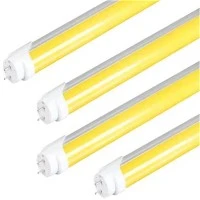
| Product Name | 280nm UV Light Tube |
| Size |
300mm(1Ft) 600mm(2Ft) 900mm(3Ft) 1200mm(4Ft) |
| Wattage | 18w |
| Wave length | 280nm |
| Material | Aluminum Alloy +PC cover |
| Cover | Clear |
| Beam angle | 120-180 degree |
| Voltage | 85-265V/ 110-277V AC |
| Led chips | SMD2835 |
| Warranty | 5 years |