What Is Ultraviolet Light?
Ultraviolet light is a form of electromagnetic radiation that causes sunburns and the glowing effect on black-light posters. However, excessive UV radiation exposure harms living tissue.
The sun emits electromagnetic radiation, which is transmitted as waves or particles with various wavelengths and frequencies. The electromagnetic (EM) spectrum refers to this wide range of wavelengths. In general, the spectrum is divided into seven areas in ascending sequence of increasing energy and frequency and decreasing wavelength. Radio waves, microwaves, infrared (IR), visible light, ultraviolet (UV), X-rays, and gamma rays are some of the popular names for these types of radiation.
In the electromagnetic (EM) spectrum, ultraviolet (UV) light lies between visible light and X-rays. It has wavelengths ranging from 380 nanometers (1.5 105 inches) to around 10 nm (4 107 inches), and its frequencies range from about 8 1014 to 3 1016 cycles per second, or hertz (Hz). The "Ultraviolet Radiation Guide," published by the U.S. Navy, states that UV is typically classified into three sub-bands:
UVB is middle UV (280-315 nm), UVC is far UV (180-280 nm), and UVA is close UV (315-400 nm).
In addition, the book adds, "Radiations with wavelengths from 10 nm to 180 nm are sometimes referred to as vacuum or extreme UV." These wavelengths can only propagate in a vacuum since air blocks them.
Ionization
Chemical bonds can be broken by UV rays. UV photons can ionize—a process in which electrons separate from atoms—because of their greater energy. Because of the ensuing vacancy, the atoms behave chemically differently and make or break chemical bonds that they otherwise wouldn't. This may help with chemical processing or it may harm materials and living tissues. When used to sterilize surfaces, for example, this damage can be helpful. However, it can also be damaging, especially to the skin and eyes, which are most negatively impacted by higher-energy UVB and UVC rays.
effects of UV
The sun is the primary source of UV light that individuals are exposed to naturally. According to the National Toxicology Program (NTP), only about 10% of sunlight is UV, and only about a third of this enters the atmosphere and reaches the ground. 95 percent of the sun UV light that reaches the equator is UVA and 5% is UVB. Because ozone, molecular oxygen, and water vapor in the upper atmosphere entirely absorb the shortest UV wavelengths, no detectable UVC from solar radiation reaches the Earth's surface. However, the NTP's "13th Report on Carcinogens" states that "broad-spectrum ultraviolet radiation [UVA and UVB] is the strongest and most harmful to living things."
Sunburn
An adverse reaction to exposure to UVB rays is a suntan. In essence, a suntan is the result of the body's defensive mechanism activating. This is made up of a pigment called melanin, which is created by melanocytes, which are skin cells. UV radiation is absorbed by melanin and released as heat. The body attempts to shield nearby cells from further damage by sending melanin into them when it detects sun damage. The skin darkens as a result of the pigment.
The DNA of sun-damaged cells can occasionally become altered, leading to issue cells that don't die but instead continue to proliferate as malignancies. According to Chuang, UV light randomly breaks DNA and the DNA repair process, giving cells the potential to resist death.
The end outcome is skin cancer, which is the most prevalent type of cancer in the US. Repeated sunburns put people at a significantly higher danger. According to the Skin Cancer Foundation, those who have had five or more sunburns are twice as likely to get melanoma, the deadliest type of skin cancer.
A second UV source
To provide UV radiation, a variety of artificial sources have been developed. The Health Physics Society states that "Artificial sources include tanning booths, black lights, curing lamps, germicidal lamps, mercury vapor lamps, halogen lights, high-intensity discharge lamps, fluorescent and incandescent sources, and some types of lasers."
Features:
● Surface mount high-power device
● Featuring high brightness combined with a compact size
● Suitable for all kinds of lighting applications such as general illumination, flash,spot, signal,industral and commercial lighting.
Specification:
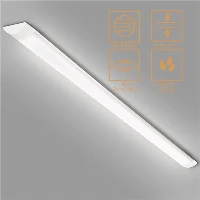
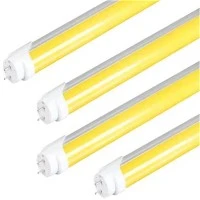
| Product Name | 280nm UV Light Tube |
| Size |
300mm(1Ft) 600mm(2Ft) 900mm(3Ft) 1200mm(4Ft) |
| Wattage | 18w |
| Wave length | 280nm |
| Material | Aluminum Alloy +PC cover |
| Cover | Clear |
| Beam angle | 120-180 degree |
| Voltage | 85-265V/ 110-277V AC |
| Led chips | SMD2835 |
| Warranty | 5 years |