Japan announces LED fluorescent lamp standards
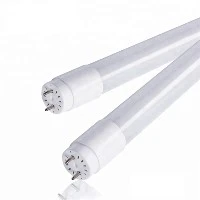
The Japan Lighting Industry Association (JELMA) formulated the "Straight tube LED lamp system with L-shaped socket (for general lighting)" (JEL801:2010) standard for straight-tube LED lamps that use LEDs as the light source. As an alternative to the straight tube fluorescent lamp commonly used in office buildings, the straight tube LED lamp is increasingly expected. Although straight-tube LED lamps made in South Korea and other countries have been on the market in the Japanese market, the manufacturers involved are mainly small and medium-sized enterprises, and the major lamp manufacturers are hesitant to launch products because they do not have standards. The formulation of this standard will promote the popularization of straight tube LED lights.
In terms of straight tube LED lamps, it has been pointed out that there are problems in lamp compatibility, brightness, weight and safety. This time the standard has added content that can eliminate these concerns.
There are clear reasons for specifying these values. For example, the luminous flux of 2300lm is determined in consideration of actual usage conditions such as the use of dozens of lamps. When compared with a 40W fluorescent lamp under the same setting conditions, this is the luminous flux required to obtain the same illuminance. Moreover, "the luminous flux does not exceed 70% in the range of 120 degrees" is a point that must be paid attention to. Its characteristic is that the light can fully reach the part exceeding 120 degrees. The luminaire has the use of a reflector to obtain the desired light orientation, and it is difficult for such luminaires to use a tube that is bright only directly below the tube. In addition, if the light does not reach the surroundings of the lamp tube, there will be a situation where "because the wall is bright but dark directly below it makes you feel uncomfortable". In order to prevent this, this condition must be met.
Among the current straight-tube LED lamps, the more prominent ones are products with higher vertical illuminance, no less than fluorescent lamps. The focus of this standard is that it is no less than fluorescent lamps in all aspects, and is not different from fluorescent lamps in use. For example, for products that are used to replace 40W fluorescent lamps, the luminous flux of day white straight tube type LED lamps is formulated to reach 2300lm or more, the color rendering index is more than 80, and the luminous flux does not exceed the overall luminous flux within the range of the light-emitting angle of the tube of 120 degrees. 70% and other regulations.
In the standard setting stage, JELMA's franchise companies have put forward the opinion that the conditions are too strict. The conditions established by this standard are indeed technically very high. But if you don't do this, you will have a lamp that is inferior to fluorescent lamps in use. LED is still in the process of development, so this value is set for the future to improve the efficiency and brightness of LED.
Benwei lamps used in lighting must first ensure safety and compatibility. At present, most of the straight tube type LED lamps on the market require power supply construction for lighting appliances, or the straight tube type LED lamp is directly installed on a fluorescent lamp holder. In terms of power input, there are products that are input from both ends of the tube like ordinary fluorescent lamps, and there are products that only input from one side. In this case, there is no way to talk about the compatibility of the lamp.
But the base of the BENWEI tube is still mostly the same "G13" type as the straight tube fluorescent lamp. Therefore, it is easy for consumers to mistake the LED lamp and connect it to the lamp holder of the incompatible lighting fixture. Moreover, in Japan, there are various styles of lighting fixtures with G13-type sockets, ranging from the old-fashioned to the latest. The power circuit is different, so it cannot be said that any lighting fixture can use LED lamps to replace fluorescent lamps.
At present, there are not too many straight-tube LED lights on the market, and sellers can still teach consumers the correct way to use them. However, after the circulation of this kind of lamp increases, this kind of service level will not be maintained, and consumers are likely to use it incorrectly. There are hundreds of millions of lighting tubes on the market. Even if the frequency of accidents caused by misuse is only at the ppm level, dozens of them occur every year. JELMA is unable to provide a security "ticket" for all straight tube fluorescent lamps that can be connected to the G13 lamp socket.
Because of this, we decided not to use the G13 lamp socket model when formulating the standard for straight tube LED lights. It was changed to a lamp socket named "L-shaped". In this way, it is possible to prevent the straight tube type LED lamp from being mistakenly connected to the lighting equipment using the straight tube type fluorescent lamp.
has established standards not only for single-tube lamps, but also for lighting systems using straight-tube LED lamps. There are roughly four features on the system. First, the power supply circuit is arranged outside the lamp tube to supply DC power to the lamp tube. In other words, the BENWEI lamp alone omits the power supply circuit and becomes a DC drive. The second is the use of L-shaped lamp sockets. Then the lamp holder can be replaced. Finally, the lamp is powered from the end face of one side (single-sided power supply).
The biggest reason for the external power supply circuit is to improve the luminous efficiency of the straight tube LED lamp. At this stage, it is necessary to achieve brightness and efficiency no less than 40W straight tube fluorescent lamps through LED lamps. Changing the power supply circuit to an external method is to take into account that this can increase the freedom of optical design in the tube, and improve the brightness and efficiency.
The lamp holder with the L-shaped lamp socket is changed to a replaceable design, in order to ensure high safety with long-term use of lighting equipment. No matter what kind of light source, the lamp holder cannot avoid deterioration after long-term use. After changing the lamp holder to a replaceable design, the lighting fixture can be used for a long time.
is changed to single-sided power supply to improve the safety when replacing LED lights. If electrodes are provided at both ends of the LED lamp, even when one electrode is connected to the lamp socket, an electric shock will occur when the electrode on the other side is touched with bare hands. By concentrating the electrodes on one side, this risk of electric shock can be avoided. In addition, although the straight tube type fluorescent lamp has terminals at both ends, this type of lamp will only be energized when the electrodes at both ends are connected to the lamp socket, so there is no need to worry about electric shock.
Someone also pointed out that there is a danger of falling of the straight tube type LED lamp. What kind of considerations have been made to this point when formulating the standard this time?
Indeed, the 40W class of fluorescent lamps is only 200g, and there are more than 600g of straight tube LED lamps on the market. LED heating will cause the lamp tube to bend, and heat shrinkage may occur during use, accompanied by the risk of falling. If there is no standard, consumers will worry about long-term use of LED tubes.
Therefore, the current standards stipulate heat shrinkage note 1) and deflection note 2). Compared with fluorescent lamps using glass, LED lamps using resin materials are more susceptible to thermal shrinkage and deflection.
Note 1) The current standard stipulates that the thermal shrinkage is that when the ambient temperature difference is 50K, the change in the distance between the lamp tube and the lamp socket should be controlled below 2.0mm.
Note 2) The current standard stipulates that the deflection caused by the weight of the lamp tube is 10mm or less at the center.
Someone pointed out that there is a "flicker" problem with LED light products.
Regarding the waveform of the current flowing in the lamp, we stipulate that "the fluctuation rate cannot exceed 1.3". This is precisely to prevent the occurrence of flicker problems. Fluctuation rate refers to the value calculated by taking the average value of the current flowing in the lamp tube as the denominator and the change in the current value as the numerator. If this value is specified as a maximum of 1.4, the current flowing in the lamp tube will periodically approach zero. If it does not exceed 1.3, this phenomenon will not occur. Moreover, we also stipulated the period of the waveform to be above 100 Hz.